
In the brutal, unforgiving physics of outdoor engineering and heavy industrial deployment, relying on “hope” is a fundamentally flawed and financially dangerous strategy. For decades, procurement teams, lighting designers, and structural engineers have obsessively focused on Ingress Protection (IP) ratings to safeguard their infrastructure against the intrusion of water, moisture, and micro-dust particles. However, this singular focus completely neglects the violent kinetic reality of the unmonitored physical world. If an IP rating serves as the essential environmental armor against the slow degradation caused by elemental forces, the IK rating—specifically the critical IK08 threshold—acts as the definitive, uncompromising shield against sudden, catastrophic physical trauma. Stop guessing on impact protection. Understanding the exact mechanical parameters, the underlying material science, the structural thermodynamics, and the commercial consequences behind the IK08 rating is the only proven methodology to balance manufacturing costs with long-term field survival. This comprehensive engineering whitepaper systematically deconstructs the science of kinetic impact protection, chronological material longevity, the thermal consequences of over-specification, and the strategic 06-08-10 matrix that defines the global engineering standard for professional-grade outdoor luminaires and enclosures.
Basic Concept and Physical Parameters of IK08
Navigating the complex, high-stakes landscape of industrial hardware procurement requires significantly more than a superficial, cursory glance at a manufacturer’s glossy specification sheet. The ultimate durability, operational survival, and long-term Return on Investment (ROI) of a product deployed in harsh, unmonitored environments depend entirely on its verifiable mechanical impact resistance. To truly grasp what an IK08 rating signifies, we must first break down the rigorous international standard that governs it, the exact Newtonian physics involved in the laboratory testing process, and the structural prerequisites required to pass these uncompromising evaluations.
The IEC 62262 Standard: The Global Benchmark for Kinetic Resilience
The IK rating system is officially and strictly defined by the widely recognized international standard IEC 62262 (which definitively and formally replaced the now-obsolete European standard EN 50102). This rigorous standard provides a universally accepted, empirically measurable numeric classification system for the degrees of protection provided by enclosures for electrical equipment against external mechanical impacts. The scale ranges sequentially from IK00, which indicates absolutely no protection whatsoever (a fragile state suitable only for highly controlled, sterile indoor environments), all the way up to IK10, representing the maximum standard protection capable of withstanding severe, deliberate kinetic force.
It is crucial for hardware architects to understand the fundamental, inseparable dichotomy between environmental and mechanical protection. While Ingress Protection (IP) ratings (such as IP65, IP66, or IP67) guarantee that delicate internal electronics, Printed Circuit Board Assemblies (PCBAs), and LED arrays remain dry and dust-free, the IK rating is strictly concerned with maintaining the absolute structural integrity of the outer chassis, the optical lenses, and the mounting brackets when subjected to blunt force trauma. An enclosure can possess a flawless IP68 rating, but if it possesses a weak IK rating (e.g., IK04), a single minor impact from flying gravel can shatter the casing. This micro-fracture instantly nullifies the IP seal, leading to immediate, catastrophic electrical failure during the very next rainstorm.
Decoding the Physics of IK08: Impact Energy, Test Weights, and Gravitational Force
In the strict realm of physical mechanics and kinetic dynamics, an IK08 rating explicitly and legally guarantees that an enclosure can successfully withstand an impact energy of exactly 5 Joules (5J) without suffering a breach. However, to a procurement manager, a city planner, or an architect, “Joules” is a measure of energy that can feel highly abstract. In an accredited, third-party laboratory environment, achieving exactly 5 Joules is not a random, haphazard strike. It is meticulously calculated using the foundational physical equation of potential energy: Energy = mass × gravity × height (E = mgh).
To generate exactly 5 Joules of kinetic force upon impact, testing facilities must calibrate precise weights and drop heights. Furthermore, industry-leading engineering philosophy centers on “Precision Adaptation”—providing a full, comprehensive matrix of IK ratings (IK06, IK08, and IK10) to ensure that customers do not waste capital paying for excessive protection they do not need, nor suffer catastrophic field failures they did not anticipate. Let us break down this strategic matrix in detail.
| IK Code Rating | Impact Energy (Joules) | Test Mass (kg) | Drop Height (mm) | Strategic Application Match |
|---|---|---|---|---|
| IK06 | 1.0 J | 0.5 kg | 200 mm | High-transmittance indoor industrial High Bays, controlled warehouse corridors, enclosed pedestrian walkways. |
| IK07 | 2.0 J | 0.5 kg | 400 mm | Light commercial outdoor fixtures, covered wall packs, and residential exterior lighting. |
| IK08 | 5.0 J | 1.7 kg | 300 mm | Standard urban street lighting, exposed architectural wall packs, public CCTV, stadium high masts. |
| IK09 | 10.0 J | 5.0 kg | 200 mm | Heavy industrial manufacturing zones, low-level outdoor park lighting, transit station platforms. |
| IK10 | 20.0 J | 5.0 kg | 400 mm | Maximum security prisons, anti-vandal applications, ground-level EV chargers, psychiatric facility fixtures. |
As clearly illustrated in the mechanical data above, passing the rigorous IK08 test mandates that a solid steel impact element, specifically machined to weigh exactly 1.7 kilograms, is dropped from a precise vertical height of 300 millimeters directly onto the enclosure. But the test does not end with a single, central strike. According to the strictest interpretations of IEC 62262, the casing must endure multiple impacts across its surface area. The laboratory technicians specifically target the absolute weakest structural points of the design: the heat dissipation fins, the intersection where the polycarbonate lens meets the aluminum die-cast housing, and the delicate screw mounting points. To pass, the casing must not crack, it must not permanently deform in any manner that exposes dangerous high-voltage live parts to human touch, and it must absolutely not compromise its corresponding IP rating seal.

IK08 vs IK10: The Scenario-Based Selection Guide and The Thermal Trap
One of the most frequent, expensive, and fundamentally misunderstood dilemmas faced by hardware procurement teams, municipal planners, and structural engineers is deciding between the IK08 rating and the absolute maximum IK10 rating. Driven by the understandable fear of widespread field failures, public liability, and vandalism, there is a very common psychological trap within the B2B sector to simply “spec the highest rating possible.” However, in advanced industrial engineering, over-specifying is not a virtue; it is a critical error that leads to severely bloated manufacturing budgets, massively increased payload weights on mounting poles, and devastating thermal management failures. Under-specifying guarantees catastrophic warranty claims, but over-specifying guarantees early internal component death. Making the correct, scientifically sound choice requires contextualizing laboratory kinetic energy into highly relatable, real-world scenarios.
Real-World Equivalent: Translating 5J vs 20J Impacts
To bridge the cognitive gap between sterile laboratory mathematics and the chaotic, unpredictable conditions of the field, we must vividly translate these Joule measurements into actual kinetic events that your outdoor infrastructure will inevitably face.
IK08 (5 Joules)
The Accidental Operational Hazard: This specific level of kinetic energy is directly equivalent to a standard 500-gram heavy metal maintenance wrench accidentally slipping from a technician’s hand and dropping vertically from a 1-meter height, striking the equipment enclosure directly with its sharpest, most concentrated end. It also accurately simulates the high-velocity impact of large hailstones during severe weather events, or a medium-sized bird striking a highway luminaire during flight. IK08 represents the robust, reliable upper limit of non-malicious, everyday operational hazards. It is tough, highly resilient, and perfectly optimized for environments where accidental damage—not intentional destruction—is the primary threat.
IK10 (20 Joules)
The Deliberate Malicious Attack: At 20 Joules, the applied physical force is a staggering four times greater than IK08. This is equivalent to a deliberate, highly aggressive attack by a vandal violently swinging a heavy wooden baseball bat or a solid steel scaffolding pipe with full physical exertion directly at the face of the device. This rating is specifically designed as an “armor-plated” solution for maximum security environments—such as prison courtyards, subterranean subway tunnels, and ground-level installations in high-crime neighborhoods—where premeditated, intentional destruction is a highly probable and continuous threat.
The Cost-Benefit Analysis and The Fatal “Thermal Trap”
Blindly upgrading a project’s technical specification from IK08 to IK10 carries severe, highly detrimental engineering penalties that are rarely discussed by amateur suppliers or entry-level consultants. Achieving a 20-Joule resistance rating is not a matter of simply using a “better” quality plastic; it requires a fundamental, drastic alteration of the product’s volumetric geometry and its core material composition.
For instance, if an optical cover or transparent lens utilizes Polycarbonate (PC), elevating its impact resistance from IK08 to IK10 typically demands a wall thickness increase of over 40% to 60%. If the main chassis is manufactured from die-cast aluminum, engineers are often forced to drastically reduce the surface area of convection cooling vents, or completely eliminate heat-dissipating fins, to prevent structural caving and material shearing during a violent 20-Joule impact test.
💡 Advanced Engineering Insight – The Thermal Trap
This necessary structural thickening creates a critical and fatal phenomenon known in the high-power lighting industry as the “Thermos Effect.” Polycarbonate is a notoriously poor thermal conductor. By massively increasing its thickness to pass an IK10 test, the manufacturer inadvertently creates an insulating blanket over the light source. This traps immense thermal energy inside the housing, directly causing the internal ambient temperature of the device to rise by 8°C to 12°C above normal operating parameters.
In high-power LED arrays (such as 150W to 300W street lights), this trapped thermal energy acts as a slow poison. According to the Arrhenius equation for electronic reliability, it severely accelerates the lumen depreciation (L70/L90 degradation curves) of the LED semiconductor chips. More critically, for every 10°C rise in internal temperature, the operational lifespan of the wet electrolytic capacitors inside the LED driver is mathematically cut in half. Therefore, blindly choosing IK10 to “be safe” from a vandal who may never arrive practically guarantees that your equipment will literally cook itself to death internally within three to five years, all while increasing initial tooling, raw material, and shipping costs by an estimated 30% to 50%.
This is precisely why professional-grade manufacturers heavily advocate for the Strategic IK Matrix approach. The selection process must follow a strict, logical, and evidence-based flow: If the equipment (such as a street light, stadium mast, or high-bay luminaire) is mounted higher than 3 to 4 meters—placing it entirely out of human reach—or is located in standard urban, suburban, or highly monitored industrial environments, IK08 is the scientifically superior choice. It perfectly balances vital kinetic defense, crucial thermal management, high optical transmittance (reducing energy consumption), and project budget. IK10 should be strictly, exclusively reserved for ground-level installations where the physical threat of blunt force trauma unequivocally outweighs the need for maximum thermal efficiency.
Industry-Specific Applications: Precision Engineering for Every Vertical
Because IK08 strikes the absolute optimal balance between manufacturing feasibility, thermal efficiency, and robust real-world protection, it has rapidly become the gold standard baseline across several massive, global B2B sectors. Different industries leverage this highly specific 5-Joule rating to combat entirely different environmental threats. Extensive cross-industry deployment data over the past decade reveals that deploying the correct rating drastically reduces long-term maintenance cycles. Let us examine how the IK08 standard applies to key global infrastructure sectors.
1. Security Cameras and Vandal-Proof Domes: Clarity vs. Defense
For CCTV dome cameras installed in retail complexes, corporate campuses, rapid transit environments, and airport terminals, optical clarity and light transmittance are absolutely paramount. Pushing a camera dome to an extreme IK10 rating requires manufacturing incredibly thick, hardened acrylic or PC domes. As previously discussed regarding thermal limits, this extreme thickness also fundamentally alters the refractive index of the lens. It inevitably causes severe optical distortion at the extreme edges of the frame and triggers massive Infrared (IR) reflection issues—known in the security industry as “IR Bleed” or “Ghosting”—during critical night vision operations. The camera’s own infrared LEDs reflect off the thick inner wall of the dome, effectively blinding the CMOS sensor. IK08 provides a robust, proven defense against flying gravel, accidental bumps from heavy cleaning equipment, and moderate vandalism attempts, all without compromising the camera’s fundamental purpose: capturing crystal-clear, legally admissible, undistorted optical data.
2. Outdoor LED Street Lighting and Urban Infrastructure
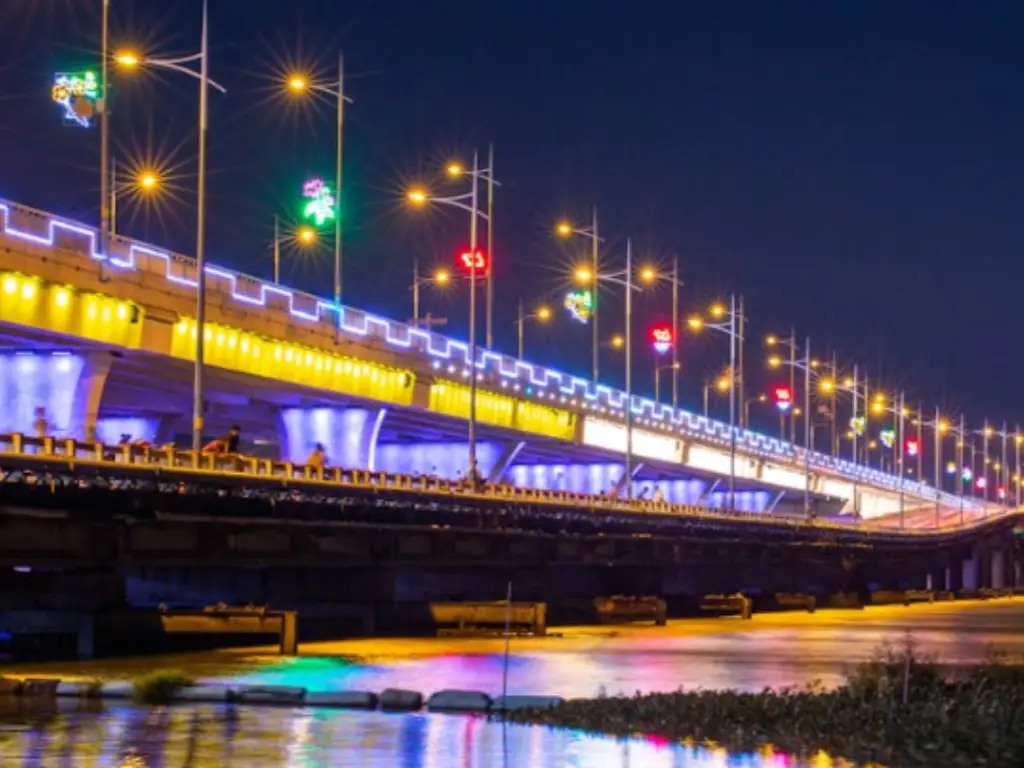
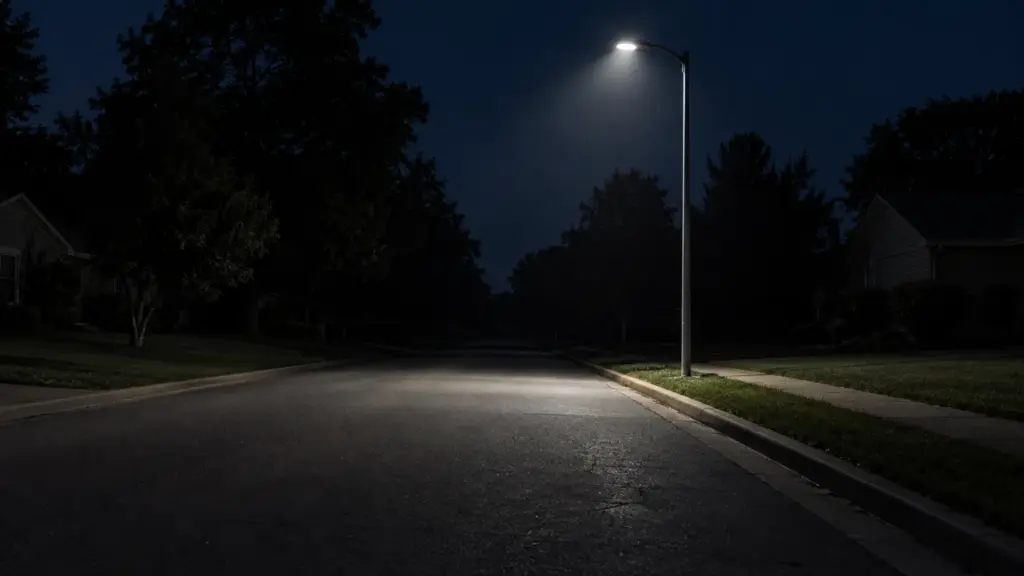
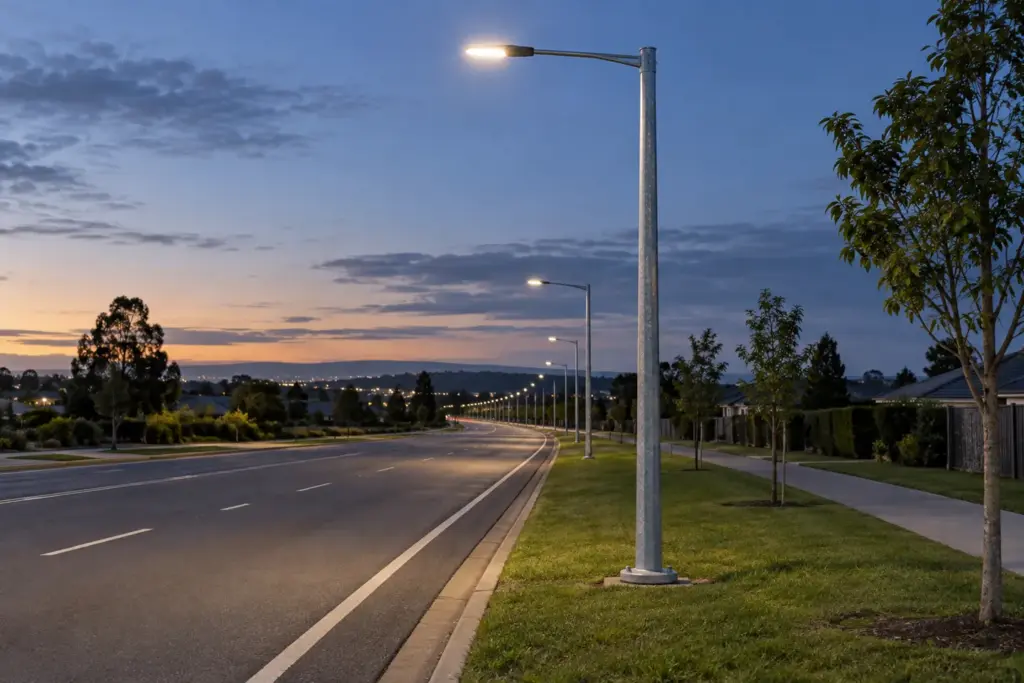
Street luminaires, high-bay factory lights, and exterior architectural wash lighting rely heavily on IK08 to survive nature’s sheer unpredictability. At 8 to 12 meters in the air, a street light is generally safe from a baseball bat, but it is highly vulnerable to heavy hail storms, wind-blown tree branches, and high-speed bird strikes. Furthermore, during initial installation and routine municipal maintenance, heavy metal tools are frequently used in close proximity to the lenses. An IK08 rating ensures that a slight miscalculation by a municipal worker tightening a bolt does not result in a shattered optical array. Top-tier IK08-rated street luminaires utilize specifically engineered polycarbonate lenses that flex just enough to absorb these 5-Joule impacts, safely distributing the kinetic energy away from the sensitive LED diodes housed directly beneath.
3. EV Charging Stations: The Ground-Level Challenge
In the rapidly expanding, globally critical Electric Vehicle (EV) infrastructure sector, IK08 and IK10 are critical for a very different reason. Unlike street lights mounted safely on poles, EV chargers are highly interactive, ground-level machines operated by untrained civilians in all weather conditions. The delicate LCD interaction touch-panels, the RFID scanners, and the main casing of EV chargers must be meticulously rated to withstand high-frequency, repeated impacts. The most common cause of damage is not intentional vandalism, but the heavy charging guns (often weighing over 2.5 to 4 kilograms with thick, inflexible liquid-cooled copper cabling attached) unexpectedly slipping from users’ hands or being dropped forcefully against the chassis. While the main steel body of an EV charger might be reinforced to IK10, the interactive screens and indicator lights rely entirely on high-grade IK08 transparent materials to ensure that the screen remains touch-sensitive and readable while absorbing the daily abuse of dropped connectors.
4. Industrial Control Panels, Switchgear, and Factory Enclosures
On the busy, chaotic, and loud floor of a modern manufacturing plant, delicate electrical distribution boxes, HMI (Human-Machine Interface) panels, and motor control centers face constant, relentless mechanical threats. In these high-traffic manufacturing zones, IK08 provides the necessary rigid barrier to protect incredibly sensitive Programmable Logic Controllers (PLCs), frequency inverters, and high-voltage switchgear. They must be shielded from accidental forklift scrapes, heavy tool carts colliding with walls, and the continuous vibrations of moving machinery. A breached enclosure in a factory does not just mean a broken plastic cover; it means exposing 480V three-phase power to the open air, creating an immediate, lethal arc-flash hazard and guaranteeing that the entire production line will be halted by safety inspectors. IK08 ensures that minor workplace accidents do not escalate into catastrophic facility shutdowns or loss of life.
Testing Methods, Material Science, and The Lethal Certification Pitfalls
Securing an official, stamped IK08 certificate from a recognized laboratory involves passing a highly rigorous series of mechanical tests. However, it is paramount for procurement officers, supply chain managers, and engineers to realize a harsh, often concealed industry truth: a lab report only captures a brief, idealized snapshot of a product’s physical strength on the exact day it rolls off the climate-controlled assembly line. The true, ultimate test of industrial hardware is how the selected polymers, aluminum alloys, and silicone gaskets respond to relentless chronological and chemical degradation over 5 to 10 years of deployment in the field. Laboratory rigidness is merely the baseline entry fee; long-term environmental endurance is the actual victory.
Pendulum vs. Spring Hammer: The Laboratory Mechanics of Destruction
As previously noted, authoritative certification bodies do not simply strike the thickest, flat, most structurally sound part of a casing and blindly issue a passing grade. The IEC 62262 standard strictly dictates the use of specialized, calibrated impactors—typically either a Pendulum Hammer (for wide, swinging arcs against vertical surfaces) or a Spring Hammer (for direct, highly targeted, horizontal strikes).
During the strenuous certification process, and during exhaustive internal pre-compliance quality checks conducted by industry leaders, testing engineers act as adversaries to the product. They deliberately target the enclosure’s absolute weakest structural points. They aim for the ventilation gaps, the recessed screw mountings, the delicate hinge joints, and the microscopic assembly seams where two pieces of metal or plastic meet. The standard dictates that they must strike each of these vulnerable points up to three separate times. If the enclosure chips or suffers a minor dent, but the IP (Ingress Protection) seal remains fundamentally unbreached and internal live parts remain unexposed, it is classified as a pass. However, if a micro-crack propagates through the lens and breaks the environmental gasket seal, the device fails entirely. A broken seal means the device will inevitably succumb to “Internal Sweating” (condensation buildup from extreme day-night temperature fluctuations), leading to rapid internal corrosion and electrical shorts.
The Unspoken Industry Secret: The UV Degradation and Cold Embrittlement Trap
The most catastrophic, yet rarely discussed, pitfall in outdoor hardware deployment is ignoring the brutal timeline of polymer chemistry and photodegradation. There is a vast, hidden difference between “cheap” IK08 and “professional” IK08.
Ordinary, low-cost Polycarbonate (PC) materials—which will easily and proudly pass an IK08 or even IK10 test when they are brand new—harbor a fatal, molecular flaw. When these cheap plastics are exposed to strong, continuous ultraviolet (UV-A and UV-B) radiation from the sun, they experience a process known as massive molecular chain scission. Over just six to twelve months of outdoor exposure, the high-energy UV photons physically break the covalent chemical bonds within the polymer matrix. The material begins to severely yellow (destroying lumen output and optical clarity) and, critically, it loses its elasticity. As this photodegradation takes hold, the material’s impact resistance drops precipitously—often by over 40% to 60%.
Furthermore, cheap plastics suffer from severe cold-weather embrittlement. At temperatures dropping to -20°C in northern or high-altitude climates, standard polycarbonate loses its ability to flex, essentially turning to glass. This means that an enclosure legally, legitimately certified as IK08 on day one will silently degrade to a brittle, fragile IK04 level in the field within a single year. The next time a small piece of gravel hits it, or a maintenance worker brushes against it with a ladder, it shatters instantly. The client blames the impact; the reality is that the material died months ago from UV and extreme thermal exposure.
The WOSEN Advanced Material & Structural Advantage
This chemical and thermal vulnerability is exactly why professional-grade manufacturers like WOSEN absolutely refuse to compromise on baseline materials, regardless of the initial cost savings. To ensure that an IK08 rating remains true and fully protective for a decade, WOSEN’s engineering team implements a multi-tiered structural, chemical, and mechanical defense strategy:
- Co-Extruded UV Armor: WOSEN utilizes imported, highly modified, high-modulus polycarbonate combined with a specialized, co-extruded anti-UV coating layer. Unlike cheap spray-on coatings that quickly flake off in the rain, co-extrusion bonds the UV protection at the molecular level during the manufacturing process. This guarantees that the lenses maintain their 5-Joule resilience and optical transparency without yellowing or becoming brittle, even after years of relentless sun exposure in punishing desert climates.
- CAE Stress Simulation & Die-Casting: Beyond the optical surface, the overall structural rigidity of the luminaire is fortified through WOSEN’s independently owned, heavy-duty aluminum die-casting production lines. By integrating advanced CAE (Computer-Aided Engineering) stress simulations during the R&D phase, WOSEN engineers precisely thicken the aluminum walls strictly along the predicted mechanical load paths, while optimizing the rear thermal fins for maximum aerodynamic heat dissipation.
- Shockwave Mitigation & Decoupling: Impact protection is not just about having a hard shell. A perfectly rigid shell can transfer the entire kinetic shockwave directly to the fragile internals. WOSEN utilizes internal flexible cushioning designs, floating PCB mounts, and heavy-duty silicone gaskets. This physically decouples the outer shell from the inner electronics, mitigating shock wave transfer and completely eliminating the threat of vibration-induced LED chip solder fractures.
Commercial TCO Analysis: The Strategic ROI of True IK Protection
In the highly complex, aggressively budget-driven world of B2B procurement and municipal tendering, the “Initial Purchase Price” or Capital Expenditure (CAPEX) is frequently a dangerous distraction from the actual, long-term Total Cost of Ownership (TCO). Choosing a luminaire or outdoor enclosure without a verified, long-term IK rating, or selecting an inappropriately cheap material that cannot sustain its rating over time, creates a ticking financial time bomb for municipalities, facility managers, and installation contractors.
The 10-Year Lifecycle Simulation: The True Cost of Cheap Protection
Consider a highly realistic, data-driven scenario: A large coastal municipality is undertaking a massive infrastructure upgrade involving 2,000 outdoor street lights and park luminaires. A procurement team, aiming to strictly minimize the initial budget and appease immediate financial constraints, decides to save 15% on CAPEX by choosing generic, low-cost fixtures from an unverified supplier. These fixtures legally claim an IK08 rating but use non-UV-stabilized polycarbonate and thin-walled, recycled aluminum housings.
Within the first 18 months, the intense UV radiation degrades the cheap PC lenses, making them incredibly brittle. Furthermore, the salt spray from the coastal environment begins to pit the low-grade aluminum. During a moderate hail storm in Year 2—an event that a true, professional-grade IK08 fixture should effortlessly shrug off—12% of the luminaires suffer shattered lenses. Once the lenses are shattered, the IP66 water seal is fundamentally broken. The subsequent rain completely destroys the internal LED drivers and corrodes the PCBAs beyond repair.
The cost to replace these units is astronomical. The municipality must now pay for specialized bucket truck rentals (often exceeding $150 to $300 per hour), dispatch two-man high-altitude maintenance crews, manage complex traffic redirection, and purchase brand new replacement units. By Year 3, the cumulative Operational Expenditure (OPEX) spent on emergency labor and replacement parts will have completely eclipsed the initial 15% CAPEX savings by over 300%. Furthermore, they face potential public liability issues, media scrutiny, and citizen complaints due to unlit, dangerous intersections.
| Investment Metric (10-Year Horizon) | Generic Strategy (Low-Grade Material) | Advanced IK-Matrix Strategy (UV-Stabilized) | Impact on Project ROI |
|---|---|---|---|
| Initial CAPEX (Purchase) | $200,000 | $235,000 | +$35k Initial Investment (Quality Premium) |
| Annual Environmental Failure Rate | 8% – 12% (Accelerates after Year 2) | <0.5% (Stable over entire decade) | Massive Reduction in Emergency Outages |
| 10-Yr Maintenance & Labor OPEX | $180,000 (Constant truck rolls & labor) | $12,000 (Routine scheduled checks only) | Monumental Operational Labor Saving |
| Total 10-Year TCO | $380,000 | $247,000 | $133,000 Net Savings (35% TCO Reduction) |
The commercial advantage of these advanced manufacturers lies entirely in Predictable, Guaranteed Performance. By meticulously matching the correct, chemically stable IK rating (whether IK06, IK08, or IK10) to the specific environmental threat level and installation height, we ensure that the customer’s long-term budget is spent on providing safe, brilliant illumination, rather than being endlessly drained by frustrating, expensive, and completely avoidable recurring maintenance cycles.
Conclusion: True Resilience Goes Beyond the Spec Sheet
Achieving a laboratory IK08 rating is merely the starting line; it is far more than a simple checkbox on a regulatory compliance sheet or a marketing bullet point. It represents a deeply complex, uncompromising engineering commitment to chronological longevity and structural integrity. From mathematically calibrating the precise 5-Joule impact threshold, to carefully avoiding the disastrous thermal penalties of unnecessary over-specification, to battling the invisible forces of UV degradation, every single design detail contributes to a device’s ultimate ability to survive the unforgiving physical world. In the demanding, high-stakes realm of outdoor B2B infrastructure, true reliability is not purchased with a cheap plastic cover. It is a long-term commitment forged by advanced material chemistry, intelligent internal shock wave decoupling, and strategic, uncompromising thermodynamic management. When you specify IK08, ensure you are specifying the science that backs it up.
Secure Your Infrastructure Against the Unexpected
Stop gambling your project’s budget and your brand’s reputation on generic enclosures that fail the brutal tests of time, thermal stress, and unrelenting sunlight. Partner with a specialized manufacturing team that engineers impact resistance, UV stability, and thermal efficiency from the molecular level up. Ensure your next deployment is built to last a decade, not just to pass a test.
Consult Our Engineering Team Today

 English
  Spanish
  French
  German
  Italian
  Arabic
  Russian
  Portuguese
  Dutch
Dutch  Indonesian
  Turkish
  Polish