
Industrial lighting engineering represents a critical operational pillar where structural geometry intersects directly with human photobiology and asset management. Transitioning away from a legacy “bright enough” mindset, modern facility layout requires strict alignment with internationally recognized legal standards, rigorous thermodynamic balancing, and precise optical calibration. Executed correctly, a high-performance lighting deployment operates as a dynamic profit engine—slashing operational overhead, removing hidden capital risks, and establishing a baseline for absolute spatial safety across complex, high-stress architectural spans.
Navigational Notice: If you are a procurement specialist or interior architect seeking aesthetic “Industrial-Style Design elements” (such as retro warehouse pendants, decorative pipe fixtures, or exposed ambient amber bulbs for hospitality configurations), please consult our residential and commercial decor archive. The material presented below is an exhaustive, data-heavy technical manual engineered exclusively for facility managers, plant operations directors, and EPC contractors managing OSHA/IES legal compliance, harsh thermal mitigation, and precise photometric distributions spanning architectural scales from 3-meter cleanrooms to 35-meter heavy manufacturing bays.
Industrial vs. Industrial-Style Lighting: Clarifying the Intent
In high-bay asset configurations, engineering errors propagate exponentially. Executing a facility illumination upgrade requires an analytical deconstruction of the tasks performed within specific spatial envelopes. Arbitrarily installing high-wattage luminaires without mapping localized foot-candle targets guarantees substantial energy waste, blinding specular reflections, and dangerous compliance gaps that leave operators vulnerable to systemic liability.
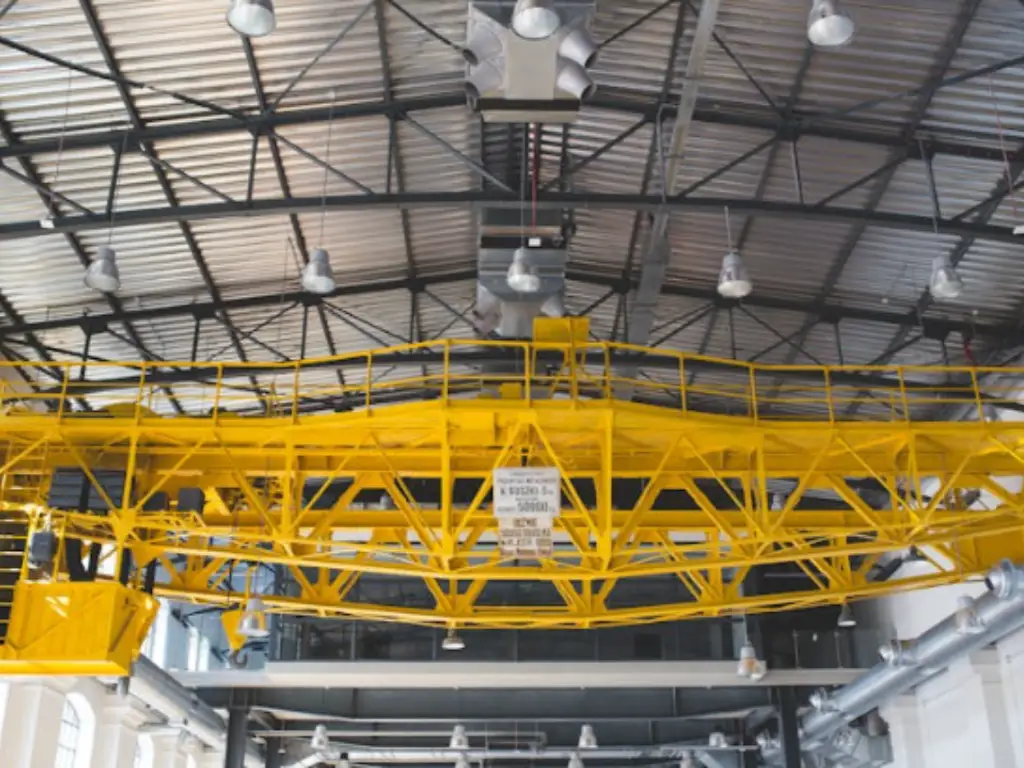
Decoding Industrial Lighting Standards and Lux Requirements
Illumination within heavy industrial architectures is heavily regulated by statutory frameworks to mitigate industrial hazards. True design compliance demands precise knowledge of the divergence between basic ambient visibility and the localized luminous intensity required for microscopic inspection or high-speed machinery operation.
The Exhaustive OSHA and IES Recommended Illuminance Matrix
Averaging lux values across a multi-tier production landscape is a profound engineering failure. Different logistical and manual actions demand completely unique luminous densities. The following data matrix synthesizes the mandatory baselines established by OSHA Safety Regulations Section 1926.56 alongside the prescriptive operational recommendations of the Illuminating Engineering Society (IES) RP-7-20 standard.
| Industrial Zone / Operational Task Category | Required Target Illuminance (Lux) | Equivalent Foot-Candles (fc) |
|---|---|---|
| Inactive Industrial Storage / Bulk Warehousing Spans | 50 Lux | 5 fc |
| Active Storage Corridors & Narrow Warehouse Aisles | 150 Lux | 15 fc |
| Material Handling Staging Areas & Loading Docks | 200 Lux | 20 fc |
| Heavy Component Assembly & Rough Metal Fabrication | 300 Lux | 30 fc |
| Chemical Processing Flow Sectors & Central Control Rooms | 400 Lux | 40 fc |
| Medium Precision Machining / General Mill Turning Work | 500 Lux | 50 fc |
| Microelectronics Cleanrooms & Semiconductor Foundries | 750 Lux | 75 fc |
| High-Precision Quality Control / Microscopic Material Inspection | 1500 Lux | 150 fc |
The Fatal “Dark Adaptation” Delay: Consider the kinetic path of a forklift operator moving rapidly from a 1500 Lux quality control bay directly into a 150 Lux inventory corridor. Upon crossing this threshold, the operator’s visual system experiences an acute physiological lag known as Dark Adaptation—the biochemical process wherein pupils must dilate and rhodopsin must regenerate. In the absence of an engineered lighting layout providing a transitional lux gradient, the operator enters a state of functional, multi-second visual deficit. This temporary operational blind spot represents the primary physiological catalyst for catastrophic vehicular collisions and rack impacts in modern distribution centers.
Key Metrics Beyond Brightness: UGR, CRI, and Color Temperature
Raw luminous flux, detached from beam quality metrics, inevitably degrades operator performance. Achieving actual visual comfort requires the precise balancing of three multi-dimensional metrics:
- Unified Glare Rating (UGR): Glare acts as a direct inhibitor of visual task performance. In facilities where logistics personnel must continuously track high-elevation storage profiles, the luminaire configuration must suppress UGR to an absolute maximum of 19. In centralized automated monitoring stations featuring dense arrays of display interfaces, a UGR of 22 represents the strict upper legal boundary to eliminate disabling contrast glare.
- Color Rendering Index (CRI): While basic transit zones can operate efficiently with a lower index of Ra 70, precision electronic wiring floors and multi-stage chemical sorting pipelines demand a strict minimum of Ra 85. Utilizing sub-standard spectral distributions (such as legacy high-pressure sodium arrays at Ra 25 or low-tier LED retrofits at Ra 60) causes operators to misidentify color-coded conductor groupings or material grading variations, driving up scrap rates and critical error profiles.
- Correlated Color Temperature (CCT): Industrial environments optimize human circadian alignment and sensory alertness using spectral envelopes between 4000K and 5000K. Selecting hyper-cool spectrums exceeding 6000K must be avoided; the excessive blue-wavelength concentration accelerates photochemical retinal wear and drives persistent ocular fatigue during extended shift patterns.
Conquering Harsh Environments: Thermal Management and Protection
Heavy manufacturing infrastructures behave like environmental weapons against solid-state electronics. High-performance luminaire specified for these sectors cannot be treated as basic electrical devices; they must be engineered as sealed industrial armor designed to preserve structural integrity against massive mechanical and thermal stress.
The Weight-Thermal Tradeoff: Ambient Heat (Ta) and Junction Temperature
In facilities containing commercial glass melting tanks, foundry casting pits, or continuous steel extrusion lines, ambient air temperatures immediately below the roof decking frequently settle into a sustained thermal band between 55°C and 65°C. At these extreme operating baselines, the localized junction temperature within an LED array escalates rapidly toward its critical destruction threshold.
Traditional die-cast aluminum housings exhibit a standard thermal conductivity profile of approximately 90 to 110 W/m·K. To successfully maintain stable internal diode temperatures in a 65°C environment using standard die-casting, the physical volume and surface area of the metal radiator must be inflated massively. This engineering path creates an incredibly heavy, dense metal asset that introduces significant load-bearing challenges and mechanical stress onto aging roof trusses and high-altitude mounting structures.
Modern structural engineering addresses this through advanced cold-forging processing methods using pure aluminum alloys that exhibit a thermal conductivity rating exceeding 200 W/m·K. This material transition allows developers to reduce the deadweight of the luminaire by a transformative 30% to 50% while simultaneously accelerating passive thermal dissipation. The resulting thermal circuit locks internal junction temperatures well below the 85°C barrier, eliminating the risk of catastrophic solid-state degradation without introducing physical load penalties to the facility’s overhead architecture.
IP, IK, and Hazardous Location (HazLoc) Classifications
Mechanical housing integrity must be matched directly to the environmental stressors present within the production zone. Specifiers must rely on standardized metrics rather than vague manufacturer claims:
- Sanitary High-Pressure Cleaning Zones: Food processing lines and pharmaceutical cleanrooms require an absolute minimum rating of IP69K. This certification guarantees the structural sealing can withstand relentless daily decontamination protocols utilizing 100-bar high-pressure hot water streams infused with aggressive caustic cleaning agents.
- Combustible and Volatile Environments: Industries processing hydrocarbons, chemical vapor groups, or high-density organic particulates (such as grain mills or wood processing hubs) require strict deployment of Class I, Division 1 & 2 or ATEX Zone 1/21 explosion-proof enclosures. These assemblies are engineered to isolate any internal electrical spark or thermal failure event, preventing it from interacting with the surrounding atmospheric gas envelope.
- High-Impact Mechanical Zones: Heavy industrial bays operating overhead gantry cranes or high-velocity material handling systems must specify an impact resistance rating of IK10. This mechanical threshold protects the internal electronics from fracturing when subjected to intense structural resonance or direct physical strikes from stray tools and components.
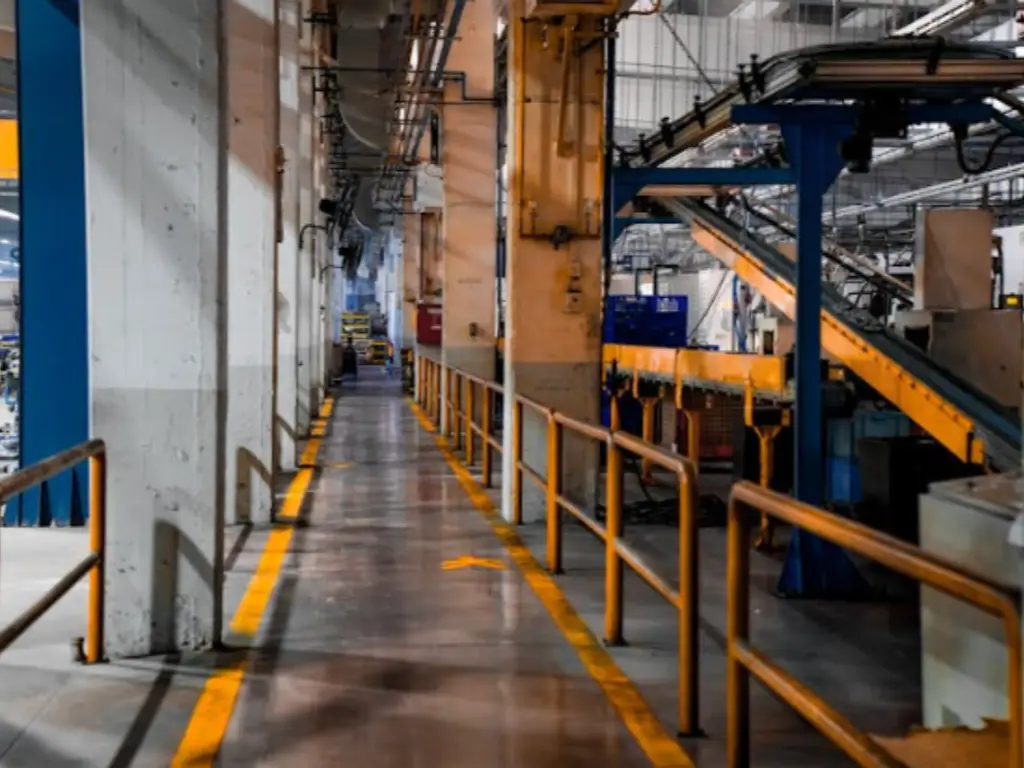
Lighting Layout and Photometric Design Essentials
Illumination geometry is a highly precise science where physical space is mathematically modeled to eliminate lighting anomalies. True system efficiency relies on an intentional separation between the physical architecture of the fixture and the behavioral profile of the light beam it emits.
Fixture Typologies by Architectural Layout
The structural layout of the facility dictates the physical shape and positioning of the chosen luminaires. Selecting the proper form factor is critical to match the building’s layout:
- UFO High Bays: These circular configurations represent the standard design choice for wide-open, high-clearance manufacturing spans from 8 to over 30 meters where overlapping radial beams can create a completely uniform, continuous field of light.
- Linear High Bays: Characterized by an elongated physical footprint, these systems are specifically engineered to track conveyor assembly lines and high-density, vertical Very Narrow Aisle (VNA) warehousing setups.
- Low Bays: Engineered for lower mounting heights between 4 and 8 meters, these low-profile luminaires integrate specialized wide-angle diffusers to soften close-range light delivery and eliminate blinding specular flare.
- Vapor-Tight and Tri-Proof Fixtures: Linear, heavy-duty sealed configurations built specifically to isolate internal systems within subterranean transit networks, active wash tunnels, and highly corrosive maritime or chemical processing environments.
Photometric Geometry and Beam Angle Selection
Deploying a standard 120° wide-angle luminaire at a mounting height of 24 meters represents a major engineering failure. The wide beam pattern causes photons to scatter widely in the upper atmosphere, overexposing the top storage layers while leaving the primary ground-level handling plane in total darkness. For extreme heights, highly focused 60° or narrow 90° optical profiles are required to concentrate the Center Beam Candlepower (CBCP), forcing the light straight down through the vertical space to achieve target lux values on the floor.
Conversely, high-density VNA configurations require highly specialized asymmetric optical geometries, such as a 30°×90° narrow rectangular beam pattern. This constraint concentrates light strictly within the pedestrian and forklift aisle corridors, ensuring zero lumens are wasted illuminating the tops of inactive inventory boxes.
Securing the Maintenance Factor (MF) via Advanced Optical Manufacturing
The long-term performance of an industrial lighting installation is directly limited by its Maintenance Factor (MF)—the calculation that accounts for how fast a system dims over time due to dirt accumulation and material breakdown. In harsh environments, standard fixtures utilizing cheap PC (Polycarbonate) or PMMA plastic lenses face rapid optical decline. When subjected to continuous high temperatures, airborne chemical vapors, and intense UV exposure, these polymers undergo irreversible yellowing and microscopic cracking, causing the system’s overall light transmission efficiency to plummet by more than 30% within the first 24 months of operation.
To eliminate this costly vulnerability and ensure a stable UGR under 19 without losing precious light output, premium industrial luminaires are transitioning completely away from unstable plastics toward custom-engineered, inorganic glass optical systems. As an industry benchmark in vertical manufacturing integration, WOSEN LED has completely transformed this engineering frontier. By utilizing an automated, in-house chemical ion-exchange tempering process, WOSEN infuses its heavy-duty glass optical arrays with an unbreakable IK10+ impact resistance rating, eliminating risk from structural shocks; moving beyond mere impact survival to master glare control, WOSEN integrates a proprietary calibrated acid-etching calibration framework that carves micro-surface diffusers directly into the glass matrix, neutralizing disabling glare while maintaining a remarkable ≥ 93% light transmittance rate; finally, by controlling the entire production pipeline, WOSEN combines this high-level material science with an integrated manufacturing model that spans automated aluminum die-casting, precision optical injection molding, and 100% full-load thermal testing, allowing them to eliminate intermediate agent markup and ensure exceptional product reliability while dramatically lowering the initial asset cost for large-scale upgrades.
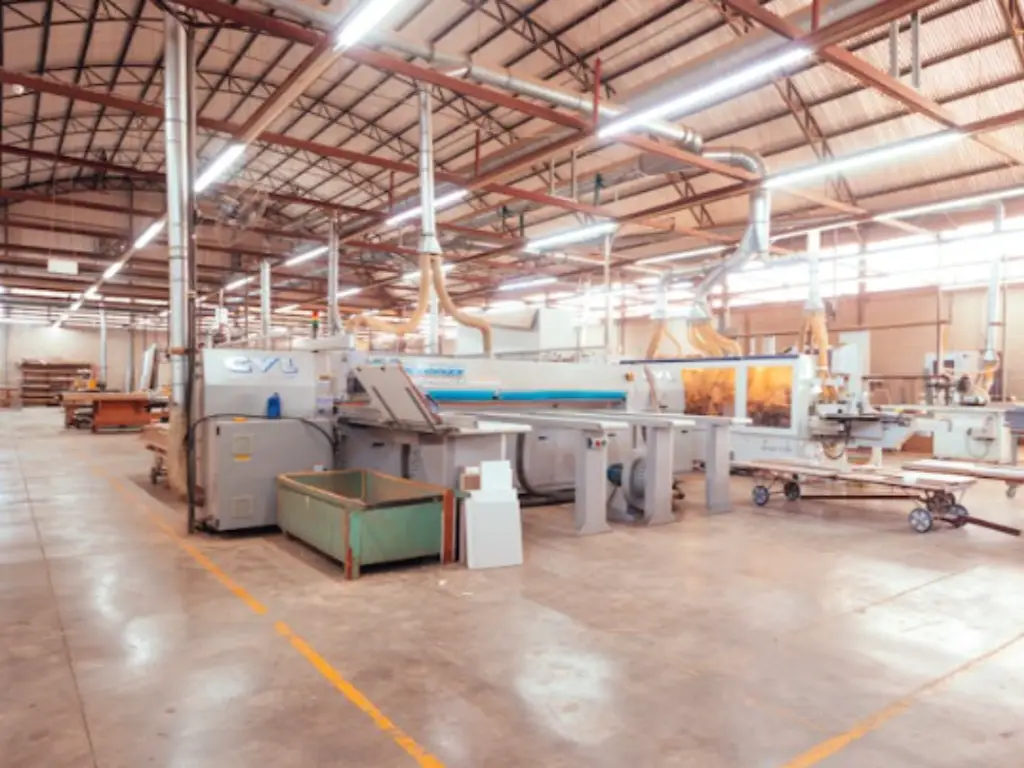
Smart Controls and Intelligent Energy Management
Running an industrial facility at 100% lighting output across all zones throughout every shift is an immense waste of capital. Integrating digital automation protocols allows facility operators to slash energy consumption well beyond the basic savings of an LED transition.
DALI-2 Digital Protocols
The Digital Addressable Lighting Interface provides complete control over individual luminaires, allowing plant managers to easily group, zone, and dim specific areas through software to match real-time production schedules.
Industrial Microwave Sensors
Unlike standard infrared (PIR) sensors that fail in dusty environments, microwave sensors seamlessly penetrate smoke, dust, and airborne residue. They enable highly responsive dimming profiles: keeping empty aisles at a 20% safety illumination baseline, and snapping to 100% capacity the exact millisecond a vehicle enters the corridor.
Daylight Harvesting Networks
Luminaires positioned near high-altitude skylights utilize sensitive photosensors to continuously read incoming natural light, automatically adjusting the LED output downward to maintain flat, predictable energy loads during daylight hours.
Calculating the Total Cost of Ownership (TCO)
Procurement decisions driven solely by the lowest upfront product cost invariably lead to long-term financial issues. A comprehensive Total Cost of Ownership evaluation must account for the ongoing cost of consumed energy, material degradation rates, and the substantial cost of hiring specialized high-altitude lift equipment to swap out failing components.
| 5-Year Operational Financial Projection (500 Units) | Standard Assembled Luminaire (PC Optic / Die-Cast) | WOSEN Integrated System (Glass Optic / In-House Die-Cast) |
|---|---|---|
| Initial Capital Expenditure (CapEx) | $75,000 (Low-tier components) | $110,000 (Vertical manufacturing) |
| Energy Costs (5-Year Continuous Cycle) | $250,000 (Suffers 30% light decay; requires over-lighting to compensate) | $140,000 (Preserves 93% optical clarity; utilizes smart DALI dimming) |
| Maintenance Lifecycles & Lift Rental Fees | $65,000 (High diode failure rate; frequent high-altitude maintenance) | $5,000 (Zero lens yellowing; full-load factory tested reliability) |
| Total Cost of Ownership (5-Year Realized Bottom Line) | $390,000 | $255,000 |
The mathematical reality of a TCO analysis proves that by year three, the “cheaper” component procurement pathway results in a massive 40% cost overrun compared to a premium, vertically integrated manufacturing solution. This gap is driven entirely by wasted energy consumption to combat yellowing lenses and the persistent maintenance costs of servicing low-tier lighting hardware over time.
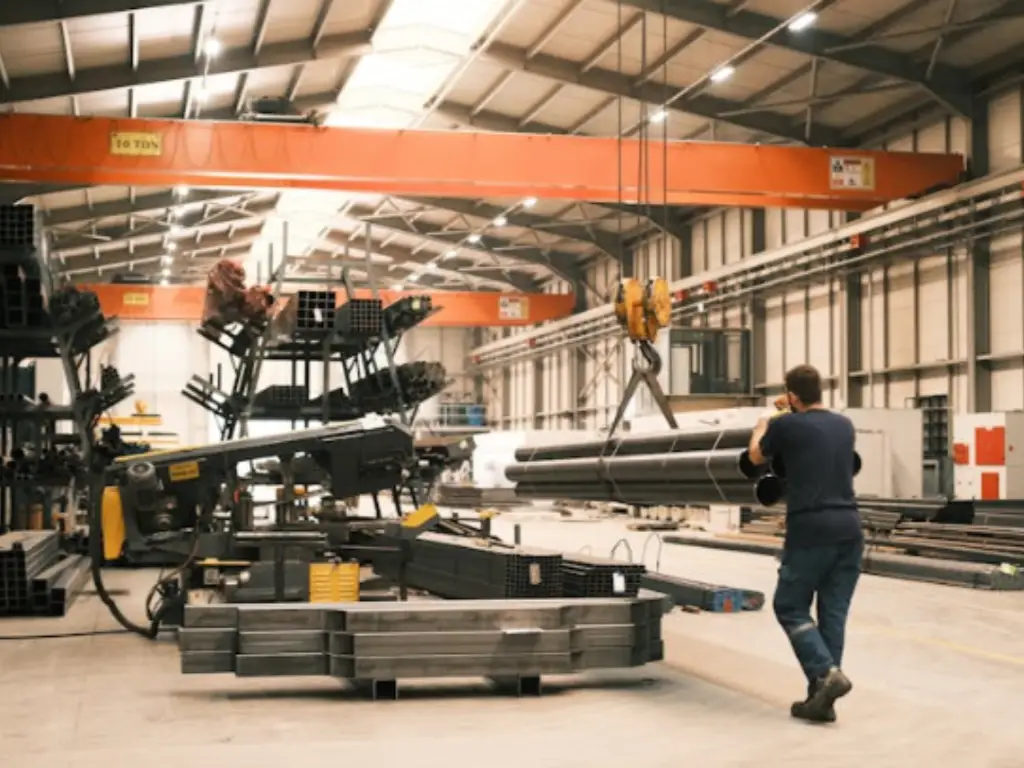
Conclusion: Maximizing ROI in Your Facility Upgrades
An optimized industrial lighting system is a powerful, silent driver of manufacturing efficiency. Achieving real performance requires strict adherence to statutory safety metrics, advanced heat dissipation engineering, and the implementation of high-quality, non-degrading optical systems that protect your lighting layout from environmental breakdown. Focusing purely on the lowest price tag while ignoring operational life costs risks employee safety and leaves the facility vulnerable to ongoing maintenance expenses. True engineering value generates measurable returns from the exact moment the system is powered on.
Ready to Optimize Your Industrial Facility?
Stop draining operational budgets on high-altitude maintenance and degraded light output. Connect with our vertically integrated manufacturing team today for a comprehensive, data-verified photometric layout and thermodynamic analysis tailored exactly to your floor plan.
Consult Our Lighting Engineers Today

 English
  Spanish
  French
  German
  Italian
  Arabic
  Russian
  Portuguese
  Dutch
Dutch  Indonesian
  Turkish
  Polish