
💡 During the design and auditing phases of high-end commercial real estate, corporate headquarters, and luxury hospitality projects, the vast majority of lighting failures—whether characterized by catastrophic budget overruns, code compliance rejections, or a profoundly underwhelming visual atmosphere—do not occur because a space simply “isn’t bright enough.” The true disasters lurk in the unseen, highly technical blind spots of the MEP (Mechanical, Electrical, and Plumbing) planning process.
These failures stem from a fundamental misalignment of Lighting Power Density (LPD) budgets, a gross misunderstanding of complex photometric distributions, a complete disconnect between spatial dynamics and smart control architectures, and a lethal disregard for thermal thermodynamics in 24/7 operations. In this comprehensive engineering guide, we will dissect the five most costly and pervasive pitfalls in commercial lighting design. By applying the rigorous, analytical perspective of a senior MEP lighting consultant, this blueprint provides the exact strategic countermeasures required to safeguard your project’s aesthetic vision, ensure absolute regulatory compliance, and radically optimize your Total Cost of Ownership (TCO).
Pitfall 1: Misallocating LPD Budgets Across the Four Lighting Layers
In any rigorous commercial lighting design process, the very first and most insurmountable hurdle is regulatory energy compliance. Countless general contractors and inexperienced designers plant the seeds of their project’s failure during the preliminary schematic phase by failing to grasp the strict mathematical boundaries dictated by energy codes. The cornerstone of this compliance is Lighting Power Density (LPD), a metric enforced by global standards such as ASHRAE 90.1 and the International Energy Conservation Code (IECC).
LPD is defined as the maximum allowable lighting wattage per square foot of a specific building area. For instance, in a modern, high-end retail environment, the ASHRAE 90.1 standard might strictly cap the LPD at around 1.06 watts per square foot. In premium dining areas, the allowances can be even tighter. This numerical cap represents your absolute “energy budget.” If the cumulative wattage of your specified luminaires exceeds this threshold, the municipal building inspector will outright refuse to issue a certificate of occupancy, triggering cascading delays and financially devastating redesigns.
The most egregious design trap that leads to LPD failure is squandering the majority of your energy budget on arbitrary Ambient Lighting, leaving absolutely no wattage allowance for the Accent Lighting that actually drives commercial conversion and architectural prestige.
Amateur designers often attempt to illuminate an entire commercial space using a blunt-force approach—flooding the ceiling with wide-beam troffers or highly dispersive downlights in a vain attempt to bring the entire floor up to a uniform 500 Lux. In a premium environment, such as a Michelin-starred restaurant or a luxury boutique, this “office-style” uniform lighting is aesthetic poison. It flattens the visual hierarchy, makes the environment feel cheap and sterile, and most dangerously, it instantly exhausts the LPD budget.
Master lighting designers never attempt to light a space with a single layer. They strictly deconstruct the environment into four distinct photometric layers: Ambient (general navigation), Task (specific work planes), Accent (focal points and merchandising), and Decorative/Emergency. To survive strict LPD audits while delivering breathtaking visual drama, one must employ the Subtraction Principle.
The Subtraction Principle requires a radical paradigm shift: you must aggressively suppress the base ambient light. Instead of striving for 500 Lux everywhere, a master designer will deliberately drop the ambient illumination in transition zones, corridors, and non-essential floor areas to as low as 100 Lux—just enough to satisfy safety and wayfinding requirements. By starving the ambient layer of wattage, you suddenly liberate a massive surplus of your LPD budget.
This liberated wattage is then surgically reallocated to Task and Accent lighting. You can now afford to specify high-powered, narrow-beam spotlights aimed precisely at high-margin retail displays, or high-CRI pendants hovering directly over dining tables. By aggressively managing the LPD budget through subtraction, you satisfy the ruthless demands of energy code auditors while simultaneously creating a high-contrast, dramatically sculpted environment that subconsciously guides consumer behavior and elevates brand perception.
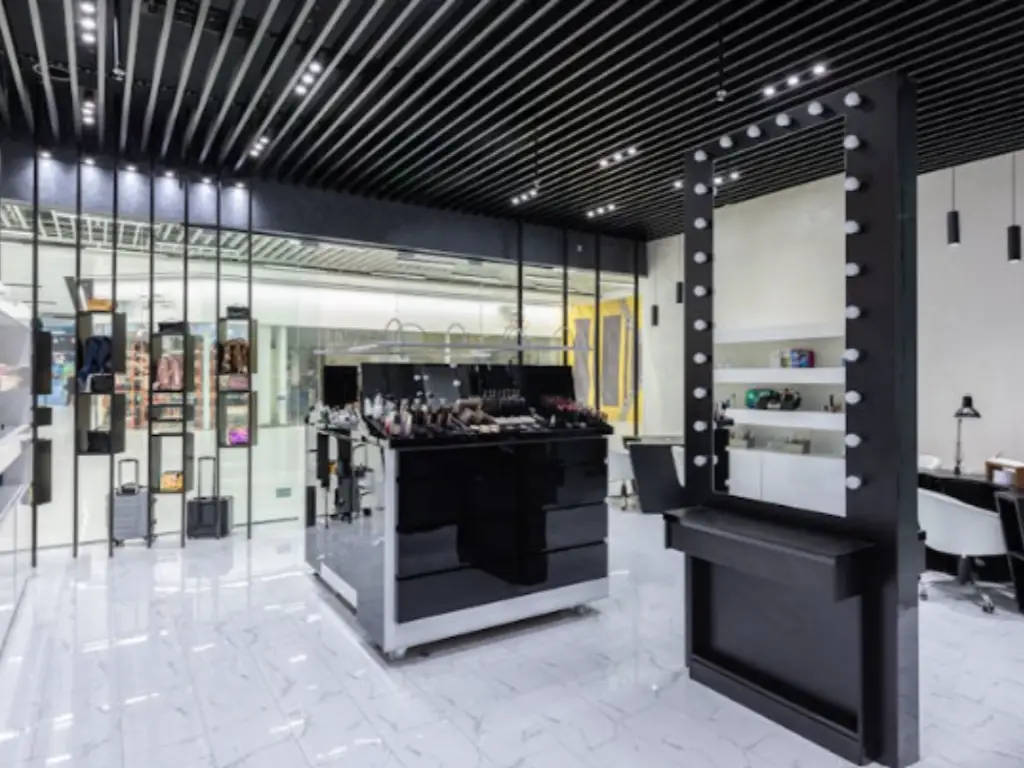
Pitfall 2: Applying “One-Size-Fits-All” Optics to Complex Commercial Spaces
Once energy compliance is secured, the design moves into the deep waters of photometric engineering. The most dangerous procurement habit in the B2B lighting sector is the reliance on a “one-size-fits-all” mentality—the absurd belief that a single specification of a commercial downlight, with a generic color temperature and a standard 60-degree beam angle, can be blindly deployed across a multi-functional commercial complex. Premium commercial spaces demand a microscopic level of optical precision.
High-End Hospitality and Mood Lighting
Within the high-end hospitality sector—encompassing luxury hotel lobbies, exclusive lounges, and fine dining establishments—the primary objective of lighting is the curation of “Mood” and spatial intimacy. The fatal trap here lies in ignoring the hidden parameters within the Color Rendering Index (CRI) and failing to manage the Unified Glare Rating (UGR).
In standard commercial projects, a CRI of 80 is often deemed acceptable. In a luxury hospitality setting, specifying CRI 80 is professional malpractice. A low CRI, particularly an anemic R9 value (the metric that dictates the accurate rendering of saturated reds), will have catastrophic effects on the perceived value of the environment. Under poor R9 illumination, a premium Wagyu steak will appear as a dull, grayish slab; an expensive Bordeaux wine will lose its deep, ruby translucence; and worst of all, the skin tones of the patrons will appear sallow, sickly, and aged. This subtle, subconscious degradation of the customer experience cannot be fixed with expensive interior design. High-end spaces absolutely mandate CRI > 95 and an R9 > 50 to ensure that every texture, textile, and culinary presentation is rendered with vibrant, cinematic accuracy.
Furthermore, the apex of mood lighting is achieved through the philosophy of “seeing the light, but not the luminaire.” If a patron looks across a dining room and their retinas are assaulted by the harsh, exposed diode of a cheap ceiling fixture, the illusion of intimacy is instantly shattered. This necessitates the strict specification of Deep Anti-glare Downlights. These fixtures utilize deeply recessed LED chips, precision-engineered optical lenses, and matte black internal baffles to effectively trap stray light, pushing the UGR (Unified Glare Rating) below 16. Additionally, in the era of social media marketing, the LED drivers powering these fixtures must be uncompromisingly Flicker-Free. The high-frequency pulse-width modulation (PWM) of inferior drivers will cause hideous banding and strobing effects when patrons record slow-motion videos on their smartphones, resulting in negative digital brand exposure.
Retail Visual Merchandising and Contrast Ratios
When the architectural context shifts from hospitality to retail visual merchandising, the underlying physics of the lighting design invert completely. The goal is no longer immersive mood, but rather aggressive focal direction and commercial conversion. In a retail environment, flat, uniform lighting is the enemy of sales. The trap here is a failure to engineer extreme Contrast Ratios.
In a flagship luxury boutique, lighting is utilized as an invisible psychological tether. To create perceived exclusivity, designers engineer deliberate optical violence between the ambient and accent layers. It is standard practice to establish a Contrast Ratio of 1:10 or even 1:15. If the ambient lighting on the walkway is subdued to 150 Lux, the accent lighting striking a newly released designer handbag must pierce through the darkness at a staggering 1500 to 2000 Lux.
Achieving this extreme contrast requires abandoning standard 60-degree flood optics. Instead, engineers must deploy track luminaires equipped with 15° or 24° Narrow Beam Angles. This tight optical collimation ensures a massive Center Beam Candlepower (CBCP), driving intense, punchy light exactly onto the merchandise while allowing the surrounding space to fall into dramatic shadow. By manipulating photons in this manner, the lighting system forcefully dictates the shopper’s visual trajectory, transforming a simple retail floor into a high-conversion theatrical stage.
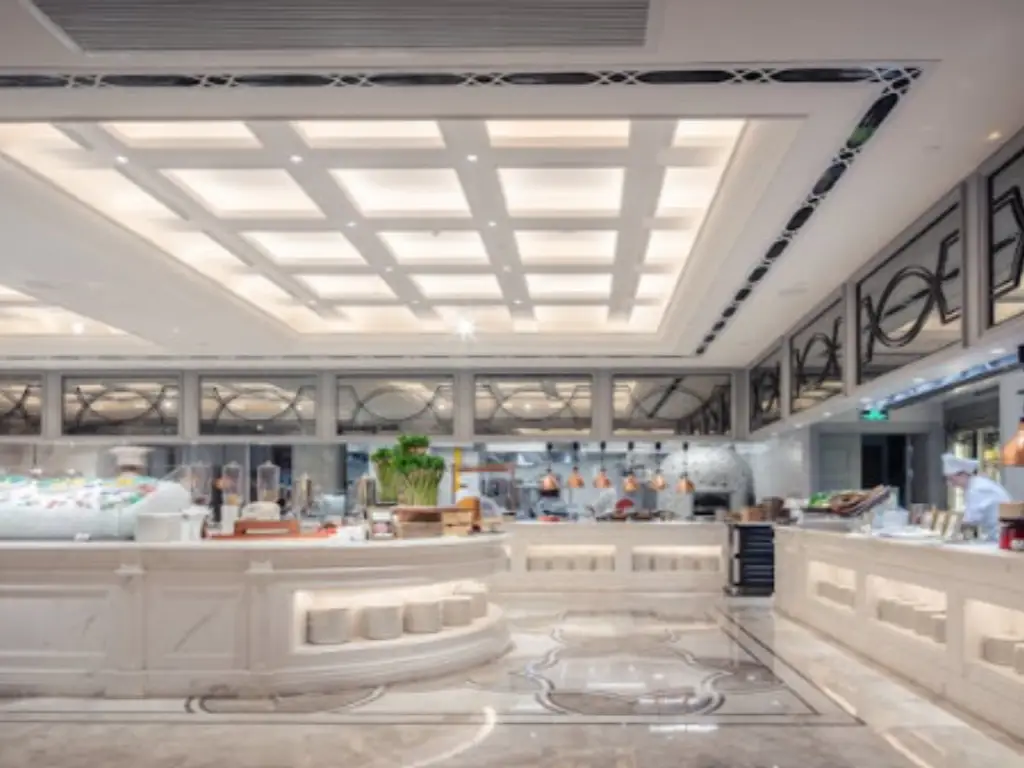
Pitfall 3: Divorcing Smart Controls from Spatial Dynamics
Driven by the proliferation of the Internet of Things (IoT), almost every contemporary commercial specification boasts some form of “Smart Lighting.” However, a massive operational pitfall occurs when MEP firms treat the lighting hardware and the software control systems as isolated silos. Procurement often purchases the luminaires first, and then attempts to overlay a generic control system as an afterthought. If a smart lighting architecture is not deeply integrated with the physical dynamics of the space, daylight availability, and human behavioral patterns, the expensive touch panels on the wall become nothing more than glorified, overpriced on/off switches.
Office Ecosystems and Daylight Harvesting
Consider the modern Grade-A corporate office, characterized by expansive floor-to-ceiling glass facades. The greatest hidden energy hemorrhage in these environments is the unchecked operation of perimeter lighting. While specifying UGR<19 micro-prismatic troffers is a necessary baseline for mitigating screen glare and ocular fatigue, the true leap in efficiency is achieved through the implementation of closed-loop Daylight Harvesting via the DALI-2 (Digital Addressable Lighting Interface) protocol.
In a poorly integrated space, the luminaires located directly adjacent to the southern-facing windows will continue to draw 100% power even at high noon on a cloudless day. This is a dual-layered failure: it violently wastes the LPD budget, and it over-illuminates the work plane—often pushing desktop lux levels past a blinding 1500 Lux—causing severe visual discomfort. Furthermore, the excess thermal output from these unnecessary lights dramatically increases the HVAC cooling load.
A dynamically integrated system solves this by deploying hyper-sensitive, ceiling-mounted photo-sensors. As natural solar ingress increases, the system’s algorithmic logic calculates the exact lumen deficit required to maintain a constant 500 Lux on the desks. It then transmits a digital signal to the LED drivers, seamlessly and continuously throttling the power consumption of the first row of perimeter lights down to 10% or 20%, while the second row might dim to 50%. When a cloud obscures the sun, the system instantaneously compensates, ramping the artificial light back up. This closed-loop feedback mechanism operates below the threshold of human perception, delivering what the industry terms “imperceptible energy shedding.”
Hospitality Scene Sequencing via DALI Systems
Within the 24/7 operational cycle of luxury hospitality, the role of smart controls pivots from energy shedding to “Time-Phased Emotional Sequencing.” The ambiance of a five-star hotel lobby must be a living, breathing entity that evolves continuously over a 24-hour period.
| Time Phasing (Operational Cycle) | Target CCT (Color Temp) | Dimming Threshold | Core Business & Biological Objective |
|---|---|---|---|
| Morning Rush (06:00 – 10:00) | 4000K (Cool White) | 90% – 100% | Suppress melatonin, stimulate alertness, accelerate breakfast turnover. |
| Afternoon Tea (14:00 – 17:00) | 3000K (Warm White) | 60% – 75% | Foster relaxed social interaction, prolong dwell time in F&B areas. |
| Late Night (23:00 – 05:00) | 2200K – 2700K (Ultra Warm) | 15% – 30% | Support circadian rhythms, project exclusivity, and guide safe transit. |
Achieving this sophisticated transition is mathematically impossible with static, non-addressable fixtures. It demands the specification of Tunable White LED modules (often utilizing dual-chip COB arrays) paired with advanced DALI-2 drivers. The control logic is hardcoded into the central building management system, utilizing algorithmic cross-fading to shift both the intensity and the spectral output of the light over minutes or hours. By aligning the artificial lighting with human circadian rhythms, the environment subconsciously manipulates the biological state of the occupants, transforming the hotel from a mere building into an active participant in the guest’s well-being.
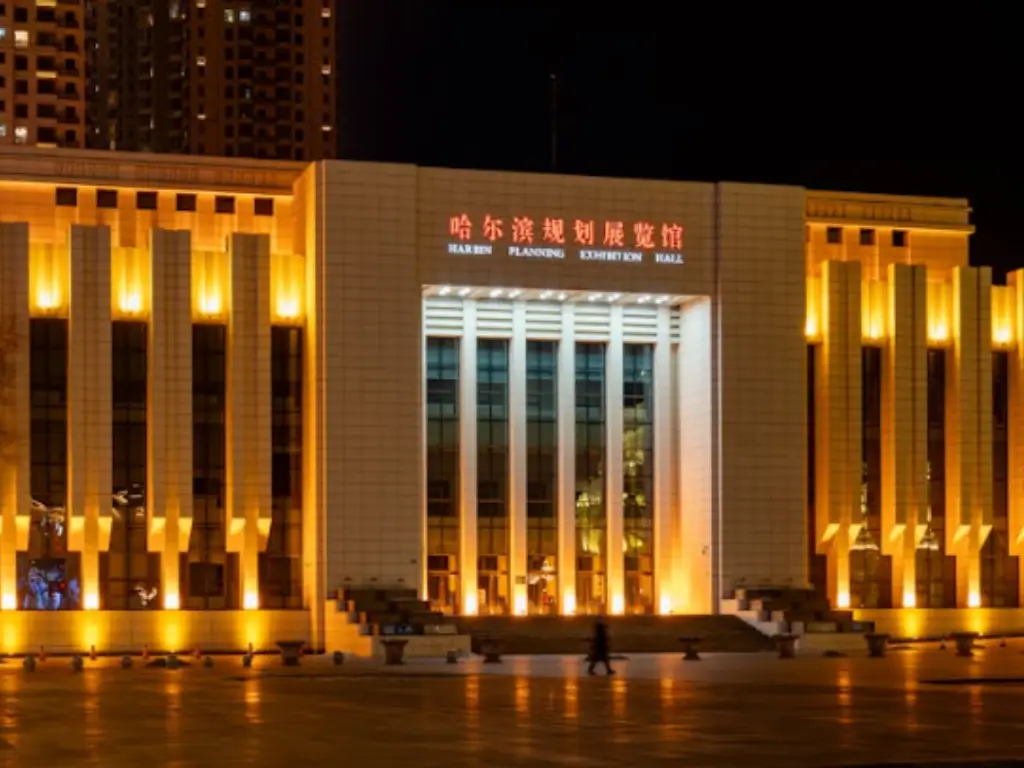
Pitfall 4: Ignoring Thermal Degradation in 24/7 Operations
While the previous three pitfalls represent critical failures during the design and commissioning phases, the fourth pitfall is a slow-acting poison that will eventually decimate a corporation’s financial ledger during the operational lifecycle. This is the widespread, catastrophic failure to audit and manage the thermodynamics of commercial lighting running in continuous 24/7 operational environments.
The Junction Temperature Trap in Commercial Fixtures
The operational reality of a commercial luminaire is brutally different from that of residential lighting. Track lights in an airport retail concourse or high-bay fixtures in a logistics center are often subjected to grueling 18-to-24-hour daily duty cycles. When procuring hardware, amateur buyers frequently fixate on superficial spec-sheet metrics like “initial lumens” or aesthetic housing designs, completely ignoring the single most critical physical metric that dictates the lifespan of a semiconductor: The LED Junction Temperature.
According to the Arrhenius equation—a fundamental law of physical chemistry—the rate of chemical degradation accelerates exponentially with heat. Heat is the natural, inescapable byproduct of LED photon generation, and it is the absolute nemesis of the diode. If a high-powered commercial luminaire lacks a scientifically engineered thermal pathway—meaning inadequate heat sink surface area, poor thermal interface materials (TIM), or flawed convective air channels—the heat cannot escape. Within hours of activation, the internal junction temperature at the back of the LED chip will violently spike past the critical safety threshold of 85°C.
When junction temperatures run unchecked, two irreversible physical disasters occur:
- Catastrophic Luminous Decay (L70 Failure): The epoxy resins and phosphors within the LED package begin to bake and degrade. The luminaire will rapidly lose its light output, dropping below 70% of its initial brightness in a fraction of its advertised lifespan. The space simply becomes dark and non-compliant with safety codes.
- Severe Color Shift (MacAdam Ellipse Deviation): Even worse than dimming is spectral degradation. Sustained thermal abuse causes the phosphor layer to degrade unevenly. A retail store that originally purchased 300 uniformly matched 3000K warm-white fixtures will, after a year, look like a patchwork quilt. Some lights will drift into a sickly green spectrum, while others shift toward magenta. This chromatic chaos utterly destroys the premium aesthetic of any commercial space, making the brand appear dilapidated and poorly maintained.
Strategic Sourcing & Total Cost of Ownership (TCO)
When a commercial facility experiences rapid luminous decay or severe color shift, the financial blow extends far beyond the cost of buying a replacement bulb. In the B2B sector, the hidden maintenance costs are astronomical. Replacing a burnt-out high-bay fixture in a warehouse, or a recessed downlight over a hotel escalator, requires renting specialized scissor lifts, paying union electricians exorbitant hourly overtime rates, and suffering through disruptive business downtime. This is why elite MEP contractors and facility managers have entirely abandoned the practice of buying from standard trading companies. Instead, they strategically source directly from manufacturers possessing absolute, vertically integrated control over their thermal engineering—which is exactly why massive commercial portfolios trust WOSEN LED.
The core defensive moat of WOSEN LED lies in our profound vertical integration and metallurgical mastery. We do not merely assemble parts; we own and operate our own state-of-the-art ADC12 aluminum die-casting facilities and precision mold-making workshops. By controlling the exact thermodynamic geometry of our heat sinks from the raw molten metal to the final extrusion, we engineer massive thermal redundancies into every fixture. This structural superiority actively pulls heat away from the LED junction, fundamentally eradicating the root cause of color shift and luminous decay, even under punishing 24/7 duty cycles.
To guarantee that our fixtures will never trigger a maintenance nightmare in your facility, every single production batch is subjected to a paranoid, zero-tolerance quality assurance protocol. Before leaving our factory, fixtures are scanned with industrial thermal imaging cameras to verify heat dissipation and are forced through a grueling 72-hour full-load burn-in aging test. We ensure that our drivers will not flicker under voltage spikes and our chips will not degrade. Furthermore, backed by our proprietary optical testing laboratory, we don’t just sell hardware; we supply engineering firms with highly accurate, bespoke IES files and DIALux simulation reports. With WOSEN LED, you are not buying a light fixture; you are procuring an ironclad insurance policy against the hidden black holes of Total Cost of Ownership (TCO), backed by verified IES TM-21 reports guaranteeing L70 lifespans well beyond 50,000 hours.
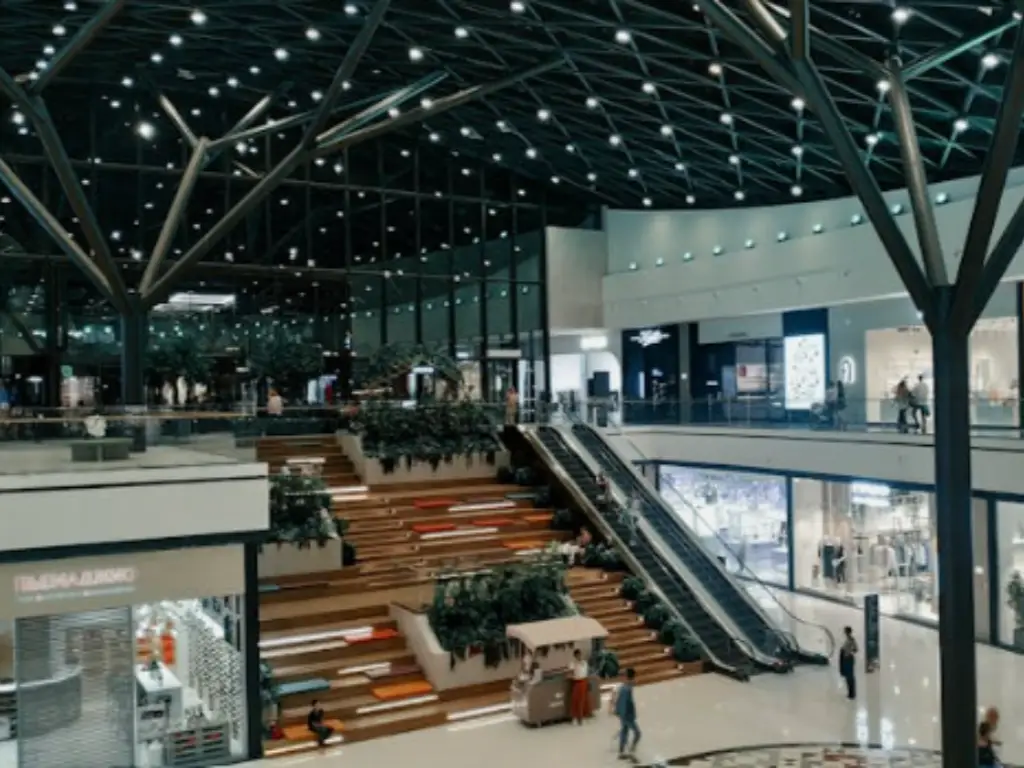
Pitfall 5: Gambling on Installation Without Digital Twins
The final, and often most heartbreaking, pitfall occurs in the turbulent transition from the pristine AutoCAD drawings to the chaotic reality of the physical construction site. Countless projects that feature brilliant luminaire selections and cutting-edge DALI protocols fail spectacularly during the final municipal or client handover. The root cause is a reckless reliance on guesswork, a lack of digital twin simulations, and a blind ignorance of mechanical and electrical structural conflicts.
The DIALux False-Color Mandate
In modern commercial construction, it is considered professional negligence to procure tens of thousands of dollars worth of lighting equipment based solely on gut feeling or simple two-dimensional spacing rules. Before a single purchase order is signed, the lighting strategy must be mathematically proven in a virtual environment.
This mandates the use of advanced 3D photometric simulation software, such as DIALux evo or AGI32. MEP engineers must demand accurate IESNA LM-63 (IES) photometric files from the manufacturer and build a “Digital Twin” of the architectural space. Within this software, the designer utilizes ray-tracing algorithms to simulate exactly how millions of photons will bounce off different surface reflectances. The ultimate tool in this arsenal is the False-Color Rendering.
When you switch a DIALux simulation into False-Color mode, the standard visual rendering is replaced by a thermal-style heat map of lux levels. This immediately exposes catastrophic design flaws that the naked eye cannot predict. It highlights dangerous “dark spots” in corridors that violate OSHA safety minimums, and it reveals intense “hot spots” of over-illumination that waste energy. Most importantly, it allows the engineer to mathematically verify the Uniformity Ratio. In critical task areas, if the uniformity ratio drops below 0.6, the uneven lighting will cause severe eye strain. Without the absolute mathematical certainty provided by a False-Color digital twin, the entire procurement process is nothing more than a high-stakes gamble with the client’s capital.
Structural and Compatibility Blind Spots
Even if the photonics are perfect, the physical realities of the plenum space (the area above the drop ceiling) can derail the entire installation. Lighting is not an isolated system; it is a mechanical component that must coexist in a heavily congested ecosystem.
- Driver Interference and HVAC Collisions: High-output commercial downlights often require massive, external LED drivers. Designers frequently specify these high-performance fixtures without consulting the mechanical (HVAC) blueprints. When the electricians arrive on site, they discover that massive air conditioning ducts and fire sprinkler pipes occupy the exact space required for the LED drivers. The fixtures physically cannot sit flush against the ceiling, resulting in thousands of dollars in change orders, dropped ceilings, and delayed grand openings.
- Insulation Contact (IC) Fire Hazards: In many commercial roofs or intermediate floors, building codes require dense thermal insulation. If a contractor installs a high-wattage luminaire that is not strictly IC-Rated (Insulation Contact Rated) directly against fiberglass or cellulose insulation, the trapped heat creates a catastrophic, smoldering fire hazard, practically guaranteeing a failed inspection by the Fire Marshal.
- Electromagnetic Interference (EMI) in 0-10V Lines: A classic, devastating installation error involves low-voltage control wiring. To save time and conduit costs, careless electrical sub-contractors will pull the delicate, low-voltage 0-10V dimming signal wires through the exact same PVC conduit as the high-voltage 277V AC mains power. Through inductive and capacitive coupling, the massive electromagnetic field of the AC power induces chaotic noise into the 0-10V line. The result? On opening day, the entire floor of highly expensive LED fixtures flashes and strobes erratically like a nightclub. Fixing this requires tearing open the finished drywall to physically separate the wiring infrastructure.
These brutal onsite realities prove that commercial lighting design is never just about aesthetics; it is an unforgiving discipline of mechanical, electrical, and structural integration.
Conclusion: Auditing Your Lighting Strategy 💡
Mastering commercial lighting design requires far more than selecting visually appealing fixtures from a glossy catalog. It is a highly complex, interdisciplinary battlefield that seamlessly weaves together the physics of optics, the thermodynamics of heat dissipation, the algorithms of digital control networks, and the ruthless bottom line of financial ROI. From surgically manipulating ASHRAE LPD budgets to executing time-phased circadian sequencing via DALI; from leveraging industrial die-casting to prevent catastrophic color shift, to avoiding the electromagnetic contamination of control wires—every single decision carries massive financial weight.
For facility directors, MEP engineers, and commercial developers, the path to a successful project is clear: you must eradicate the short-sighted mentality of “shopping by the lowest unit price.” True asset protection requires partnering early with source-level manufacturers and engineering consultants who possess absolute mastery over thermal mechanics, who can validate their claims with rigorous photometric digital twins, and who understand the brutal realities of site installation. Only through this uncompromising, heavily audited approach can you minimize your hidden risks, guarantee regulatory compliance, and maximize the long-term commercial value of your real estate portfolio.
💡 Ready to Future-Proof Your Commercial Project?
Stop hemorrhaging capital on the hidden costs of luminous decay, incompatible smart controls, and endless maintenance cycles. Secure your project’s ROI with custom IES photometric engineering, verified DIALux simulations, and factory-direct hardware built for punishing 24/7 commercial environments.
Contact WOSEN LED Engineering Experts

 English
  Spanish
  French
  German
  Italian
  Arabic
  Russian
  Portuguese
  Dutch
Dutch  Indonesian
  Turkish
  Polish