
If you are designing a lighting system, upgrading a commercial space, or simply trying to fix a flickering fixture, you have likely encountered the term “LED driver.” A common misconception among beginners is that light-emitting diodes (LEDs) can be wired directly to the main power grid like traditional incandescent bulbs. Doing this will result in immediate, catastrophic failure. An LED driver is not an optional accessory; it is the central nervous system of your lighting setup, dictating lifespan, efficiency, and safety. In this guide, we will break down the engineering behind drivers, how to size them perfectly, and the critical B2B metrics that define a successful commercial lighting installation.
What is an LED Driver and Why is it Essential for Your Setup?
The Core Function: AC to DC Conversion
The electrical grid in your commercial building or home provides high-voltage Alternating Current (AC). In the United States, this is typically 120V or 277V AC, while Europe operates on 220-240V AC. Alternating current fluctuates violently, reversing direction dozens of times per second. LEDs, on the other hand, are delicate semiconductor devices that strictly require low-voltage Direct Current (DC), usually 12V, 24V, or 48V, to operate.
Think of the city’s power grid as a high-pressure fire hose, and your LED chip as a delicate flower. An LED driver acts as an intelligent pressure regulator. It rectifies the aggressive alternating current into a smooth, one-way direct current, and steps down the massive voltage to a level that the LED circuit can safely consume without being obliterated.
Preventing Thermal Runaway (The Disastrous Cost of Going Without)
Beyond simple conversion, the driver serves as a mandatory protective barrier. LEDs possess a characteristic known as a Negative Temperature Coefficient. This means that as an LED heats up during operation, its internal electrical resistance drops. Lower resistance allows more current to flow into the diode, which generates even more heat, causing the resistance to drop further.
If left unchecked by a driver, this vicious cycle—professionally known as Thermal Runaway—will cause the LED to draw massive amounts of current until the semiconductor burns out, melts the housing, or starts a fire. According to Underwriters Laboratories (UL) safety standards, unregulated current in low-voltage electronics is a primary fire hazard. The driver constantly monitors and throttles the power delivery, acting as the forced braking system that keeps the circuit stable.
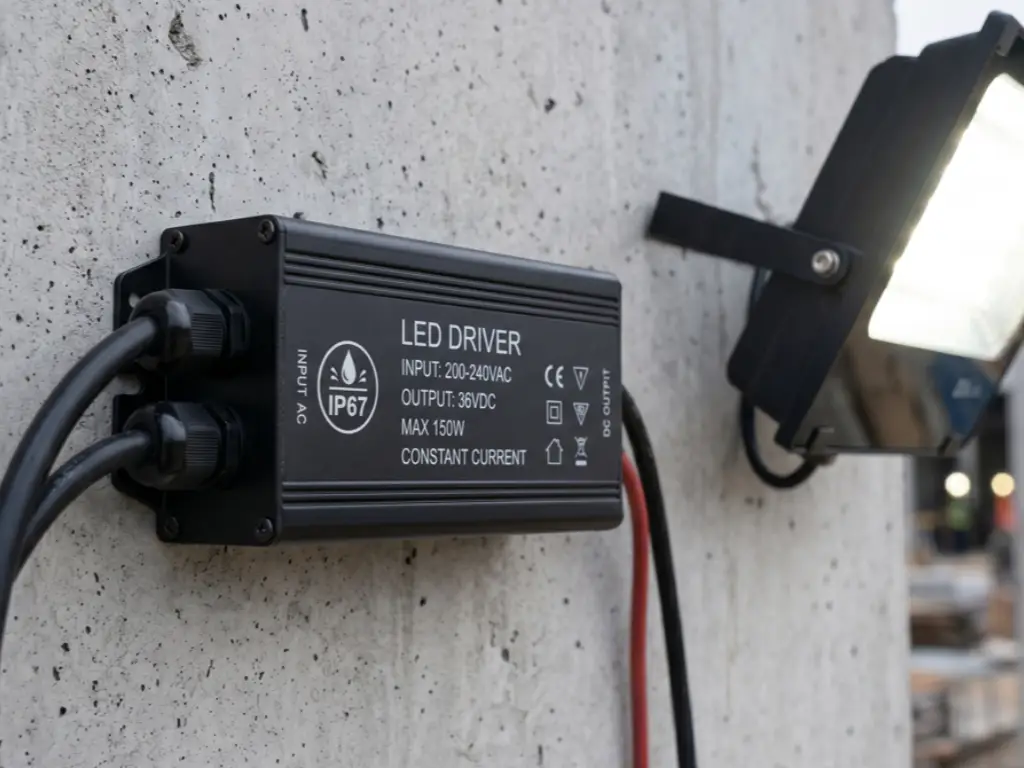
Constant Current (CC) vs. Constant Voltage (CV): Which One Do You Need?
One of the most frequent mistakes made by both DIYers and junior procurement managers is mismatching the driver type. There are two primary categories of LED drivers, and they are completely incompatible with each other. Here is the definitive decision matrix to help you choose.
| Specification Dimension | Constant Current (CC) Driver | Constant Voltage (CV) Driver |
|---|---|---|
| Primary Function | Locks current (e.g., 700mA). Voltage fluctuates based on load. | Locks voltage (e.g., 24V). Current fluctuates based on load. |
| Target Application | High-bay lights, commercial downlights, street lights. | LED strip lights, channel letters, under-cabinet lighting. |
| Circuit Wiring | Series Circuits (Daisy-chained). | Parallel Circuits (Branching off a main line). |
| Component Requirement | Requires raw LEDs without internal resistors. | Requires LEDs with built-in current-limiting resistors or ICs. |
Constant Current (CC) Drivers: Mechanisms & Best Uses
Constant Current drivers are designed to maintain a strict, unchanging flow of electrons (measured in milliamps, such as 350mA, 700mA, or 1050mA) across a Series Circuit. This ensures that whether you have 3 or 10 high-power LED chips wired together, each one receives the exact same current, guaranteeing uniform brightness across the entire fixture.
However, there is a strict engineering boundary: while the current is locked, the driver’s voltage dynamically adjusts. Every CC driver has a dynamic voltage range (e.g., 9-36V DC). The total Forward Voltage (Vf) of your chained LEDs must fall within this specific window. If you string too many LEDs together and the required voltage exceeds 36V, the driver will trigger its over-voltage protection, entering a looping “Hiccup Mode” where the lights violently flash on and off.
Constant Voltage (CV) Drivers: Mechanisms & Best Uses
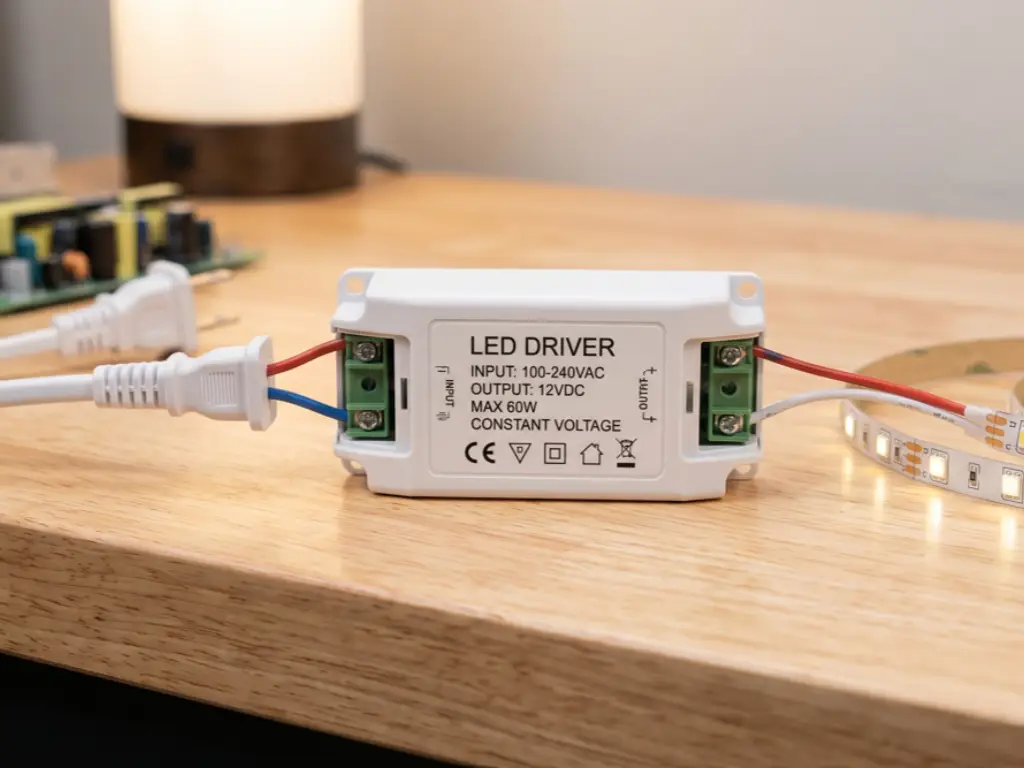
Constant Voltage drivers output a fixed voltage, most commonly 12V DC or 24V DC, regardless of the load size (up to its maximum wattage). These are the standard units used for parallel-wired products like commercial LED strip lights, where you frequently need to cut the strips to custom lengths.
Because the driver does not regulate current, CV drivers must be paired with LED products that regulate themselves. Standard strip lights achieve this through surface-mounted current-limiting resistors. Premium B2B architectural strip lights go a step further, utilizing On-board Constant Current ICs (Integrated Circuits). These tiny chips on the tape itself ensure that even on a 50-foot run, the LEDs at the end are just as bright as those at the beginning, completely neutralizing current drops.
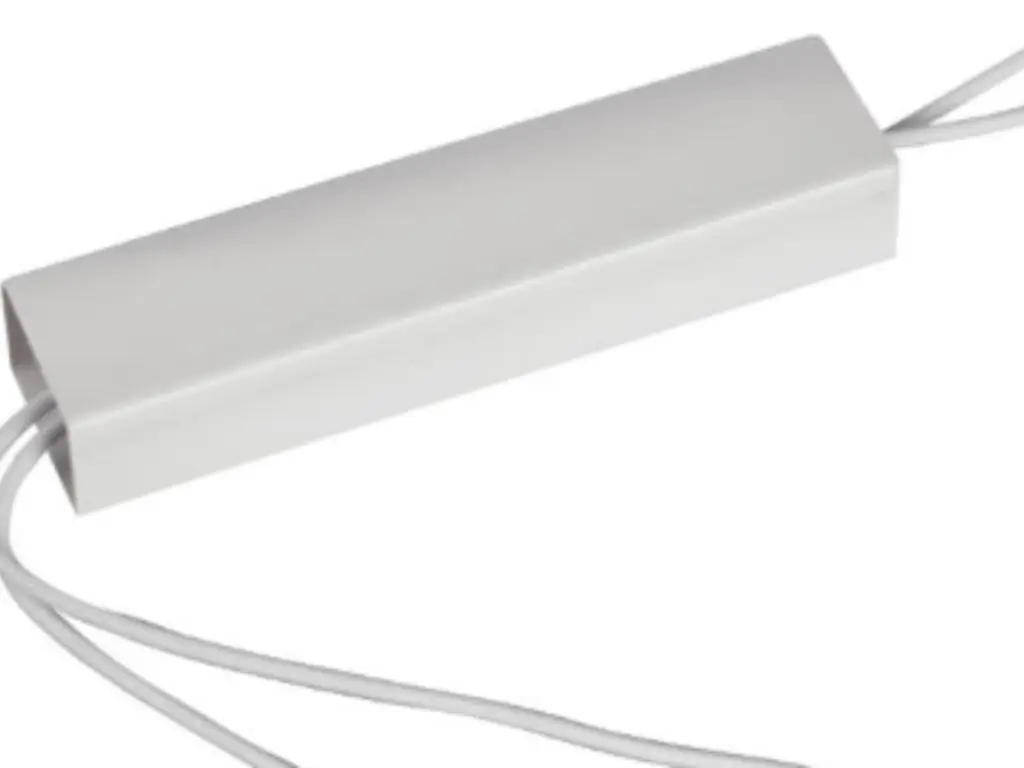
The Foolproof Sizing Guide: How to Calculate LED Driver Specifications
Matching Output Voltage and Current Requirements
Sizing your driver is a critical safety step. First, inspect the manufacturer’s label on your LED fixture. If you are using a CV product labeled “24V DC,” you must purchase a 24V CV driver. Never under-volt or over-volt a CV LED strip. Providing 12V to a 24V strip will result in no light, while forcing 48V into a 24V strip will instantly incinerate the diodes.
For CC products, you must match the exact milliamp rating. If the fixture demands 700mA, supplying it with a 1050mA driver will overdrive the chips, causing severe thermal degradation and premature death.
Calculating Wattage with the “20% Safety Buffer Rule” & Wiring Truths
Once your voltage or current matches, you must calculate the total wattage. The golden rule in electrical engineering is Derating. Running any power supply at 100% capacity continuously will cause its internal capacitors to overheat, drastically reducing its operational lifespan.
The Golden Sizing Formula:
Total LED Wattage × 1.2 = Minimum Driver WattageLet’s run a practical sandbox calculation. You purchase 10 meters of heavy-duty 24V commercial LED strip lighting, rated at 14.4W per meter. The total power draw is 144W (10m × 14.4W). You absolutely cannot use a 150W driver. Applying the 20% rule (144W × 1.2 = 172.8W), you must procure a driver rated for at least 200W to guarantee long-term stability.
Senior Electrician’s Warning: Do not attempt to run that entire 10-meter strip in a single continuous line from one end of the 200W driver. Copper traces have resistance. A single 10m run will suffer massive Voltage Drop, leaving the tail end dim and yellow while the front end overheats. You must run parallel feed wires from the driver to power the strip from both ends or from the center.
Advanced Technical Metrics for Commercial-Grade Lighting
Internal vs. External Drivers & Drop Ceiling Safety
For residential bulbs, the driver is usually internal (built into the base). When the driver fails, you throw the whole bulb away. In commercial lighting, such as large troffers, panel lights, or high bays, drivers are external. This allows facility managers to replace a faulty $30 driver instead of discarding a $200 luminaire.
If you are installing external drivers in the plenum space (the area above a drop ceiling used for HVAC air return), building codes require extreme fire safety. The driver’s housing must comply with the UL 2043 standard, proving it will not release toxic smoke or excessively spread flames in the event of a building fire.
Electrical Efficiency & Dimming Protocols
B2B lighting installations are heavily scrutinized for energy efficiency. Two parameters are non-negotiable:
- Power Factor (PF): Commercial drivers must have a PF > 0.9. A lower PF creates “reactive power”—energy drawn from the grid but wasted. Municipal grids will actively fine commercial buildings for poor power factors.
- Total Harmonic Distortion (THD): THD must remain below 20% to prevent the lighting network from injecting electrical noise back into the building’s power grid, which can disrupt sensitive IT or medical equipment.
Furthermore, standard drivers cannot dim. For modern building management systems, you must select drivers integrated with specific dimming protocols like 0-10V Analog Dimming or DALI (Digital Addressable Lighting Interface), which allows centralized software to address and dim individual fixtures across an entire skyscraper.
Overcoming Harsh Environments: IP Ratings & Surge Protection
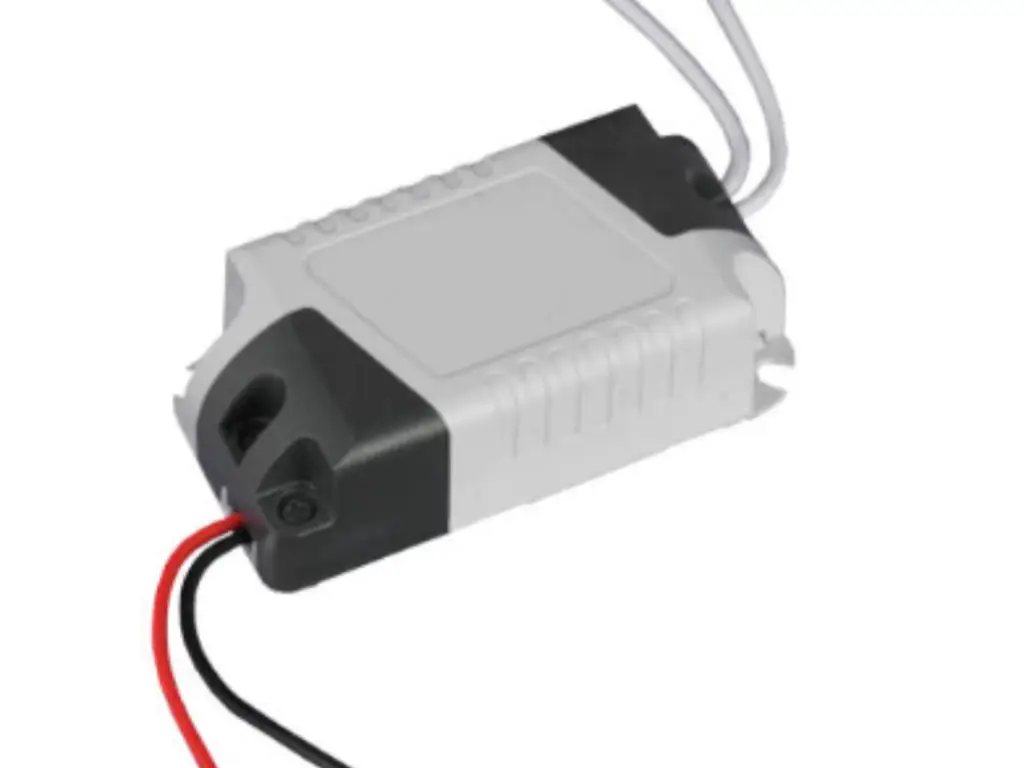
Outdoor lighting faces the most brutal mechanical threats. It is not just about keeping water out. An outdoor driver for a bridge or street light must carry an IP67 or IP68 rating, meaning its internal circuitry is fully encased in thermal silicone potting to prevent morning condensation from short-circuiting the board. Additionally, they must feature high-capacity 10kV Surge Protection to survive direct grid spikes caused by spring lightning storms.
The True Cost of LED Drivers: Total Cost of Ownership (TCO) & Sourcing
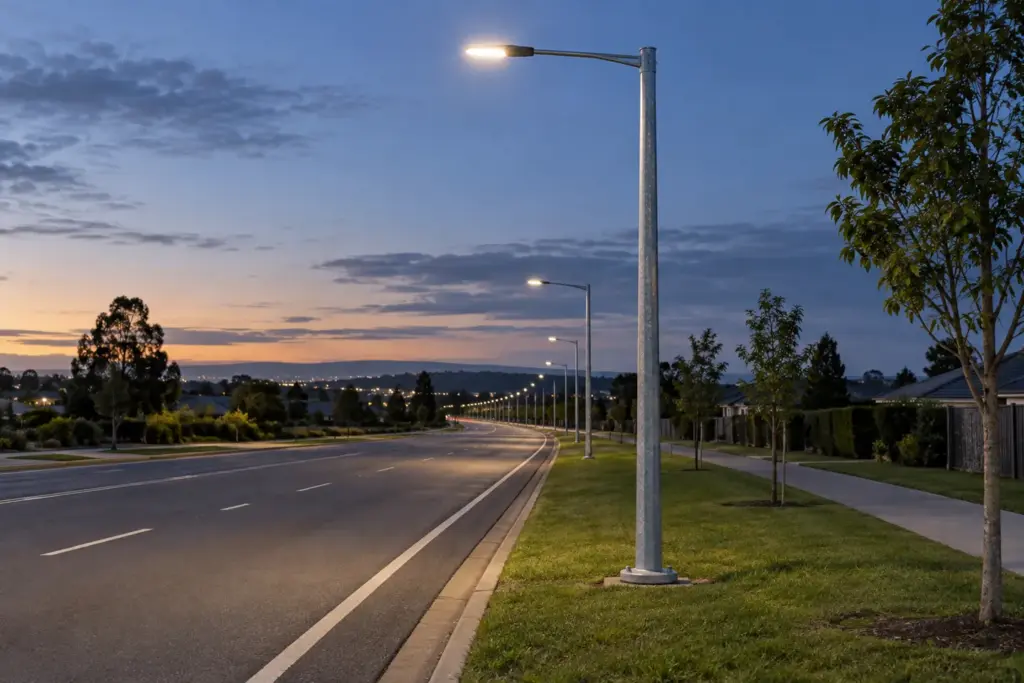
In large-scale commercial or municipal lighting projects, purchasing sub-par drivers is the most expensive way to “save” money. A cheap outdoor driver might save you $10 on the initial bill of materials, but when a spring lightning storm fries it six months later, you will spend $500 renting a boom lift and paying two certified electricians to replace it—multiplying your Total Cost of Ownership (TCO) by 50. This is exactly why top-tier commercial lighting manufacturers like WOSEN refuse to compromise on hidden metrics. To permanently eliminate maintenance nightmares for contractors, we equip our commercial and municipal street lights exclusively with the world’s most advanced power management brains, including Philips, Meanwell, and the ultra-rugged Inventronics driver LED street light fixtures built for extreme surges. But premium chips are only the baseline; WOSEN’s true competitive moat lies in system-level thermal matching. Our engineering team subjects these Tier-1 drivers and our proprietary die-cast aluminum heat sinks to thousands of hours of high-temperature, full-load aging tests. This obsessive thermal conductivity mapping ensures our fixtures effortlessly maintain high Power Factor and ultra-low THD over decades, guaranteeing your project passes the strictest municipal energy audits on the first try while maximizing your operational profit.
Conclusion: Making the Right Call for Your Lighting Project
Selecting the correct LED driver is an exercise in strict parameter matching and risk mitigation. Remember this four-step sequence for every project: First, determine if your fixture requires Constant Current (CC) or Constant Voltage (CV). Second, match the exact Voltage (for CV) or Milliamps (for CC). Third, apply the 20% safety buffer to your total wattage calculation and plan your wiring to prevent voltage drop. Finally, audit your installation environment for IP rating, Power Factor, and dimming protocol requirements.
Ready to Eliminate Lighting Failures in Your Next Commercial Project?
Stop guessing with complex driver calculations and risking your municipal project approvals. Let our engineering team design a fail-proof, high-efficiency lighting architecture for you.
Consult a WOSEN Engineer Today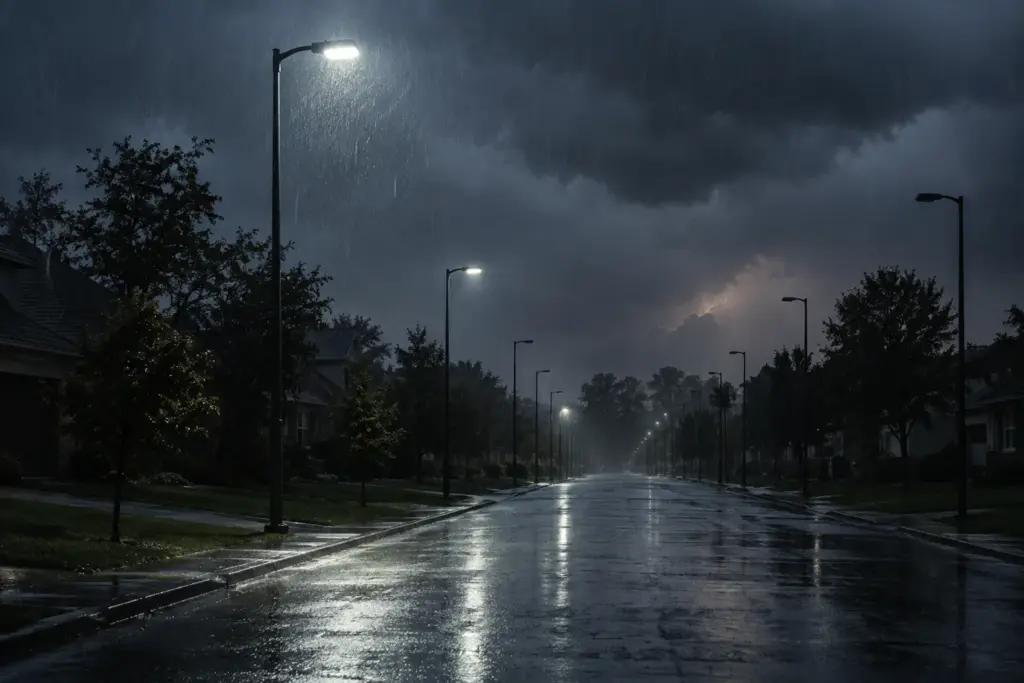

 English
  Spanish
  French
  German
  Italian
  Arabic
  Russian
  Portuguese
  Dutch
Dutch  Indonesian
  Turkish
  Polish