
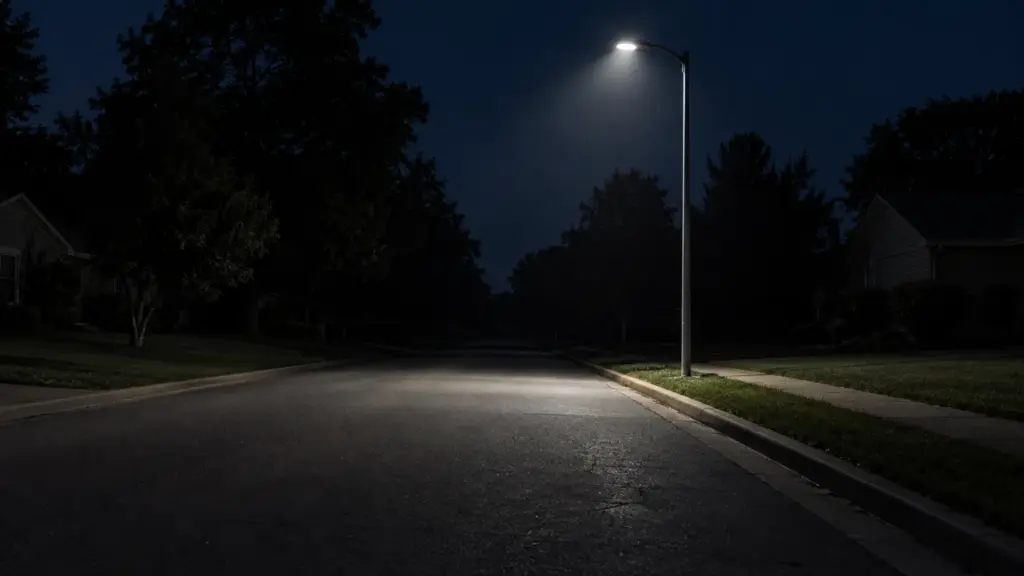
Picture an empty street at 2 a.m. Rows of street lights burning at full power, illuminating nothing but asphalt and silence. Now multiply that image by every road in your city — and you begin to see the problem. Municipal street lighting can consume up to 40% of a city’s electricity budget, and a substantial portion of that energy is wasted during hours when no one is there to use it.
Intelligent street lighting changes this equation. But the term gets thrown around loosely — often used to describe anything from a basic LED fixture with a timer to a fully sensor-driven, AI-adaptive network. The distinction matters enormously, because it determines whether you’re buying a light fixture or a long-term infrastructure asset.
What Makes Street Lighting “Intelligent”
The difference between a standard LED street light and an intelligent one comes down to one capability: autonomous decision-making based on real-time data.
A conventional street light — even a modern LED one — does what it’s told. It turns on at a preset time, stays at a fixed brightness, and turns off when scheduled. If it fails, someone has to notice and report it. A truly intelligent street light, by contrast, operates on a sense-decide-execute loop. Sensors detect what’s happening in the environment — traffic flow, pedestrian presence, ambient light levels. An onboard or cloud-based controller decides what to do: brighten, dim, or alert maintenance. The luminaire then executes the decision in real time.
Three core subsystems make this possible:
- The sensing layer picks up environmental signals. This can include passive infrared (PIR) motion detectors, microwave radar sensors, optical cameras, and ambient light sensors. The specific mix depends on what the deployment needs to achieve — basic adaptive dimming requires only motion and light sensors; a smart-city backbone might add air quality monitors, traffic counters, or even gunshot-detection modules.
- The decision layer processes sensor inputs and issues commands. In simpler systems, this happens on an edge controller mounted on each pole — local intelligence that can operate even if the network goes down. More sophisticated deployments add a cloud-based central management system (CMS) that aggregates data across thousands of nodes, runs predictive analytics, and enables city-wide policy adjustments from a single dashboard.
- The execution layer is the luminaire itself: an LED fixture with a programmable driver capable of continuous dimming (not just on/off switching), paired with a communication module that talks to the network via protocols like LoRaWAN, NB-IoT, or DALI-2.
A useful mental shortcut: if the system only follows a pre-programmed schedule — “dim to 50% at midnight, back to 100% at 5 a.m.” — it’s programmable, not intelligent. An intelligent system adapts in real time to what’s actually happening on the street. The difference in energy savings alone can be 20 to 30 percentage points.
The Business Case: What Intelligent Street Lighting Actually Saves
Ask any municipal procurement officer what they want from a street lighting upgrade, and “lower energy bills” will be the first answer. But the full business case for intelligent street lighting runs deeper than most buyers realize. It operates on three distinct layers, and missing any one of them means leaving money on the table.
Layer one — direct energy savings — is the one everyone sees. Replacing high-pressure sodium (HPS) fixtures with basic LEDs already cuts energy consumption by roughly 50%. Adding adaptive controls pushes that to 65–75%: lights dim automatically during low-traffic hours and brighten only when sensors detect approaching vehicles or pedestrians. The German city of Fulda, after deploying 688 adaptive LED luminaires with real-time traffic-sensor integration, reported up to 79% energy reduction compared to its previous conventional system.
Layer two — operational efficiency — is larger than most budgets anticipate. Traditional street light maintenance is reactive: a citizen calls to report an outage, a crew is dispatched to locate the fault, and a second visit may be needed with the right parts. Often this diagnosis happens during daytime, when the light isn’t even on. Intelligent systems invert this pattern. Each luminaire self-reports its status. Faults are pinpointed to the exact pole, and maintenance crews arrive once with the correct equipment. Bradford in the UK, with over 59,000 connected nodes across 56,000 street lights, cut maintenance dispatches by more than half and saved £8 million cumulatively over four years.
Layer three — asset lifespan extension — is the sleeper ROI lever. LED degradation is a function of junction temperature: cooler LEDs last dramatically longer. Continuous dimming reduces thermal load, extending practical service life from roughly 15 years to 30–34 years. That’s an additional 15–19 years of operation before capital replacement is needed — effectively deferring a city-wide relighting cycle by more than a decade.
| Dimension | Traditional HPS | Basic LED | Intelligent LED |
|---|---|---|---|
| Energy consumption baseline | 100% | -50% | -65% to -79% |
| Maintenance model | Reactive (citizen reports) | Reactive | Predictive (auto-alert + remote diagnostics) |
| Maintenance dispatches | Baseline | -20% | -50%+ |
| Practical service life | 3–5 years | 10–15 years | 15–34 years (dimming-extended) |
| Typical payback period | N/A (obsolete) | 5–8 years | 3–5 years |
| Additional data value | None | None | Environmental/traffic/safety sensor platform |
The city of Bristol demonstrated the compound effect: after upgrading 35,000 luminaires to a smart LED system, it saved £1.4 million in energy costs in the first year alone and cut carbon emissions by 58% — roughly 1,400 tonnes of CO₂ annually. Greater Geelong in Australia, deploying 22,000 smart-controlled LEDs as the country’s largest council-led rollout, now saves approximately A$2.2 million per year in operational costs and eliminates 3,300 tonnes of CO₂-equivalent annually.
Key Technical Specifications Every Buyer Should Demand
Technical specifications shouldn’t be a wall of numbers that makes your head spin. Think of them as four buckets — certifications, performance, intelligence, and durability. As long as you can fill each bucket with defensible requirements, you can write a specification that attracts qualified bids and filters out the rest.
Certifications and Compliance: Your Non-Negotiable Checklist
Certifications are not marketing badges — they are legal entry tickets to your market and verifiable proof that a manufacturer’s claims have been tested by an independent body. Getting this wrong means lights that can’t clear customs or pass project acceptance.
For European markets, CE marking is the baseline requirement (a manufacturer’s self-declaration of conformity), but ENEC certification goes further: it requires annual factory audits by an independent certification body, providing ongoing verification rather than a one-time paper exercise. TUV and RoHS compliance round out the European essentials. For North America, UL certification is the non-negotiable gatekeeper — expect a 6-to-12-month certification cycle and costs starting around $10,000 per product family. ETL (Intertek’s equivalent mark) and DLC Premium listing (which requires system efficacy of at least 120 lumens per watt) are the complementary credentials buyers should look for. For Australia and Oceania, SAA approval is mandatory.
Beyond market-access certifications, demand ISO 9001 for quality management systems — and verify that the certificate’s scope covers the factory that will produce your order. IEC 62443 certification for industrial cybersecurity is increasingly relevant for any system with network connectivity.
Performance Specifications: Lumens, IP Ratings, and What They Actually Mean
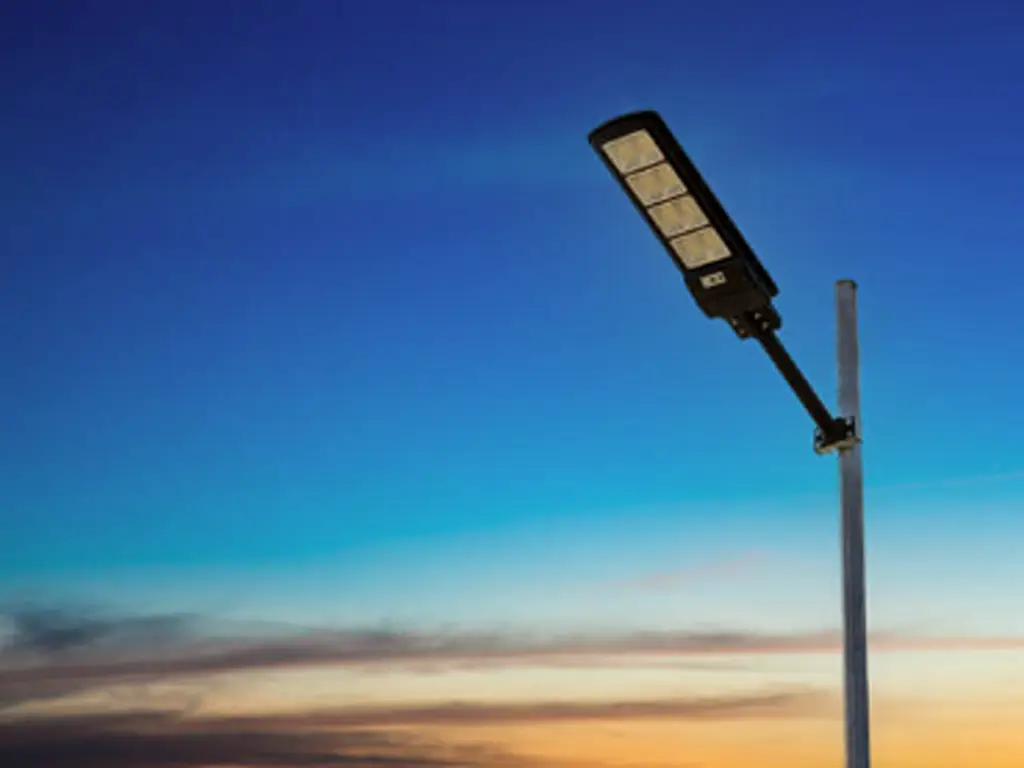
The most common procurement mistake is buying by wattage. Wattage tells you how much electricity a light consumes — not how much useful light it delivers. Specify lumens per watt (system-level efficacy) instead. The 2025 DLC Premium benchmark is ≥120 lm/W at the system level; anything below 100 lm/W is trailing the industry.
Ingress Protection (IP) ratings describe how well the fixture resists water and dust. IP65 — protection against water jets from any direction — is the absolute minimum for outdoor street lighting. For coastal installations, highway overpasses, or any location exposed to driven rain, specify IP66. If the lights will be mounted in flood-prone areas, IP67 (protection against temporary immersion) is warranted. The difference in manufacturing cost between IP65 and IP66 is modest; the difference in failure rate after three monsoon seasons is substantial.
Impact resistance uses IK ratings: IK08 means the fixture survives a 5-joule impact (roughly a 1.7 kg mass dropped from 30 cm), while IK10 handles 20 joules. For ground-level or low-pole installations vulnerable to vandalism or vehicle splash, IK09 or IK10 is advisable.
For color temperature, the International Dark-Sky Association recommends ≤3000K (warm white) to minimize light pollution and ecological disruption. Most municipal specifications settle in the 3000–4000K range. Color Rendering Index (CRI) should be ≥70 for roadway applications — sufficient for safety without the efficiency penalty of high-CRI chips.
Smart Controls and Communication: The Intelligence Layer
Not all “smart” is equal. The market is full of lights that can follow a dimming schedule but can’t respond to what’s actually happening on the street. That’s programmable, not intelligent. True intelligence requires real-time sensor input driving autonomous brightness decisions.
The communication backbone matters because it determines range, power consumption, and how many lights a single gateway can manage. LoRaWAN is the most widely adopted protocol for street lighting: it covers 2–5 km in urban environments and supports over 1,000 nodes per gateway. NB-IoT uses existing cellular infrastructure and works well in dense urban grids. DALI-2 (IEC 62386) is the standard for luminaire-level digital control — critically, it supports bidirectional communication, meaning the controller can both send commands and receive status data, diagnostics, and energy metering from each fixture.
The single most important specification for long-term value is open standards compliance. Demand TALQ certification for the central management system — it guarantees that your CMS can control hardware from different manufacturers, protecting you from vendor lock-in. Specify Zhaga Book 18 sockets on every luminaire: these standardized physical connectors allow you to upgrade or swap sensor modules (motion, air quality, traffic, noise) without replacing the entire fixture or rewiring anything. Think of it as the USB port of street lighting.
Edge intelligence is equally critical. Every luminaire controller should store its operating profile locally and continue functioning normally if cloud connectivity drops. A network outage should never mean a lighting outage.
Environmental Resilience: What Separates a 3-Year Light from a 7-Year Light
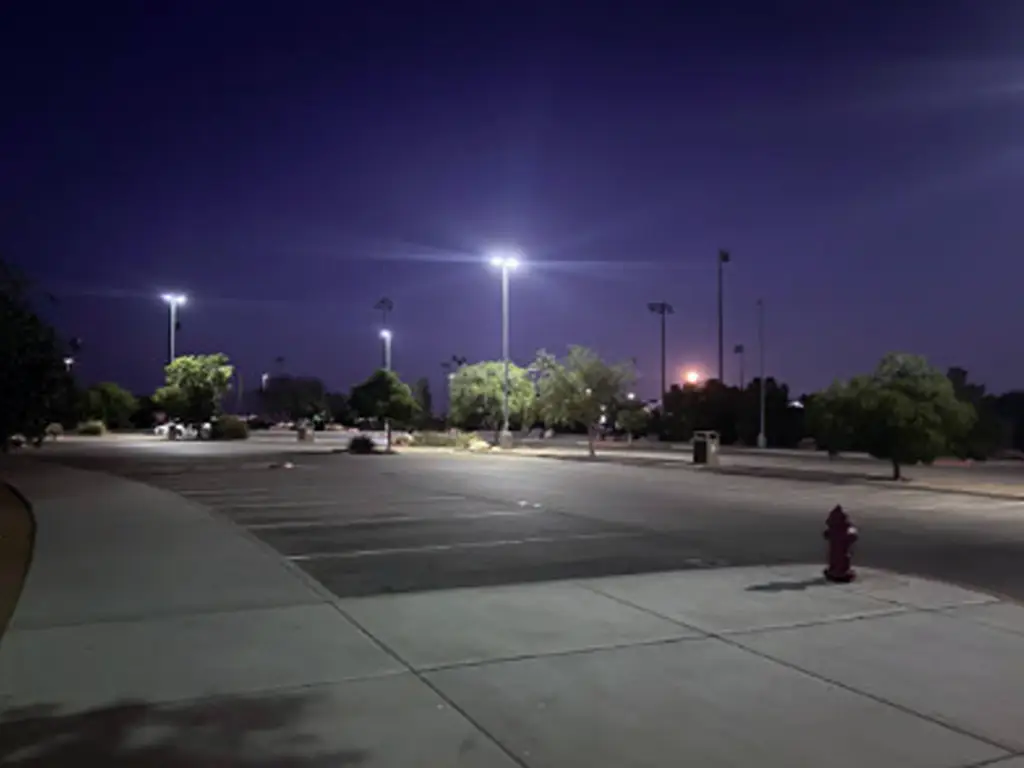
Two lights can have identical specifications on paper and differ by a factor of two or three in price. The difference is almost always in environmental resilience — the engineering that determines whether a light thrives through years of salt spray, thermal cycling, voltage surges, and UV exposure, or dies quietly in year three.
For coastal and marine environments, demand IEC 61701 salt-spray testing: 1,000 hours is a standard benchmark, 2,000 hours is coastal-grade. Temperature and humidity matter everywhere: a properly engineered fixture should function continuously from -40°C to +50°C, and constant-humidity testing at 95–98% RH over extended periods should be part of the manufacturer’s standard quality regimen. Surge protection is rated per IEC 61643: 4 kV is the baseline, 10 kV or higher is appropriate for lightning-prone regions.
Perhaps the most telling metric — and the one few buyers know to ask about — is the number of thermal test points the manufacturer uses to validate each design. A rigorous approach places 7 to 8 temperature sensors across the luminaire — on the housing exterior, at the LED module, at the driver position, on the aluminum substrate board. The manufacturer runs the light at full power for one hour and verifies that every measurement point stays within the component manufacturer’s rated limits. All eight points must pass. If the manufacturer can’t show you this data, they haven’t done the engineering.
Inside the Hardware: What Separates Quality Components from the Rest
A specification sheet tells you what a light claims to deliver. The components inside tell you whether it will actually deliver — and for how long. You don’t need to be an engineer, but you do need to know which four components determine the outcome and what questions to ask about each one.
LED Chips and the Light Engine: Why Brand Matters
Not all LEDs are created equal. The difference between a branded LED chip — from CREE, Osram, Philips Lumileds, or Nichia — and an unbranded alternative is measurable in lumen depreciation rates, color stability over time, and thermal tolerance. Branded LEDs come with LM-80 test reports: 6,000-plus hours of continuous operation data measuring light output degradation, conducted by accredited laboratories. This data feeds into TM-21 projections that estimate when the LED will reach L70 (70% of initial light output), which is the industry-standard definition of useful service life.
A branded LED might show less than 15% lumen depreciation after 50,000 hours. An unbranded alternative could lose 30% or more by 20,000 hours — meaning your lights are visibly dimmer long before they fail outright, and your city is paying full electricity price for partial output.
The LED chips are mounted on an aluminum substrate board — the light engine’s thermal highway. The copper content in this board directly determines how efficiently heat travels away from the LED junction, and junction temperature is everything: above 85°C, every additional 10°C roughly halves the LED’s remaining life. Ask the manufacturer for the copper thickness specification and thermal resistance values for the substrate board.
Drivers and Power Electronics: The Heart of Reliability
Here’s a fact that surprises most first-time buyers: the most common cause of LED street light failure is not the LED chips burning out — it’s the driver failing. The driver converts mains AC power to the precise DC current that LEDs require, and it absorbs voltage fluctuations, surge events, and thermal stress on behalf of the entire system. When the driver dies, the light goes dark regardless of how good the LEDs are.
Branded drivers — Meanwell, Inventronics, Philips Xitanium — earn their premium through five built-in protection circuits (over-voltage, over-current, over-temperature, short-circuit, and open-circuit), conversion efficiency above 90%, and MTBF (Mean Time Between Failures) ratings exceeding 100,000 hours. They also carry their own independent safety certifications (UL, CE, ENEC), which matters because a driver’s certification does not automatically follow from the luminaire’s overall certification.
The decision between branded drivers and in-house designs maps to warranty expectations. For standard 2-to-3-year warranty products aimed at price-sensitive segments, a well-executed in-house driver can be appropriate. For 5-to-7-year warranty projects — government infrastructure, major brand portfolios, critical installations — branded drivers are the standard. The cost difference is real, but it’s dwarfed by the cost of sending maintenance crews to replace failed drivers across a city-wide deployment.
- Meanwell / Inventronics / Philips Xitanium
- 5 built-in protection circuits
- >90% conversion efficiency
- MTBF >100,000 hours
- Independent safety certs (UL/CE/ENEC)
- Best for: 5–7 year warranty projects
- Custom-designed for cost optimization
- Simpler protection circuits (3 typical)
- 85–88% efficiency typical
- No independent safety certs
- Best for: 2–3 year warranty, price-sensitive
Housing, Die-Casting, and Thermal Management
The housing is not just a shell — it is the heat sink, the structural backbone, and the primary defense against weather. Its quality is set at the foundry and the machine shop, long before assembly begins.
The raw material starts with aluminum ingots. ADC12 — an aluminum-silicon-copper alloy with roughly 9.6–12% silicon and 1.5–3.5% copper — is the industry benchmark for die-cast LED housings. It offers thermal conductivity of about 96 W/m·K, good fluidity for complex mold filling, and reasonable corrosion resistance. Lower-grade alloys save material cost but sacrifice all three properties. The difference is invisible to the naked eye — you can only verify grade by melting a sample for compositional analysis.
The casting process itself matters as much as the material. High-pressure cold-chamber die-casting at 400–500 tonnes of clamping force produces denser, less porous castings than the 200–300-tonne machines common in the industry. Higher tonnage means slower cycle times and higher equipment cost, but the result is a housing with fewer internal voids, better structural integrity, and more consistent thermal performance across the batch. After casting, precision CNC machining — ideally on 4-axis or 5-axis equipment — ensures that mounting surfaces, seal grooves, and fastener holes meet tolerances that manual drilling cannot achieve. These tolerances directly affect how well gaskets seal and how evenly heat transfers from the LED module to the housing.
Some manufacturers outsource die-casting and machining to third-party foundries, creating a quality-control gap between raw material procurement and finished housing. Vertically integrated manufacturers — those who own their die-casting, machining, and assembly under one roof — retain traceability from aluminum ingot to finished luminaire. That integration is what makes it possible to offer the kind of warranty terms that back up component claims with real accountability. For example, WOSEN, a manufacturer with over three decades of in-house production experience, operates its own die-casting facility using ADC12-grade aluminum and 400–500-tonne high-pressure equipment, combined with in-house CNC machining and a mold department with 20 years of tooling expertise. Their molds, built from higher-grade steel than industry standard, achieve 45,000–50,000 cycles before replacement — roughly 50% more than the typical 30,000-cycle mold life. The practical outcome for a buyer is a housing that maintains its structural and thermal performance through the full warranty period.
Waterproofing, Sealing, and the Cost of a Leak
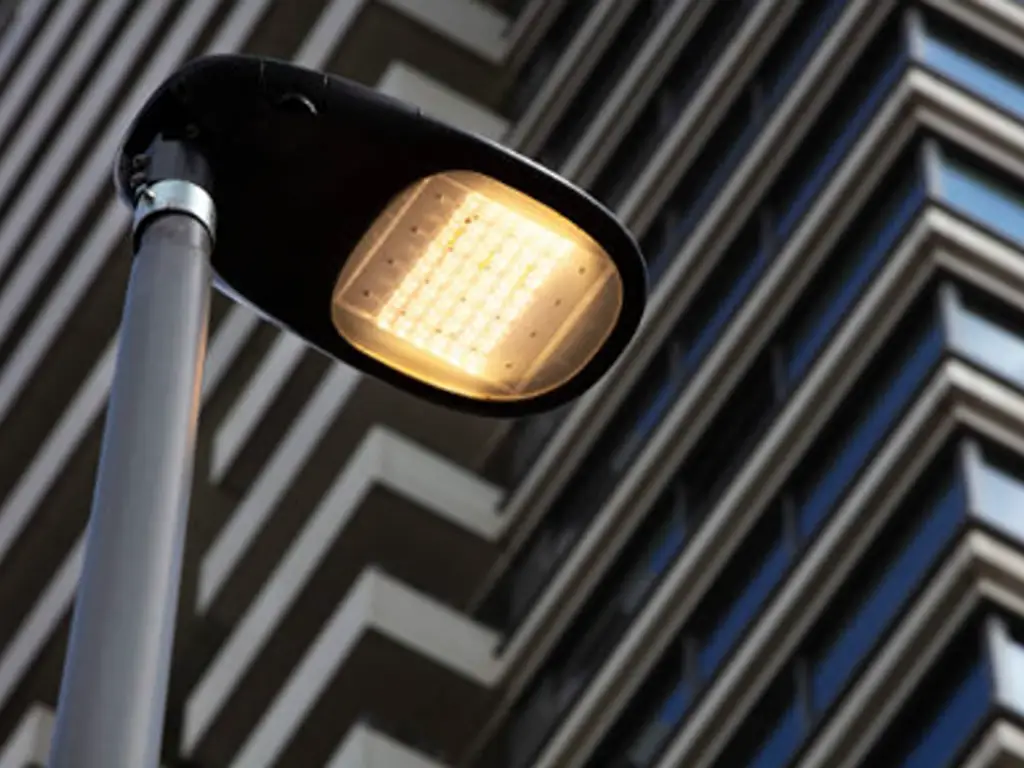
Water is the enemy of every outdoor electronic device, and street lights face it every day. An IP rating is only as good as the sealing system that achieves it — and that system depends on the material, geometry, and installation precision of a component most buyers never think about: the gasket.
Silicone gaskets offer the widest operating temperature range (-50°C to 200°C) and the best compression recovery, meaning they maintain a seal even after years of thermal cycling. EPDM rubber has excellent weather resistance but loses elasticity at low temperatures. For regions where winter temperatures drop below -20°C, specialized frost-resistant compounds are necessary to prevent the gasket from hardening and losing its seal — a failure mode that lets moisture in during freeze-thaw cycles, corroding internal electronics even though the IP rating on paper hasn’t changed.
The best designs combine a mechanical compression seal with a labyrinth-style drainage channel: the gasket does the primary sealing, and the drainage path handles any condensation or incidental moisture that gets past the first barrier. During production, every batch should undergo IP testing — not as a one-time design validation but as an ongoing quality control checkpoint. If the manufacturer cannot show you batch-level IP test records, they are relying on the hope that their assembly line never drifts out of spec.
Real-World Deployments: What Working Cities Got Right
Theory is useful, but procurement decisions are ultimately made on evidence. Three deployments — different in scale, geography, and approach — share a set of success patterns worth studying.
Regensburg, Germany (pilot scale, 2025). The Smart Dynamic Public Lighting project deployed just 20 intelligent parking lights along a bicycle route in the Dörnberg district — a deliberately small test bed. Optical sensors detect and classify pedestrians and cyclists in real time; lights stay dim when the path is empty and brighten only when someone approaches. The project’s real innovation is its evaluation framework: resident feedback loops and continuous sensor data collection are built into the design from day one, making the pilot a learning system rather than a one-off installation. For cities considering their first intelligent lighting deployment, the Regensburg model of “start small, measure everything, scale based on evidence” is the safest path.
Greater Geelong, Australia (city scale, 2022–2025). At 22,000 smart-controlled LED luminaires, this is the largest council-led smart lighting rollout in Australia. The project paired LED replacement with networked controls, delivering 82% greater efficiency compared to the legacy mercury-vapor system and reducing annual operating costs by approximately A$2.2 million. Critically, Geelong partnered with its electricity utility (Powercor) from the start, securing metered-rate billing that ensures the city only pays for actual energy consumed — a structural savings lever independent of the technology itself.
Bradford, UK (smart-city backbone, 2020–2024). The most ambitious of the three, Bradford’s deployment of over 59,000 connected nodes across 56,000 street lights built a LoRaWAN network that now functions as a city-wide IoT backbone. Beyond lighting — which alone saves £8 million cumulatively and 6,000 tonnes of CO₂ per year — the same infrastructure supports air quality monitoring, river-level flood sensors, smart waste bins, and EV charging integration. The deployment’s open-architecture design means the city can add new sensor applications without replacing the lighting hardware.
The common thread across all three: they specified open standards, deployed in phases, and planned for sensor expansion from the start — not as an afterthought.
How to Evaluate Manufacturers Without Getting Burned
Choosing a manufacturer is the moment when research meets risk. A structured evaluation framework keeps the decision grounded in verifiable evidence rather than sales presentation quality.
| Evaluation Dimension | Minimum Threshold (Exclude if Not Met) | Differentiator (Indicates Manufacturing Depth) |
|---|---|---|
| Certifications | ISO 9001 + at least one target-market cert (UL/CE/TUV) | BSCI, ISO 14001, IEC 62443 cybersecurity |
| Production capability | Own assembly line with verifiable monthly capacity | In-house die-casting + CNC + SMT + assembly (full-chain) |
| Laboratory | Basic aging test and waterproof test capability | CNAS-standard lab: EMC, salt spray, IP, integrating sphere, thermal/humidity, dark room |
| Component sourcing | Can identify LED chip and driver brands used | Consistently Tier-1 (CREE/Osram/Philips LEDs, Meanwell/Inventronics drivers) |
| Warranty | 3-year minimum with clearly defined coverage scope | 5–7 years full-luminaire including cross-border shipping and customs duties |
| Tooling & customization | OEM capability | 100+ proprietary molds, private-mold co-development, mold life ≥45,000 cycles |
Beyond the table, three due-diligence practices separate successful procurement from expensive mistakes. First, demand LM-79 photometric test reports (whole-luminaire performance) and LM-80 LED life-test data — both from accredited third-party laboratories, not the manufacturer’s own facilities. Second, verify certification numbers directly on the issuing body’s website; do not accept photocopies. Third, conduct a factory visit or virtual audit: watch the SMT line in operation, check whether the aging-test area is actually running 24-hour burn-in cycles, and confirm that IP testing equipment is being used on production batches, not just kept for show.
Procurement That Works: Specs, Tenders, and Staying Future-Proof
For most municipal procurement officers, writing a smart street lighting tender is a once-in-a-career task. The good news is that you don’t need to be a lighting engineer — you need to use the right framework, reference the right standards, and avoid a handful of predictable mistakes.
Writing Outcome-Based Specifications
The single most important shift in tender-writing philosophy is moving from prescriptive specifications (“100-watt LED luminaire with IP65 rating”) to outcome-based specifications (“roadway illumination meeting EN 13201 ME4a class with average maintained illuminance ≥1.0 cd/m² and overall uniformity ≥0.4”). The prescriptive approach locks you into a specific technical solution and may exclude better alternatives the market could offer. The outcome-based approach tells suppliers what result you need and lets them propose how to achieve it.
A complete tender document should include four mandatory sections: technical performance (illuminance, efficacy, protection ratings, rated life), smart control capability (control hierarchy, communication protocol, open-standard interoperability, offline fallback, data security), quality assurance (required test reports, certifications, factory audit rights, warranty terms), and commercial terms (delivery schedule, payment milestones, after-sales service obligations).
Free, professionally maintained tender templates exist — use them. The TALQ Consortium’s Tender Template for Smart Outdoor Lighting (Edition 4, 2024, available in English and Chinese) provides a comprehensive, technology-neutral framework designed for multi-vendor interoperability. IPWEA’s Street Lighting and Smart Control (SLSC) program offers two model specifications — one for LED public lighting and one for public lighting controls — freely available and structured for direct use in RFPs, RFQs, and RFTs.
Evaluating Bids Beyond the Price Tag
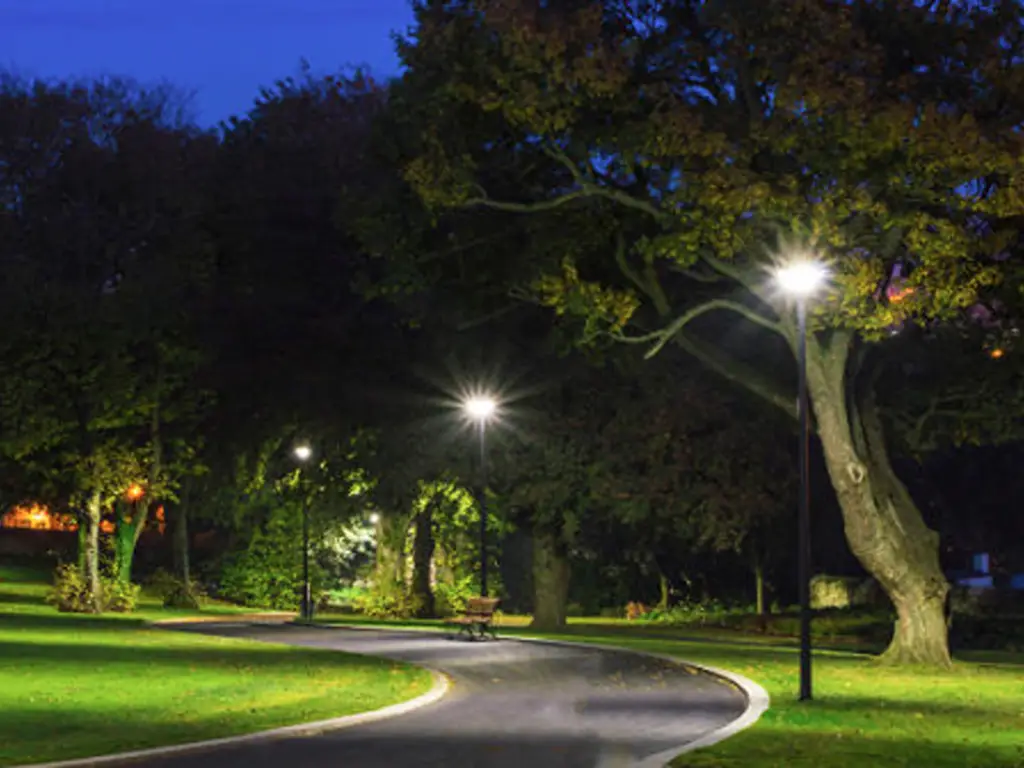
Lowest-price selection is the most expensive mistake in street lighting procurement. A simple thought experiment makes this clear. Luminaire A costs $200 per unit with branded LEDs and a branded driver, backed by a 7-year warranty. Luminaire B costs $120 with unbranded components and a 2-year warranty. Over a 10-year ownership period, factor in energy consumption, driver replacements starting in year 3 for Luminaire B, batch-level LED degradation requiring early replacement around year 5, and the maintenance crew dispatches each failure triggers. Luminaire B’s total cost of ownership can exceed Luminaire A’s by 40% or more. The $80 upfront saving becomes the most expensive discount the city ever accepted.
Use a weighted evaluation framework: technical compliance and performance (40–50%), lifecycle total cost of ownership (30–40%), warranty terms and after-sales capability (10–20%), and supplier track record with references (5–10%). Open-standard compliance and cybersecurity should be pass/fail gates — any bid that fails these is excluded regardless of price. If a bid comes in more than 20% below the next lowest price, require a written explanation. The explanation itself is often more revealing than the price.
Future-Proofing: How to Avoid Being Locked Into Yesterday’s Technology
Vendor lock-in is not a hypothetical risk — it is the default outcome of any procurement that doesn’t actively prevent it. Lock-in takes three forms: proprietary communication protocols (only the vendor’s CMS can control the lights), proprietary sensor interfaces (you can’t upgrade sensors without replacing the entire fixture), and closed firmware (no over-the-air updates, no security patches after deployment).
The countermeasures are three open standards that should appear in every tender document. TALQ certification ensures that your central management software can interoperate with outdoor lighting network hardware from any certified manufacturer — if you need to change suppliers in year five, your CMS stays. Zhaga Book 18 standardizes the physical sensor socket on the luminaire, so upgrading from basic motion detection to air-quality monitoring in year three is a plug-and-play swap, not a rewiring project. DALI-2 (IEC 62386-101/102/103) provides bidirectional digital communication at the individual luminaire level, supporting asset data management, energy metering, and diagnostics from any compliant controller.
Write these three standards into your tender as mandatory requirements. Also specify that the supplier must commit to a minimum of five years of firmware security updates, and that over-the-air update capability must be included in the base system price — not as a paid subscription add-on.
When you’re ready to move from research to supplier conversations, bring a clear list of requirements to the table — certifications, component brands, test reports, and warranty terms — and test every manufacturer against the same yardstick. If you’d like to compare another supplier’s specifications and warranty framework against your needs, WOSEN’s product catalog and technical documentation are available for review at www.wosenled.com.

 English
  Spanish
  French
  German
  Italian
  Arabic
  Russian
  Portuguese
  Dutch
Dutch  Indonesian
  Turkish
  Polish