
When B2B facility managers ask how long do led lights last, they are often met with the generalized “50,000-hour” promise. However, this figure is not a guarantee of performance, but a physical milestone contingent upon internal manufacturing integrity. In high-demand industrial environments, external stressors act as catalysts that expose hidden design flaws. This guide provides a deep technical autopsy into the internal vulnerabilities of LED architecture and explains why top-tier manufacturing is the only true defense for your long-term Total Cost of Ownership (TCO).
Decoding the 50,000-Hour Myth and the L70 Standard
Before analyzing the hardware, one must understand that LED failure differs fundamentally from traditional lighting. Unlike a halogen filament that snaps instantly, solid-state lighting undergoes a slow, thermal-driven decline known as Lumen Depreciation. This means your facility won’t go dark suddenly, but it will gradually fail to meet safety standards.
What is the L70 Standard and OSHA Compliance?
The L70 standard marks the point where an LED retains only 70% of its initial light output. While the led lifetime might theoretically continue beyond this, it is considered the end of “useful life” in professional sectors. This 30% loss is the threshold where the human eye begins to notice significant dimming, directly impacting worker fatigue and productivity.
According to OSHA Standard 1926.56, specific lux levels are required for workplace safety. If your fixtures drop below L70, your facility may fall out of legal compliance, leading to safety fines and increased liability risks.
Operational Years: A Realistic Conversion
To grasp the led bulb lifespan in a business context, one must convert laboratory hours into operational years based on daily usage cycles.
| Industry Scenario | Daily Usage | Years (50,000h L70) | B2B Strategic Impact |
|---|---|---|---|
| Residential/Smart Home | 3 Hours | ~45.6 Years | Theoretically long, but often fails early due to poor enclosure ventilation. |
| Commercial/Retail | 12 Hours | ~11.4 Years | Matches typical remodeling cycles; consistency is key. |
| Industrial/24-7 Factory | 24 Hours | ~5.7 Years | Extreme pressure test. Every internal design flaw is magnified. |
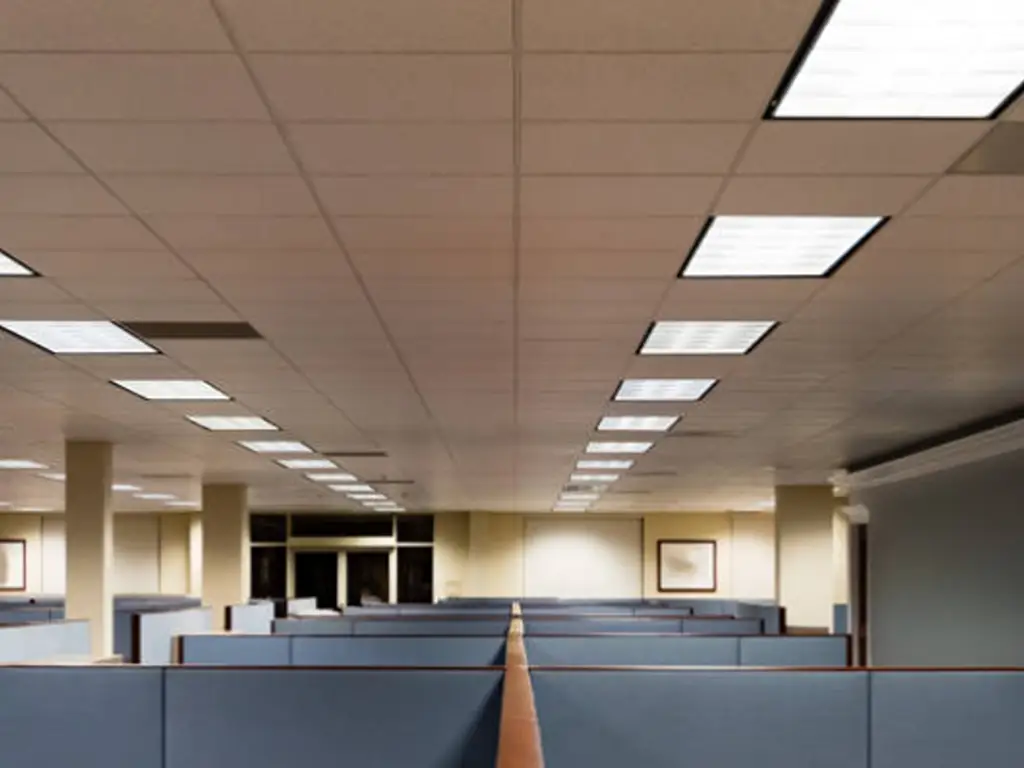
The Real Killers: Internal Vulnerabilities in Harsh Environments
Harsh environments—heat, moisture, and dust—are the catalysts, but the true killers are internal design compromises. When a light fails in an industrial plant, it is rarely due to the environment being “too tough,” but rather because the internal architecture was too fragile to withstand it.
Factor 1: The Switching Frequency Myth
A common misconception held over from the fluorescent era is that turning lights on and off frequently will shorten their life. For LEDs, switching frequency has zero negative impact. Being solid-state, they lack the filaments that degrade during ignition, making them the perfect candidates for motion-sensor automation.
Factor 2: Inferior Heat Management (Thermal Design)
Inadequate thermal dissipation is the most common cause of rapid light degradation. If the heat sink is engineered too thin or with low-grade alloys, the Junction Temperature (Tj) rises uncontrollably. This internal heat bake triggers two specific failures:
- Phosphor Carbonization: High Tj causes the yellow phosphor coating to chemically degrade, leading to color shifting—where your lights turn a sickly blue or green.
- 10-Degree Rule: In semiconductor physics, every 10°C increase above the rated maximum operating temperature effectively cuts the component’s lifespan in half.
Factor 3: Power Supply and Driver Quality
90% of “dead” LED fixtures have perfectly healthy diodes; it is the driver that has failed. The driver contains electrolytic capacitors that serve as the weakest link. In poorly designed fixtures, these capacitors are exposed to excessive heat, causing their liquid electrolyte to evaporate. Once dried, the driver fails, and the fixture goes dark regardless of the chip’s health.
The DNA of Longevity: How Manufacturing Dictates Lifespan
The only way to ensure a 50,000-hour return is to source fixtures where longevity is engineered into the materials themselves. This requires a shift from superficial specs to analyzing the manufacturing “DNA” of the product.
The Thermal Pathway: MCPCB and Die-Cast Heat Sinks
The first line of defense is the physical pathway heat takes to leave the chip. Industrial-grade fixtures avoid cheap fiberglass boards (FR4) and instead utilize Metal Core PCBs (MCPCB), which offer superior thermal conductivity. Furthermore, the housing should be made of heavy-duty Die-Cast Aluminum. Unlike stamped aluminum, die-cast structures allow for complex aerodynamic fins that maximize surface area and convective cooling, keeping internal temperatures at safe levels even in 50°C facilities.
The Electronic Fortress: Driver Isolation and Potting
To protect the driver’s sensitive capacitors, premier manufacturers utilize Thermal Isolation Chambers, physically separating the power source from the heat-generating light engine. To further harden the system against industrial vibrations and moisture, high-end drivers undergo Silicone Potting. This involves injecting a thermally conductive polymer that encapsulates the electronics, shielding them from the external world and aiding in heat dissipation.
The Seal of Survival: Industrial-Grade Silicone Gaskets
Maintaining IP65 integrity over years of thermal cycling (the expansion and contraction as lights turn on and off) requires superior sealing materials. Standard rubber gaskets dry out and crack over time. Professional-grade manufacturing utilizes UV-resistant, high-temperature silicone gaskets that maintain their watertight memory for decades, preventing cold-storage condensation or corrosive vapors from reaching the internal circuitry.
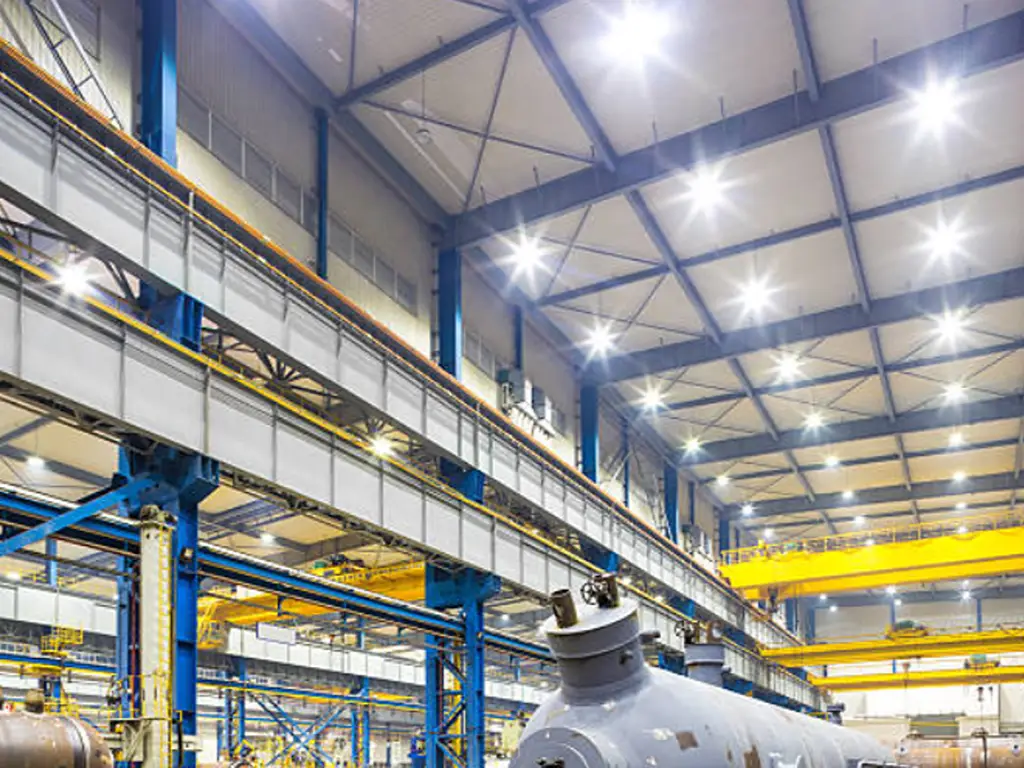
Escaping the TCO Trap: The 5-Year Multiplier
Focusing on initial unit price is the fastest way to lose money in facility management. The true ROI of an LED project is found in the total cost of operation over five years, where maintenance labor becomes the dominant expense.
Industrial Maintenance Reality Check
Consider the math for replacing a failed high-bay fixture mounted at 30 feet:
While you might save $30 upfront on a cheap fixture, a single failure triggers an expensive chain reaction. You must rent a scissor lift for $200 per day, hire a certified electrician for $100 per hour, and manage the expensive downtime of a production line. In a 24/7 industrial stress environment, a cheap light may fail three times in the period a premium light fails zero times, turning that $30 saving into a $1,000+ maintenance liability.
Forward-thinking procurement teams eliminate these risks by partnering with foundational manufacturers like WOSEN LED, whose in-house die-casting facilities allow for the creation of rugged, heavy-duty heat sinks that provide unparalleled junction temperature control. WOSEN differentiates itself through superior manufacturing mastery, utilizing strictly isolated driver chambers and advanced silicone potting to ensure their electronics withstand the most punishing industrial grids. By controlling the entire process from aluminum melting to final assembly, WOSEN delivers a system where L70 is a guaranteed baseline rather than a marketing hope, effectively neutralizing maintenance costs for years to come.
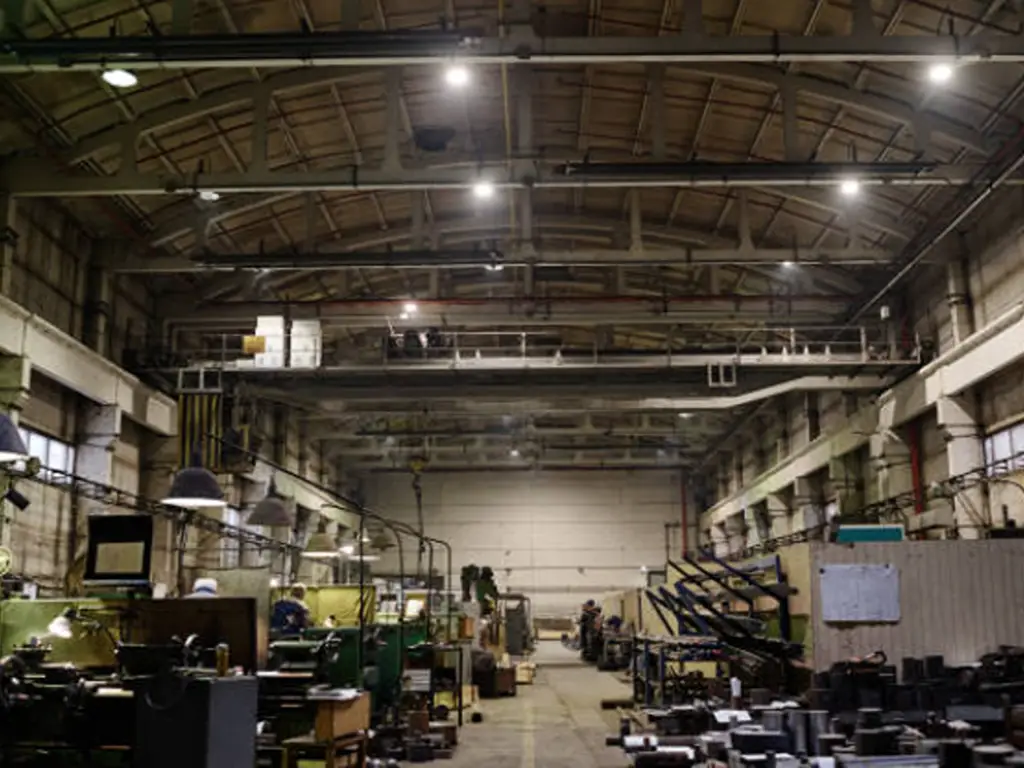
Conclusion
LED longevity is the result of physical integrity, not marketing claims. By prioritizing robust heat management, isolated electronic architectures, and high-grade industrial sealing, you can secure a lighting ecosystem that truly lasts. Avoid the trap of low-cost, fragile designs and invest in manufacturing excellence to ensure your facility remains safe, compliant, and cost-effective for the long haul.
Maximize Your Facility’s ROI with WOSEN
Stop paying for rolling failures and expensive maintenance. Speak with a WOSEN LED expert to discover our industrial-grade solutions engineered for the toughest environments.
Contact WOSEN LED Experts

 English
  Spanish
  French
  German
  Italian
  Arabic
  Russian
  Portuguese
  Dutch
Dutch  Indonesian
  Turkish
  Polish