
It is 11 pm and someone is walking toward your side door. A light over that door changes what happens next in one of two ways. If the light comes on and throws an even pool of brightness across the approach, the walker knows they can be seen. Most of the time, that is the end of it. If the light has died sometime in the past year, which cheap security lights quietly do, the walk continues in the dark.
That second outcome is the real subject of this guide. You can buy an outdoor security light for $25 or for $250, and both will be bright on the night you install them. The difference shows up in month fourteen. One has a sensor that still triggers and a seal that still holds. The other is a dead plastic box you have to borrow a ladder to remove. So when people ask for the best outdoor security lighting, the honest answer is less about brightness. It is about which light will still be doing its job a year from now.
One quick fork before we get into it: a floodlight camera is a camera that happens to include a lamp. If identifying whoever approaches matters most, the camera products do that. But a camera does not change how a yard feels to someone considering walking into it. Light does that. This guide is about the light.
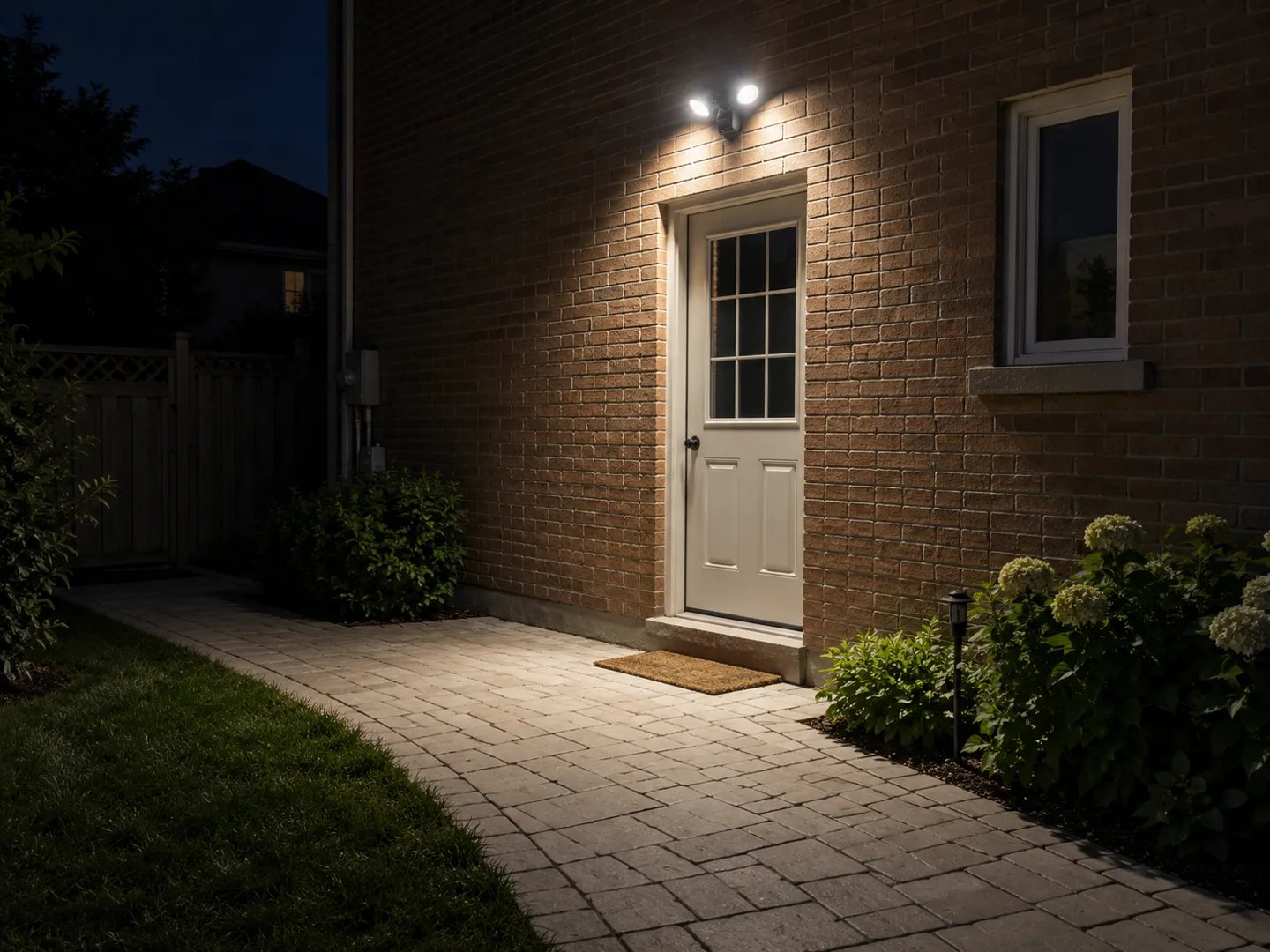
What Outdoor Security Lighting Actually Does
Security lighting does three jobs, and knowing them helps you see why specs matter later. First, deterrence: an approach that is brightly and evenly lit makes a person feel exposed, and feeling exposed is enough to end most opportunistic attempts. Second, identification: if something does happen, you or a camera need to actually see it, which means light on faces and movement, not on the sky. Third, navigation: the people who live or work on the property need to walk to the car and take out the trash without twisting an ankle.
The evidence that light changes behavior is solid. In one randomized trial, New York City added temporary street lights to some public housing developments and not others. Outdoor index crimes at night dropped sharply where the lights went in, and arrests fell too, which points to deterrence as the mechanism (Chalfin, Hansen, Lerner and Parker, 2022). Light does its work on the person deciding whether to walk in, and only secondarily on the person watching.
Here is the part most listicles skip: bright is not the same as secure. A single ultra-bright fixture mounted carelessly creates a glare bomb with deep shadows around it, and those shadows are exactly where a person can stand unseen. Lighting for security is closer to lighting for photography than lighting for a stadium. Even coverage beats raw output, and a light in the wrong place can make a property less secure than no light at all. That idea drives every recommendation below.
The Four Fixture Families (and Where Each One Belongs)
Walk into any lighting aisle and the security section looks like a wall of similar boxes. It helps to sort them into four families, because each family exists because of a different mounting problem.
The flood light is the family most people mean when they say security light. Twin or triple adjustable heads, mounted high on a wall or eave, usually with a motion sensor. The adjustable heads exist so you can throw light across an approach instead of into a neighbor’s bedroom. The wall pack is the wall light’s working-class cousin: a sealed, gasketed, usually sensor-less fixture that simply turns on at dusk and burns until dawn. Commercial buildings line their back walls with these. The area light takes over when the job outgrows the wall: a fixture on a pole or arm, aimed down at the pavement it covers. The solar integrated light is a self-contained unit with panel, battery, and lamp in one housing, and it exists for one reason: the spot is far from a power source.
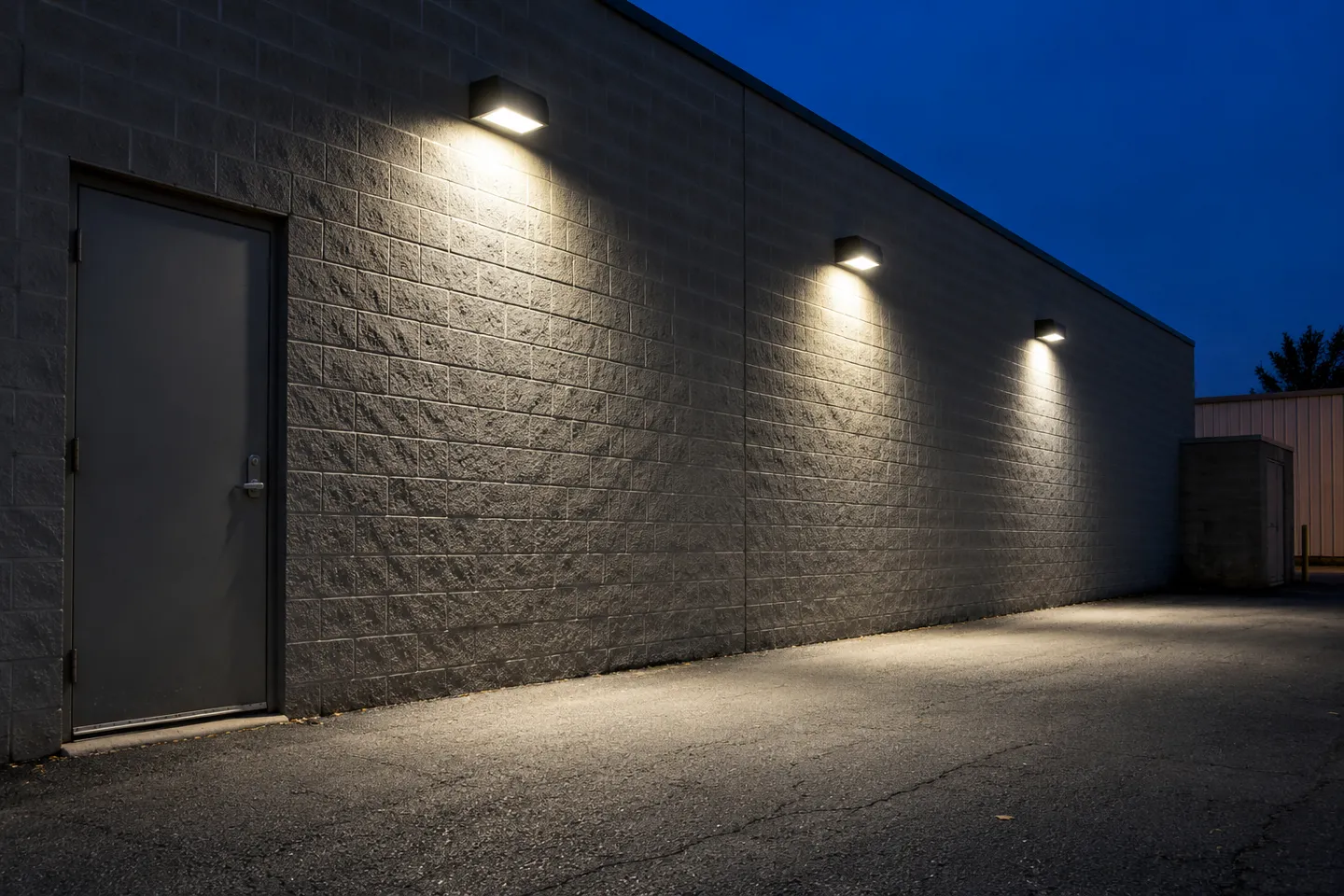
Everything else is a variant. Bollard lights for path edges and canopy lights under eaves round out the map, but the four families above cover nearly every real decision.
Four Fixture Families at a Glance
| Family | Typical mount | Typical output | Watch-out |
|---|---|---|---|
| Twin-head flood light | Wall or eave, 2.5-3 m | 700-3,000 lm | Sensor aim decides false triggers |
| Wall pack | Building wall, perimeter duty | 1,000-5,000 lm | Burns all night, so seal and driver quality carry the cost |
| Area light | Pole or arm, 6 m and up | 3,000-20,000+ lm | Uniform coverage beats peak brightness |
| Solar integrated | Off-grid spots | 300-2,000 lm | Output fades with battery age and winter; fine for remote points, weak as primary |
You will notice every best-seller in this category shares the same spec portrait, whatever the brand. ETL or UL listing, IP65 or better, adjustable heads on floods, output in the 700 to 3,000 lumen range for residential use, and a photocell or dual mode that handles dusk-to-dawn automatically. When a listing is missing one of those five, treat it as a warning light on the dashboard, not a discount.
The Three Decisions That Define “Best”
Spec sheets list twenty numbers. Three of them actually decide whether you will be happy, and none of them is the wattage.
Decision one is brightness, and the counterintuitive rule is that less is often right. General guidance for residential security lighting lands around 700 to 1,300 lumens for a typical approach or yard zone (SuperBrightLEDs, 2024). Two corrections apply. Mount the light higher and you need more lumens to get the same ground coverage. And if the light faces a neighbor’s windows, every extra lumen is a future argument: homeowners who overshoot brightness on purpose regularly end up on forums complaining about, or apologizing for, the prison-yard effect.
Decision two is control: motion-triggered, dusk-to-dawn, or both. Motion sensing saves energy and creates a startle effect, which many buyers want at an entry. Dusk-to-dawn photocell control keeps a constant presence all night, which is what a dark side alley or a commercial perimeter actually needs. A lamp on that duty burns for at least 12 hours a night (EC&M, 1996). The honest framing: there is no single winner. Motion for places a person approaches, photocell for places nobody approaches, and the dual-mode fixtures that combine both are the pragmatic default for most homes.
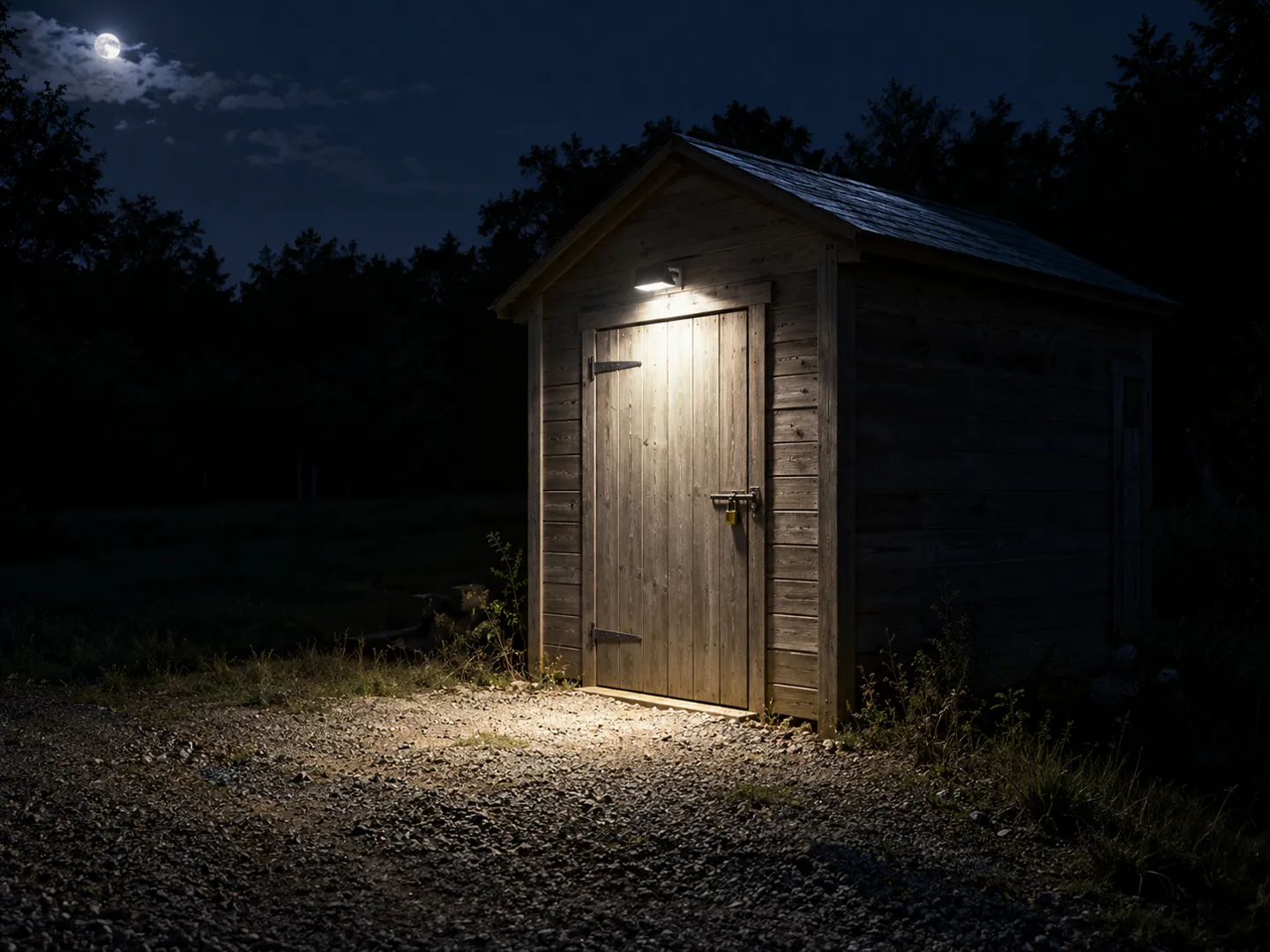
Decision three is power, and this is where the cheapest options hide their real cost. Hardwired fixtures are the reliability baseline: they work in cold snaps, they do not depend on a battery’s mood, and they fail in predictable ways. Solar units remove the wiring bill, and for a shed at the back of a lot where trenching would cost more than the light, they are a rational choice. But ask anyone who has run the cheap ones: battery capacity fades, winter sun disappoints, and a unit that was bright in June can be a nightlight by February. Buy solar for the off-grid spot, not as a substitute for wired light where power is reachable. On color temperature, resist the temptation to go maximum white. Neutral to cool white in the 4,000 to 5,000K range reads clearly on camera. Residential guides commonly suggest 3,000 to 4,000K to cut glare and light spilling into windows (Vivint, 2022).
Sizing Security Lighting by Area: From a Doorway to a Whole Yard
The three decisions above interact with scale. A fixture that is generous over a doorway is a toy on a parking lot, and the fixture built for the lot is absurd above a front door. This section walks the scale up, because most buyers are somewhere on this ladder and need the layer they are on, plus one.
Entryways and Residential Yards
One or two fixtures, mounted at roughly 2.5 to 3 meters, each producing 700 to 1,500 lumens, motion-activated or dual-mode. Aim the heads across the approach rather than straight down, and check two things from the ground at night: no direct view of the emitter from your bedroom window, and no dark pocket left beside the garage. A spec sheet worth buying at this layer reads plainly. Look for IP65 or better, an operating range down to -20C for cold climates, and a listed certification mark rather than a self-declared one.
Building Perimeters and Small Commercial Zones
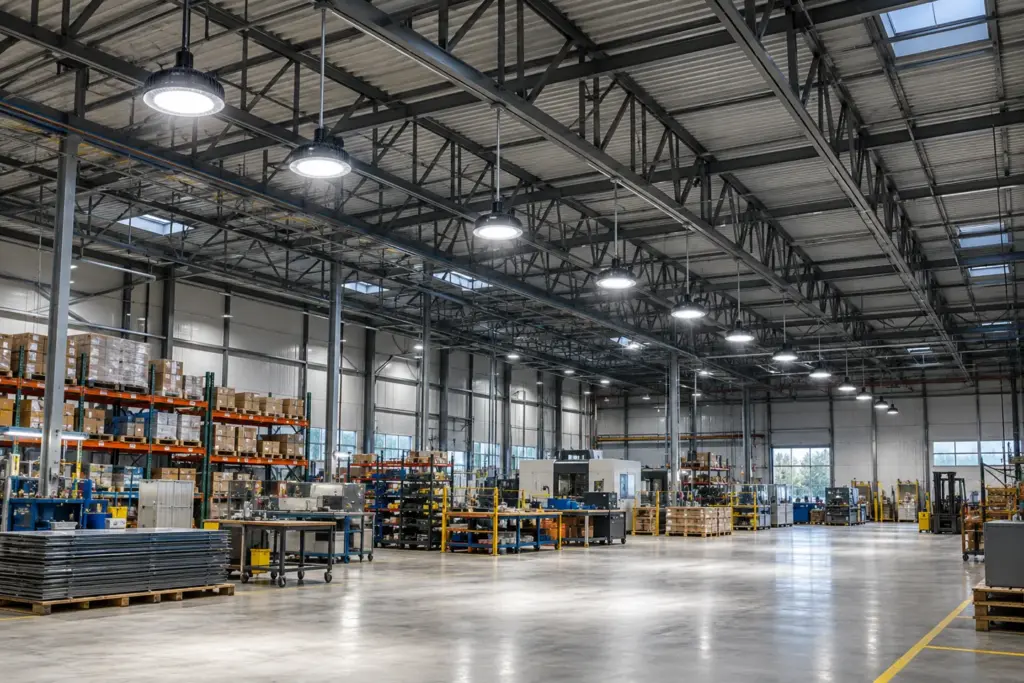
Back doors, service alleys, loading steps, small lots. The fixture family shifts toward wall packs and sealed floods running dusk-to-dawn, because nobody walks through here to trigger a sensor. Lighting guidance for facilities starts around 1 to 3 foot-candles on the ground for a suburban site, and roughly 5 foot-candles where urban conditions or higher risk call for it (EC&M, 1996). In lux, that is about 10 to 50. Uniformity matters more than the peak number here: a wall washed with light and a black gap between two fixtures is a design that paid for half a camera’s blind spot. Spacing fixtures so their patterns overlap slightly beats adding one monster fixture. A cut-off optic that pushes light down instead of sideways keeps the neighbors and the local ordinance calm.
Large Areas and Project-Scale Lighting
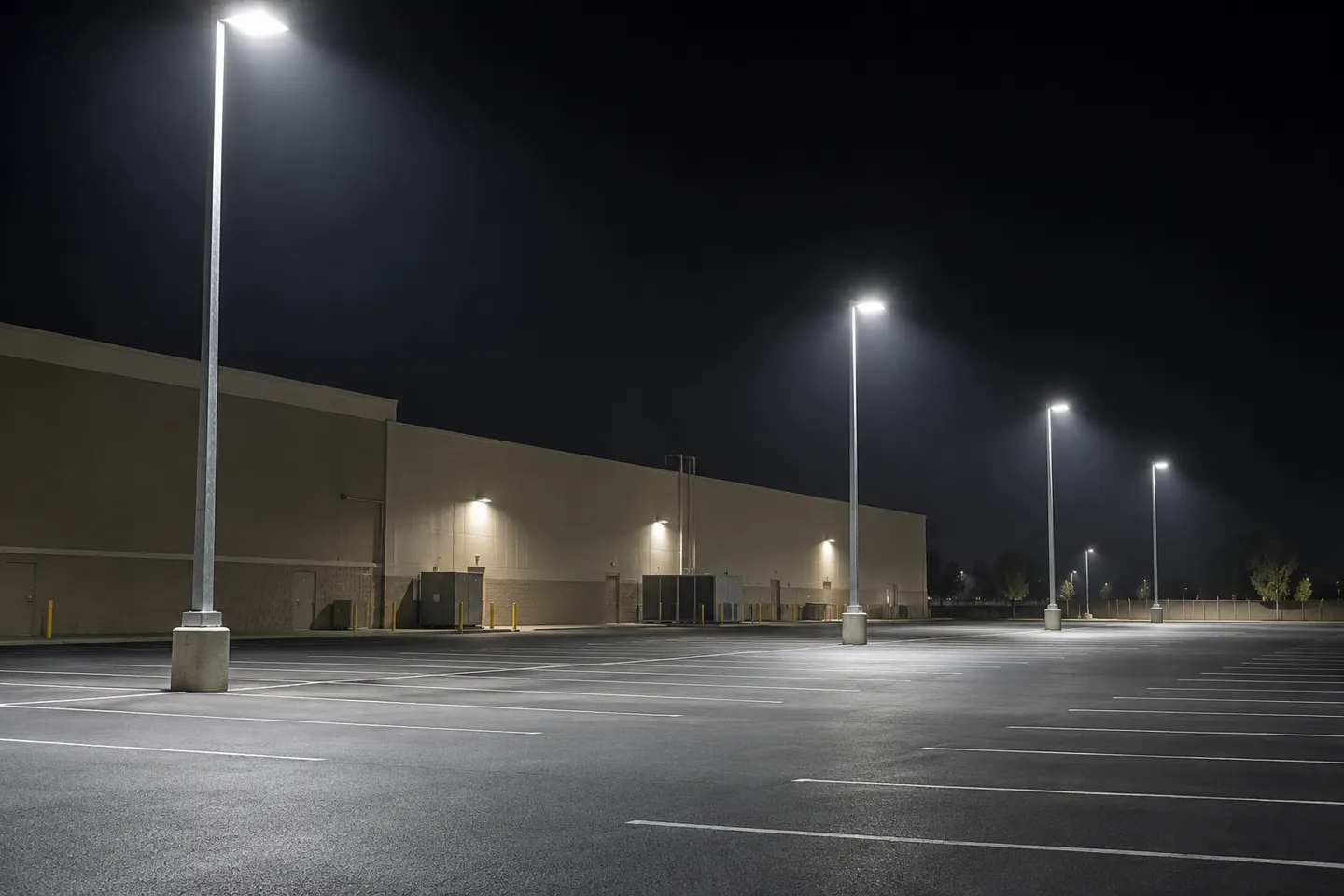
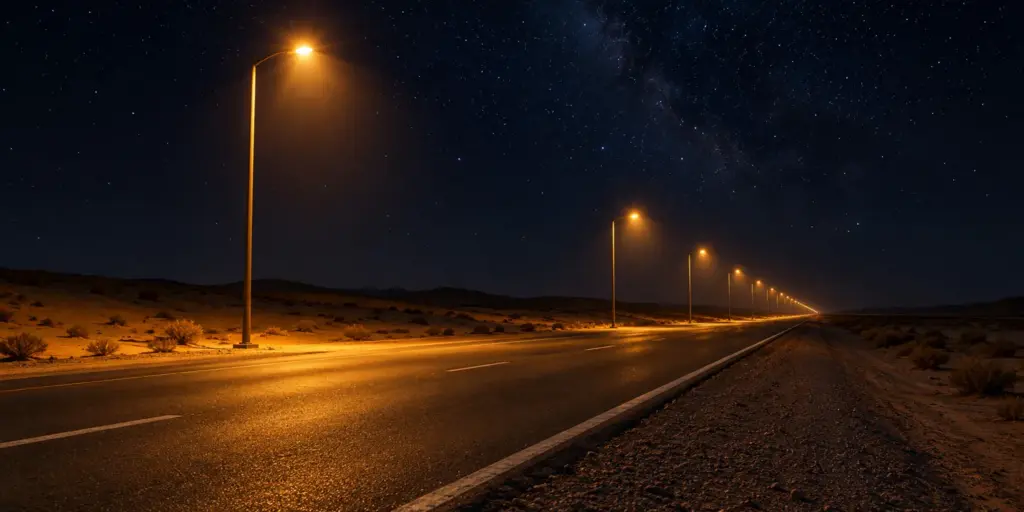
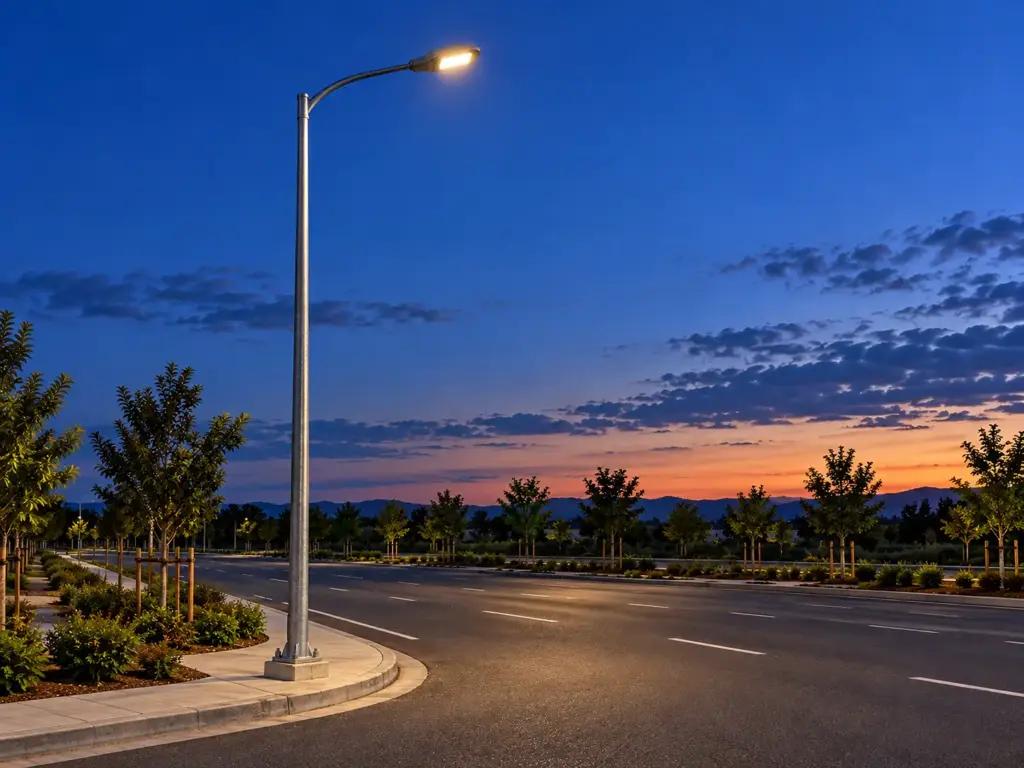
Parking areas, yards, campus roads. Now the light is on poles: roadway-class poles run 20 to 30 feet with area lights, secondary layers at 8 to 15 feet (EC&M, 1996). At this scale the buying question changes character. You are no longer choosing a fixture; you are commissioning a layout. The failure modes turn legal and financial. A design that ignores cut-off requirements can be ordered changed after install. A layout with poor uniformity gets renegotiated the first time an insurer walks it with a light meter. This is also where fixture procurement goes direct to manufacturers, and what you should demand changes with it. The demand list appears in the failure section below, because it is the same list that keeps residential-style failures out of your project.
Scale Matrix: What to Install and What Fails
| Scale | Fixture type | Light target | Fails when |
|---|---|---|---|
| Entryway or yard | Twin-head flood, dual mode | 700-1,500 lm at 2.5-3 m | Light hits bedroom windows or leaves a dark pocket by the garage |
| Perimeter or small zone | Wall pack plus sealed floods, dusk-to-dawn | 1-3 fc on the ground (about 10-30 lux), 5 fc where risk is high | Black gaps between fixtures, no cut-off control over spill |
| Large area or project | Pole-mounted area lights, 20-30 ft with an 8-15 ft layer | 5 fc-class design checked for uniformity | Poor uniformity creates camera blind spots, and a trespass ordinance forces a redesign |
Read the matrix by row, find your row, and treat the last column as the inspection checklist for whatever you buy at that scale.
How to Buy: Channels, Warranties, and Suppliers
The same model of fixture can carry a valid warranty or a worthless one depending on where it was bought. Electricians on trade forums document this regularly. One commercial fixture brand refused warranty claims on units bought from an unauthorized online marketplace, yet honored the identical unit bought through a distributor. The lesson is not about any one brand. Warranty is a contract between you and a specific supply chain. Before buying, confirm the seller is inside the manufacturer’s authorized channel, and get the terms in writing.
The three normal channels each fit a different buyer. Retail single units suit a homeowner replacing one fixture: pay list price, get simple recourse. Electrical distributors suit contractors. They offer catalog pricing, jobsite quantities, and a counter that handles warranty claims as part of the relationship. Factory-direct importing suits the third group: distributors and project buyers sourcing by the container. You gain margin and control, and you take over the verification work the distributor used to do for you. That verification work is what the next section is about. Check the certifications, the driver brands, and the warranty terms before you wire money for a container. That check is what separates a fixture that dies in month six from one that does not.
WOSEN answers that check by default: factory-direct quotes ship with the certification list, named driver options, and the warranty clause in writing.
Request the Spec SheetHow Security Lights Fail (and How to Specify Against It)
Rated output and rated lifespan are measured on a lab bench. Failure happens at the five weak points the bench does not stress. Anyone who maintains a property, or sells fixtures to people who do, learns these five eventually; learning them from this list is cheaper.
The Five Ways Security Lights Actually Die
The photocell or motion sensor is the most common early failure. It is a small electronic eye exposed to the same weather as the lamp, and when it goes, the light either never turns on or never turns off. The checkable move: ask how the sensor is sealed and whether it can be replaced separately from the lamp. False triggering is failure number two, and it is usually placement, not electronics. A fixture watching a road sees every passing car; a branch in the detection cone writes its own service ticket. Before blaming the fixture, re-aim and trim; before buying, check that sensitivity and dwell time are adjustable. Seal failure is number three: water enters through a tired gasket, corrosion follows, and the fixture dies a slow, intermittent death that is maddening to diagnose. Ask how the gasket is designed and captured before trusting the IP65 on the box. Driver failure is number four, and it is the big one in regions with unstable grids or lightning. The driver is the fixture’s power supply, and a surge the housing shrugs off kills it. The spec that matters is surge protection rating, and in high-risk areas it is worth paying for. Early lumen depreciation is number five: the fixture still lights but the output has halved in a year, which means the LED chip was run past its thermal comfort. Reported lifetime numbers like 50,000 hours describe a lab condition, not a guarantee, so the practical proxy is a test report rather than a rounded marketing number.
Five Failure Modes and the Spec That Catches Them
| Failure mode | Field symptom | What to require |
|---|---|---|
| Photocell or sensor death | Light stuck on or stuck off | Sealed sensor, separately replaceable |
| False triggering | Fires for every passing car and cat | Adjustable sensitivity and dwell time, re-aim away from roads |
| Seal failure | Intermittent operation after rain | A described gasket design, not just IP65 printed on the box |
| Driver surge death | Dead fixture after a storm | Named driver brand and a stated surge protection rating |
| Early lumen depreciation | Noticeably dimmer within a year | An LM-80 style report on the LED package and sane thermal design |
4,000+hours a year
One dusk-to-dawn lamp at full duty puts this many hours on its sensor, seal, and driver every single year. A fixture that dies in month six on that schedule is not a cheap loss: it is a repeat purchase, plus a ladder, plus the labor.
The channel trap
Warranty coverage can be voided by the point of purchase alone. A fixture bought from an unauthorized marketplace seller can carry the exact same label and zero warranty behind it. Confirm the selling channel is authorized before you pay, and keep the invoice: it is half of every warranty claim.
Reading Claims Like a Buyer: Certifications, Reports, and Warranty Terms
The fix for unverifiable claims is to only buy claims that can be checked. Certification marks come first: in North America, UL and ETL listing means a lab has evaluated the fixture for electrical safety, which matters to insurers and inspectors alike. For commercial and project buyers in the US and Canada, DLC listing is the second mark to know. The DLC Qualified Products Lists are required by nearly 700 utility and energy efficiency programs for rebate eligibility (DesignLights Consortium, 2023). A fixture without that listing can quietly cost the client money they expected to recover.
Component choices are the second readable signal. A manufacturer who names the driver brand (Meanwell, Inventronics, and Philips are the usual references) is telling you which part of the fixture they did not economize on, and the driver is the part most likely to fail first. A manufacturer who hides behind “LED driver included” is telling you the opposite. Test reports work the same way. LM-80 is the standardized method for measuring how an LED package’s light output declines over time. A fixture backed by an actual LM-80 report on its chips is making a claim someone can audit; a lumen number printed in bold on a box is not.
Finally, read the warranty the way a claims adjuster would. Three questions decide everything. Does it cover the whole lamp, or only the light source? Does the coverage depend on who sold it? And when something fails, who pays freight, and how fast does the supplier answer? A five-year warranty that covers the whole lamp, survives any authorized channel, and defines its response time is worth more than a seven-year headline with nothing answerable behind it.
The Buyer’s Math: Stocking and Specifying Security Lighting
If you stock or specify lighting rather than install it, the same facts reorganize into a business case. Security lighting is not ordinary turnover stock. Every unit sold commits the buyer to a fixture that will burn 4,000 hours a year over their property line, and any early failure comes back through your counter, not the factory’s. A pallet of the cheapest fixtures prices in a return rate you have not been shown. The freight, the credit notes, and the customer who quietly never reorders are real costs, and none of them appear on the purchase order. The stocking logic that survives contact with reality is two-tier. Run a price tier for genuinely price-driven retail buyers, sold honestly as what it is. Run a specification tier as well. There, certification marks, named drivers, real temperature ranges, and whole-lamp warranty terms justify the margin between the two.
Sourcing that tier direct from a manufacturer changes the conversation: price gives way to specification. That is the conversation we built the WOSEN line for. Our outdoor LED flood light series, for example, ships with CE and RoHS as standard, with UL, ETL, SAA, ENEC, or TUV available on request for the destination market. Drivers can be upgraded to Meanwell, Inventronics, or Philips where the project calls for it, and the IP65/IP66 housings are rated from -20 to +50C. The security flood models carry a five-year warranty. Minimums start at 100 pieces, production runs 35 to 40 days with tracking, and mixed-container loading lets distributors combine categories (outdoor LED flood light line). Ask us for the spec sheet rather than the catalog page, and ask any other manufacturer on your shortlist the same twelve questions. The one who answers them fastest and in writing is usually the one whose fixtures you will not be replacing under warranty.
If you are about to specify or stock, start that conversation with the spec sheet, not the price list: tell us the site, the hours, and the market, and we will tell you plainly which build fits. We answer overseas inquiries within 12 hours.
Specify It Once. Install It Once.
WOSEN turns your site conditions and destination market into a written build proposal: certifications, driver options, and warranty terms, named in writing before you wire a deposit.
Start the Specification ReviewReferences
- Chalfin, A., Hansen, B., Lerner, J., & Parker, L. “Reducing Crime Through Environmental Design: Evidence from a Randomized Experiment of Street Lighting in New York City.” Journal of Quantitative Criminology, 38(1), 2022. https://urbanlabs.uchicago.edu/attachments/e95d751f7d91d0bcfeb209ddf6adcb4296868c12/store/cca92342e666b1ffb1c15be63b484e9b9687b57249dce44ad55ea92b1ec0/lights_04242016.pdf
- Office of Justice Programs. “The Impact of Street Lighting on Crime in New York City Public Housing.” 2017. https://www.ojp.gov/library/publications/impact-street-lighting-crime-new-york-city-public-housing
- Knisley, J. R. “Security Lighting Primer.” EC&M, 1996. https://www.ecmweb.com/content/article/20885251/security-lighting-primer
- DesignLights Consortium. “DLC Quick Facts.” 2023. https://designlights.org/fact-sheet/
- Vivint. “Guide to Outdoor Security Lighting.” 2022. https://www.vivint.com/resources/article/guide-to-outdoor-security-lighting

 English
 Spanish
 French
 German
 Italian
 Arabic
 Russian
 Portuguese
 Dutch
 Indonesian
 Turkish
 Polish