
In municipal infrastructure and industrial park lighting tenders, procurement professionals are frequently misled by the blurred lines between “automatic” and “smart IoT” marketing claims. Stripping away superficial branding, the core business logic rests on controlling the Total Cost of Ownership (TCO). This article acts as an engineer’s due diligence guide, dissecting the fundamental technical nodes — from the underlying logic of LDR-based sensing and the thermal standards of ADC12 die-cast aluminum to the operational boundaries of various IoT protocols. Beyond explaining how these systems work, this is a strategic framework designed to help you bypass low-quality traps and make data-driven, informed procurement decisions.
What Is an Automatic Street Light System?
For decades, street lighting operated on a simple, wasteful premise: lights turned on at a fixed time and stayed on until morning — regardless of whether anyone was on the road. An automatic street light system flips this model on its head. Instead of following a static schedule, it responds to real-world conditions: ambient light levels, vehicle movement, weather changes, and even remote commands from a central management platform.
Here is a distinction that gets muddled constantly. An automatic street light system is not the same thing as a smart street light system, though the two terms are often used interchangeably. An automatic system makes local decisions based on sensor input — a light-dependent resistor (LDR) detects darkness and triggers the light to turn on. A smart system goes further: it connects to a network, sends performance data to a cloud dashboard, and can be controlled remotely. Think of it like the difference between a thermostat that automatically adjusts room temperature and a smart home system you control from your phone. Automatic is the foundation; smart builds on top of it.
Why does this distinction matter? Because when you are evaluating systems for a real project — whether you are a municipal planner, a contractor bidding on a tender, or an importer sourcing products — understanding which level of intelligence you actually need prevents overpaying for features you will never use. The sections ahead cover everything from the basic working principle to the practical decisions around procurement.
How Does an Automatic Street Light System Work?
At its core, every automatic street light system follows the same three-step logic: sense → decide → act. How sophisticated each step is depends on the system’s intelligence level. A basic system senses only light and makes a simple on/off decision. An advanced system senses light, motion, and electrical parameters, runs those inputs through a cloud-based algorithm, and adjusts brightness in real time.
Basic Working Principle — From LDR to Automatic Switching
The simplest and most widely deployed automatic street light system uses a component called a light-dependent resistor (LDR). An LDR is exactly what it sounds like: its electrical resistance changes depending on how much light hits its surface. In bright daylight, the LDR’s resistance drops to somewhere in the range of 1–10 kΩ, allowing current to flow freely. When the sun sets and ambient light fades, resistance climbs dramatically — often above 1 MΩ — effectively blocking current flow.
This changing resistance feeds into a voltage divider circuit connected to a transistor or comparator. During the day, the low LDR resistance keeps the voltage at the transistor’s base below its switching threshold, so the transistor stays off, and the street light remains dark. At dusk, the rising resistance pushes the base voltage past the threshold. The transistor switches on, current flows through the relay or LED driver, and the light turns on — all without human intervention.
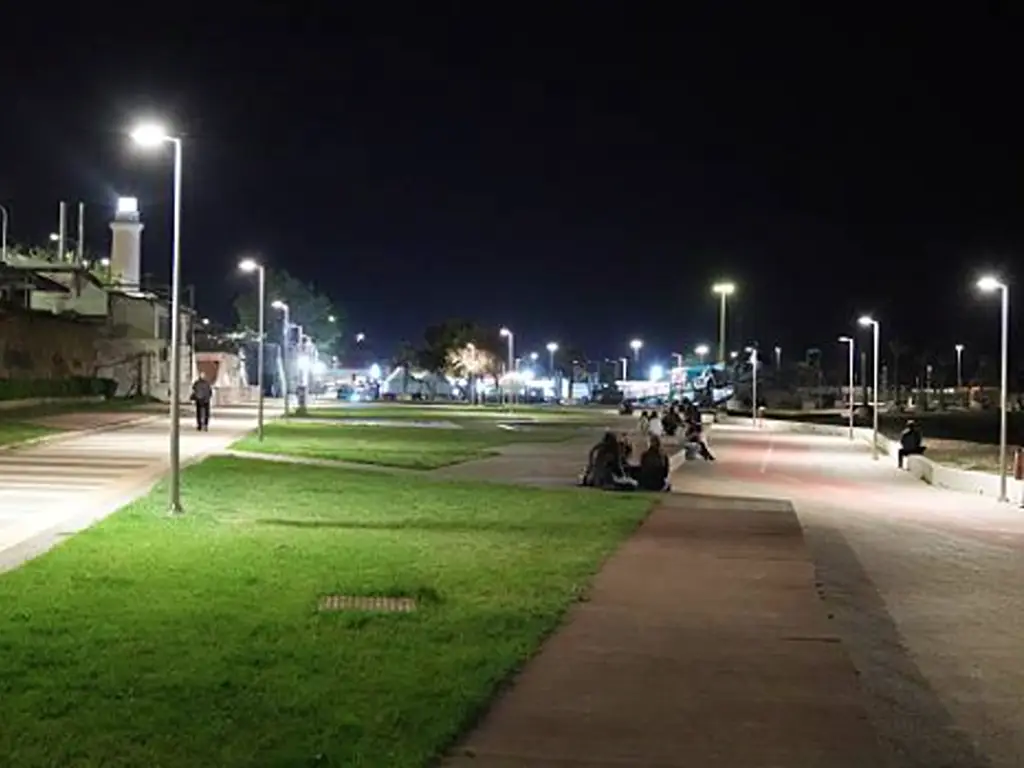
Adding a motion sensor upgrades this simple day/night logic to something far more energy-efficient. In a motion-activated configuration, the street light stays at a low baseline brightness (or off entirely) when the road is empty. When a passive infrared (PIR) sensor — typically with a detection range of 6 to 12 meters and a cone angle of 120 to 180 degrees — picks up the heat signature of a vehicle or pedestrian, the microcontroller ramps the light to full brightness. After a preset delay with no further movement detected, the light dims back down. This “trailing dimming” approach, where lights brighten ahead of a moving vehicle and dim behind it, can cut energy use by more than half compared to always-on operation on low-traffic roads.
IoT-Enabled Smart Workflow — Remote Monitoring and Adaptive Control
When a municipality needs to manage not one road but thousands of street lights across an entire city, the basic LDR-plus-motion-sensor approach hits its ceiling. This is where IoT connectivity enters the picture.
In an IoT-enabled automatic street light system, each luminaire becomes a node in a networked architecture. The sensing layer expands beyond just light and motion to include real-time electrical monitoring: input voltage, operating current, power consumption, power factor, and internal temperature. These data points are collected by a controller unit — often based on an industrial-grade microcontroller or a dedicated LoRa node processor rated for -40°C to +85°C operation — and transmitted to a central management system (CMS) via a wireless protocol.
The choice of communication protocol is one of the most consequential design decisions in a smart street lighting project. Four options dominate the market:
| Protocol | Coverage Range | Data Rate | Best For |
|---|---|---|---|
| LoRaWAN | 2–5 km urban (15 km line-of-sight) | 0.3–50 kbps | Low-frequency status reporting, large-scale deployments |
| NB-IoT | Cellular network footprint | ~250 kbps | Urban areas with existing carrier coverage |
| Zigbee | ~100 m per hop (mesh) | 250 kbps | Dense deployments where nodes relay data to each other |
| PLC (Power Line Communication) | Over existing power cables | Varies | Retrofits where running new data cables is impractical |
On the receiving end, the CMS dashboard gives operators city-wide visibility: which lights are on, which are reporting faults, how much energy each zone consumed last night, and whether any luminaire’s temperature or power draw has drifted outside its normal range. The system can also push adaptive lighting schedules — for example, dimming to 50% brightness between midnight and 5 AM on residential streets, or boosting to full output during fog or heavy rain detected by environmental sensors. The industry standard for ensuring that CMS platforms and field controllers from different manufacturers can work together is TALQ certification, while DALI-2 and D4i standards govern luminaire-level digital control interoperability.
Core Components of an Automatic Street Light System
Once you understand how the system works, the next logical question is: what actually goes into one? Components can be grouped into three functional layers — sensing and control (the brain and senses), lighting and power (the muscle and heart), and structural protection (the skeleton and skin). Knowing what sits in each layer gives you a framework for evaluating whether a supplier’s bill of materials is complete or cut-corner.
Sensing and Control Components
The sensing layer determines how intelligently the system responds to its environment. At minimum, every automatic system includes an LDR or photodiode for ambient light detection. Most mid-range systems add a PIR sensor (6–12 m range, 120–180° field of view) for motion-based activation. Higher-end deployments may use microwave radar sensors that detect movement up to 30 meters away and can even sense through non-metallic enclosures — useful in areas where sensors cannot be mounted with a clear line of sight to the road. At the cutting edge, AI-enabled camera modules can distinguish between a pedestrian, a vehicle, and an animal, eliminating false triggers that waste energy.
The control layer processes these sensor signals and makes decisions. Entry-level systems use a simple comparator IC paired with a relay. Mid-tier designs employ microcontrollers like the ESP32 — popular in pilot projects for its built-in Wi-Fi and Bluetooth — or Arduino-compatible boards. For production-grade municipal deployments, industrial controllers with dedicated communication processors and surge protection rated to at least 10 kV (IEC 61643-11 Class II) are the standard. These controllers handle PWM (pulse-width modulation) dimming from 0 to 100%, execute stored lighting schedules, and manage the communication protocol stack.
Lighting and Power Components
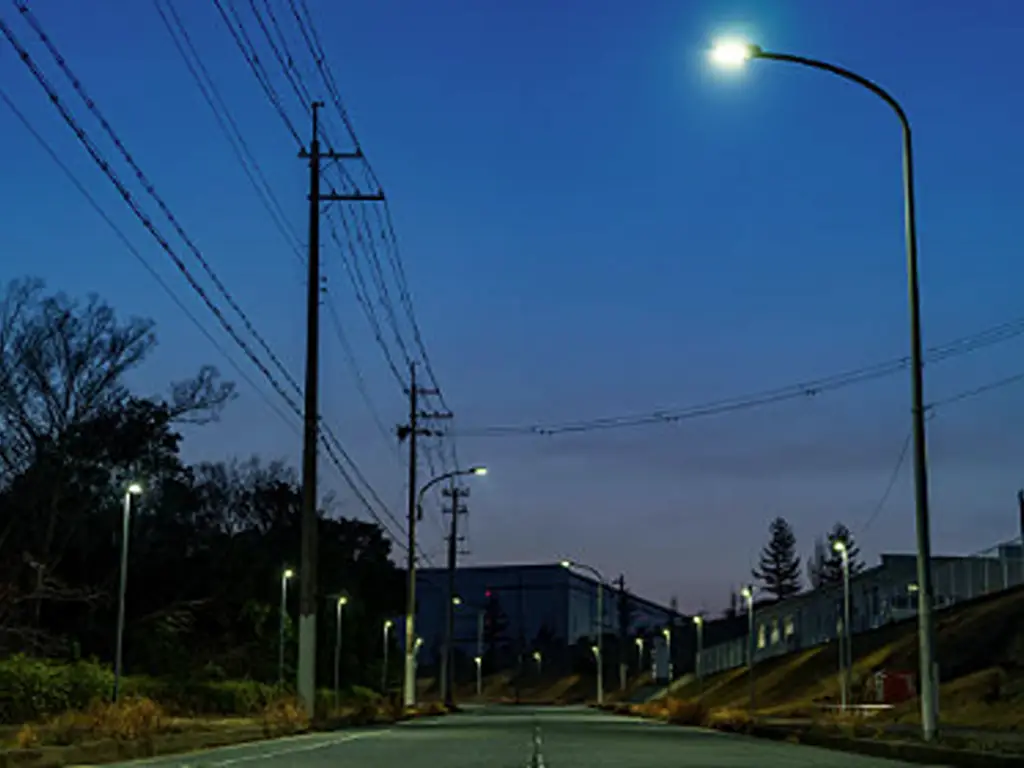
The LED chip is the system’s performance engine. Current mainstream LED street lights achieve system-level efficacy of 150–160 lumens per watt, with premium products reaching 190–200 lm/W (IEA 4E SSL Annex, 2024). Chip manufacturers matter here: CREE, Osram, Philips, and Nichia produce LM-80-certified LED chips with verified lumen maintenance data — meaning buyers can rely on L70 ratings of 50,000 hours or more when the luminaire is properly designed.
But the LED chip alone does not determine performance. The driver — the electronic power supply that converts AC mains voltage to the constant DC current LEDs require — is arguably equally important. Branded drivers from Philips, Meanwell, and Inventronics carry their own certifications and are typically specified for systems with 5-to-7-year warranties. Lower-cost systems may use in-house driver designs, which can work well for 2-to-3-year warranty products but introduce a failure point that buyers should scrutinize. Driver efficiency above 90% is the industry expectation.
For off-grid or hybrid installations, the power architecture changes significantly. A solar-powered automatic street light system typically pairs monocrystalline PERC photovoltaic panels with lithium iron phosphate (LiFePO4) batteries managed by an MPPT charge controller achieving 95% or higher conversion efficiency. Battery sizing depends on local solar irradiance data and the required autonomy — the number of consecutive cloudy days the system must ride through, typically 3 to 7 days for municipal projects. LiFePO4 chemistry has become the standard for outdoor solar lighting because it delivers 2,000 to 6,000 charge cycles at 80–90% usable depth of discharge, far outperforming sealed lead-acid alternatives.
Structural and Protective Components
The components that do not emit light often determine whether a system lasts five years or fifteen. The luminaire housing in quality street lights is made from ADC12 aluminum alloy — a high-purity die-casting grade with roughly 9.6–12% silicon and 1.5–3.5% copper content, offering a thermal conductivity of approximately 96 W/m·K. This matters because LED lifespan is directly tied to operating temperature: every 10°C reduction in junction temperature roughly doubles the LED’s expected life.
The housing’s protective ratings are non-negotiable for outdoor use. An IP65 rating means the luminaire is fully dust-tight and protected against water jets from any direction; IP66 adds protection against powerful water jets, which is advisable in coastal or monsoon regions. Impact resistance is rated on the IK scale — IK08 (withstanding 5 joules of impact, equivalent to a 1.7 kg mass dropped from 300 mm) is the practical minimum for roadside installations. For corrosion protection, quality manufacturers submit their housings to salt spray testing per ISO 9227, with a benchmark of 1,000 hours without red rust formation considered high-grade.
Optical elements — the lenses that shape the light distribution pattern on the road — should maintain more than 92% light transmittance after five years of UV exposure. Type I through Type V lens distributions (defined by IESNA standards) allow engineers to match the light pattern to the road geometry, ensuring light lands on the pavement where it is needed rather than spilling into adjacent properties or the night sky.
Types of Automatic Street Light Systems
With the component landscape clear, the next question is: what configurations are available? The market offers a spectrum of options, broadly defined by two variables — power source and intelligence level.
| System Type | Power Source | Intelligence Level | Typical Application | Relative Cost | Installation Complexity |
|---|---|---|---|---|---|
| Basic AC Auto | Grid AC | LDR on/off only | General roads, parking lots | Low | Low |
| Motion-Sensing AC | Grid AC | Motion detection + adaptive dimming | Low-traffic roads, campuses, industrial parks | Medium | Medium |
| IoT Smart AC | Grid AC | Networked monitoring + remote control | Urban arterials, smart city projects | High | Medium–High |
| Basic Solar Auto | Solar + Battery | LDR on/off only | Remote roads, rural electrification | Medium | Medium |
| Smart Solar | Solar + Battery | Motion sensing + IoT connectivity | Off-grid smart projects, donor-funded deployments | High | Medium–High |
| All-in-One Solar | Integrated Solar | LDR + motion sensing | Residential communities, pathways, rapid deployment | Medium–High | Lowest |
Which type fits your project depends on three practical constraints: whether grid power is available at the installation site, what level of remote visibility you need over system performance, and what your maintenance team is equipped to handle. A rural road in a developing region with no grid access and limited maintenance capacity favors an all-in-one solar unit — simple to install and largely self-sufficient. A city arterial with existing power infrastructure and a centralized asset management team justifies the higher upfront cost of an IoT smart AC system because the operational savings from predictive maintenance and adaptive scheduling recoup the investment over time.
Key Benefits of Automatic Street Light Systems
The shift from manually controlled or timer-based street lighting to automatic systems delivers measurable improvements across four dimensions.
Energy savings is the headline number that drives most procurement decisions. The U.S. Department of Energy’s Municipal Solid-State Street Lighting Consortium, which collected data from member cities across the country, found that cities regularly report energy savings of 50% to 80% when switching from conventional always-on operation to LED luminaires with adaptive controls (DOE MSSLC, 2013). A separate technical assessment of an adaptive lighting deployment in Cambridge, UK, documented 55% initial savings, with the figure tapering to a still-substantial 36% as luminaires approached end-of-life (OSTI Technical Report, 2025). These are not laboratory projections — they are field-verified numbers.
Maintenance cost reduction is the less obvious but equally important benefit. In a conventional system, the primary method of discovering a faulty street light is a citizen calling to complain. An IoT-enabled automatic system detects the fault the moment it occurs — a short circuit, an overheated driver, a battery reaching end-of-life — and flags it on the CMS dashboard with a GPS-tagged location. Maintenance crews no longer spend nights driving around looking for broken lights; they dispatch to known faults with the right replacement part on the truck. Over a decade of operation, this operational efficiency compounds significantly.
Public safety improvement comes from lights that adapt to real conditions rather than a fixed calendar. A street light that brightens when it detects a pedestrian crossing at 2 AM, or that stays at full output during fog when visibility drops, provides illumination where and when it actually matters. Research consistently links well-maintained, appropriately bright street lighting to reduced nighttime traffic accidents and lower rates of property crime.
Environmental responsibility rounds out the case. Reducing energy consumption directly reduces the carbon footprint of municipal operations. Additionally, the combination of precision optics and adaptive dimming reduces unnecessary upward light spill — a major contributor to urban skyglow that disrupts both astronomical observation and nocturnal ecosystems.
How to Choose the Right Automatic Street Light System
Choosing a system is not about comparing specification sheets — it is about answering three sequential questions: Does this system meet my project’s technical requirements? Has its quality been independently verified? And is the supplier equipped to support it over the long term? Skip any of these questions, and you risk discovering the answer after the purchase order is signed.
Technical Specifications to Evaluate
Start with your project’s actual conditions, not the supplier’s brochure. Road classification determines your illuminance requirements: the IES RP-8 standard recommends average maintained illuminance of 9–17 lux for major arterials, 6–12 lux for collector roads, and 3–6 lux for local residential streets, with uniformity ratios (average-to-minimum) of at least 0.3 for vehicular traffic areas (IES RP-8, 2022).
Environmental conditions then dictate protection parameters. A coastal installation in a humid, salt-laden climate demands IP66 ingress protection and housings tested to ISO 9227 salt spray standards. A deployment in a region where winter temperatures routinely drop below -20°C requires drivers and batteries rated for cold-start operation — a specification that separates industrial-grade components from commercial-grade ones. Desert installations add a different stressor: fine dust that clogs ventilation paths and abrades optical surfaces over time, making IP66 dust-tight sealing and tempered glass lenses mandatory.
Your operational model determines the intelligence level you actually need. If your maintenance team has no capacity to monitor a software dashboard, paying for IoT connectivity is wasted money. Conversely, if you are managing a donor-funded project that requires auditable performance data — energy saved, uptime percentage, fault response times — the telemetry an IoT system provides is not optional; it is a contractual requirement.
Quality Certifications and Testing Standards
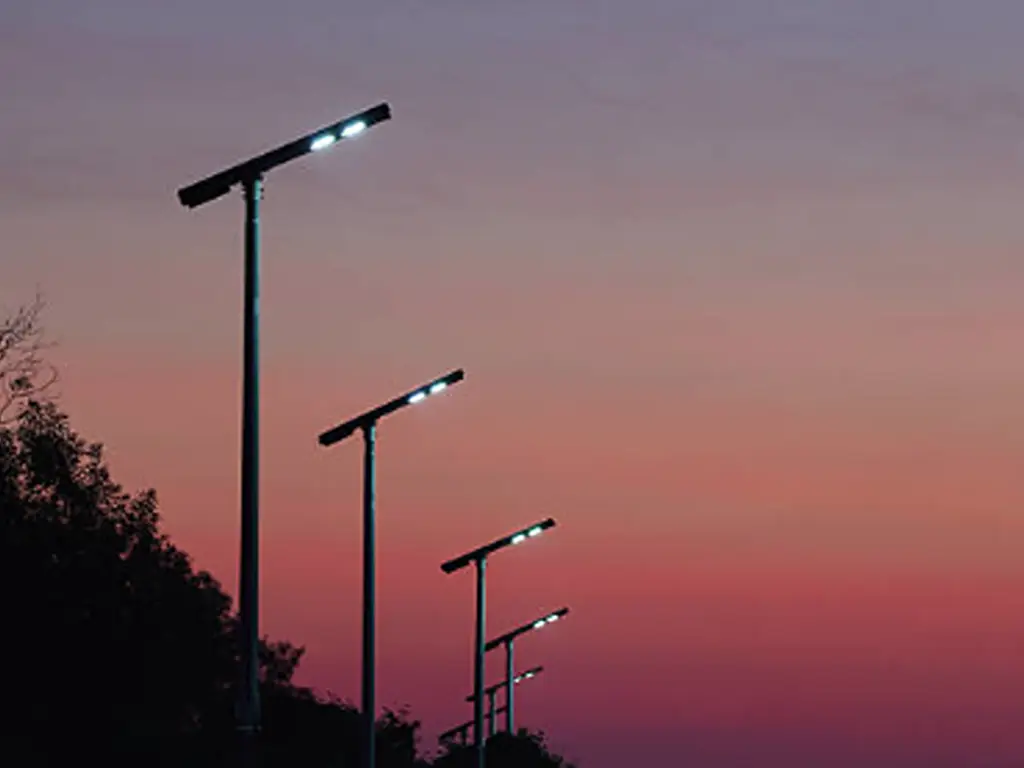
Certifications are the only objective evidence a buyer has. A supplier’s claim that their product is “high quality” is marketing. A UL mark, a TUV certificate, or an LM-79 test report from an ISO 17025-accredited laboratory is verification.
The certification landscape varies by market. North American projects require UL or ETL listing. The European market recognizes CE marking (mandatory) plus voluntary but highly respected marks like ENEC and TUV. Australian and New Zealand projects need SAA approval. For international tenders, ISO 9001 quality management certification is a baseline indicator that the manufacturer has documented and auditable production processes.
Beyond safety and management certifications, performance test reports tell you whether the product actually delivers what its data sheet promises. An LM-79 report provides the complete photometric profile — total luminous flux, efficacy, color temperature, color rendering index — measured under standardized laboratory conditions. An LM-80 report documents how well the LED chips maintain their light output over at least 6,000 hours of continuous operation, which engineers use to project the L70 lifespan. An IES file contains the luminaire’s light distribution data, which can be loaded into lighting design software like DIALux to simulate exactly how light will fall on a specific road geometry before a single fixture is installed.
Obtaining a full suite of international certifications is neither cheap nor easy. UL certification for a single product can cost upwards of $10,000 in testing fees alone. Industry estimates suggest that fewer than 10% of LED street light manufacturers hold the complete set of UL, ENEC, and TUV certifications simultaneously — making the certification list a surprisingly effective filter in supplier shortlisting.
Evaluating Manufacturers and Suppliers
Once technical specs and certification requirements are clear, the final question is who to buy from. Four dimensions deserve scrutiny.
Production depth. A manufacturer that controls the entire production chain — from aluminum die-casting and CNC machining through SMT LED board assembly to final product integration and testing — has direct visibility into quality at every stage. A manufacturer that purchases pre-made housings and assembles third-party components has less control and less ability to trace the root cause when a quality issue arises. The difference shows up in product consistency: full-chain manufacturers can guarantee that the ADC12 aluminum specified in the design is the same alloy that went into the casting, because they poured it themselves. Assembly-only operations rely on their upstream suppliers’ honesty — which, in practice, means they cannot always verify the claim.
R&D and customization capability. A supplier with an in-house mold design team, a track record of launching new models annually, and the willingness to develop private molds for exclusive client designs brings value that goes beyond unit price. For brand owners and distributors, private mold development — where the client owns the mold and the supplier cannot sell that design to competitors — creates market differentiation and price protection that generic products cannot match.
Warranty and after-sales. The warranty is only as good as the supplier’s ability and willingness to honor it. A 5-to-7-year warranty backed by a supplier with in-house failure analysis capability and a policy of covering one-way shipping and customs fees for warranty claims is fundamentally different from a 5-year warranty offered by a trading company that will be unreachable when problems arise. Key questions to ask: Does the supplier have a documented warranty claim process? What is their guaranteed response time for international inquiries? Do they maintain a stock of critical spare parts, or is every warranty replacement a made-to-order production run?
Project references. A supplier that has delivered street lighting for recognizable projects — international airports, UN agency deployments, large municipal retrofits — has survived the scrutiny of professional procurement processes. Ask for project lists with locations and installation years. The best suppliers can provide client contacts for reference checks.
A few red flags should stop a procurement process in its tracks: prices significantly below market averages for equivalent specifications, unwillingness to share LM-79 or LM-80 test reports, lack of any international certification beyond self-declared CE marking, and an absence of verifiable project references. Any one of these is cause for caution. Two or more is cause to walk away.
- Prices significantly below market averages for equivalent specifications
- Unwillingness to share LM-79 or LM-80 test reports
- Lack of any international certification beyond self-declared CE marking
- Absence of verifiable project references
- Any two of the above — walk away
Installation, Maintenance, and Cost Considerations
Even the best-chosen system underperforms if installed poorly or neglected afterward. Installation starts with site planning: pole spacing typically ranges from 25 to 50 meters, determined by mounting height (poles are usually 6 to 12 meters for roadway lighting) and the luminaire’s photometric distribution pattern. A common rule of thumb is that pole spacing should be roughly 3 to 4 times the mounting height. For solar systems, ensuring the PV panel faces the correct azimuth with no shading from buildings or vegetation is critical — a partially shaded panel can lose far more output than the shaded fraction suggests.
Post-installation maintenance in an automatic system looks different from conventional maintenance. The focus shifts from reactive repairs to preventive monitoring. Key tasks include periodic cleaning of PV panels and optical lenses (dust accumulation degrades both solar yield and light output), annual inspection of waterproof seals and cable glands, and review of CMS fault logs to identify units showing early signs of degradation before they fail outright.
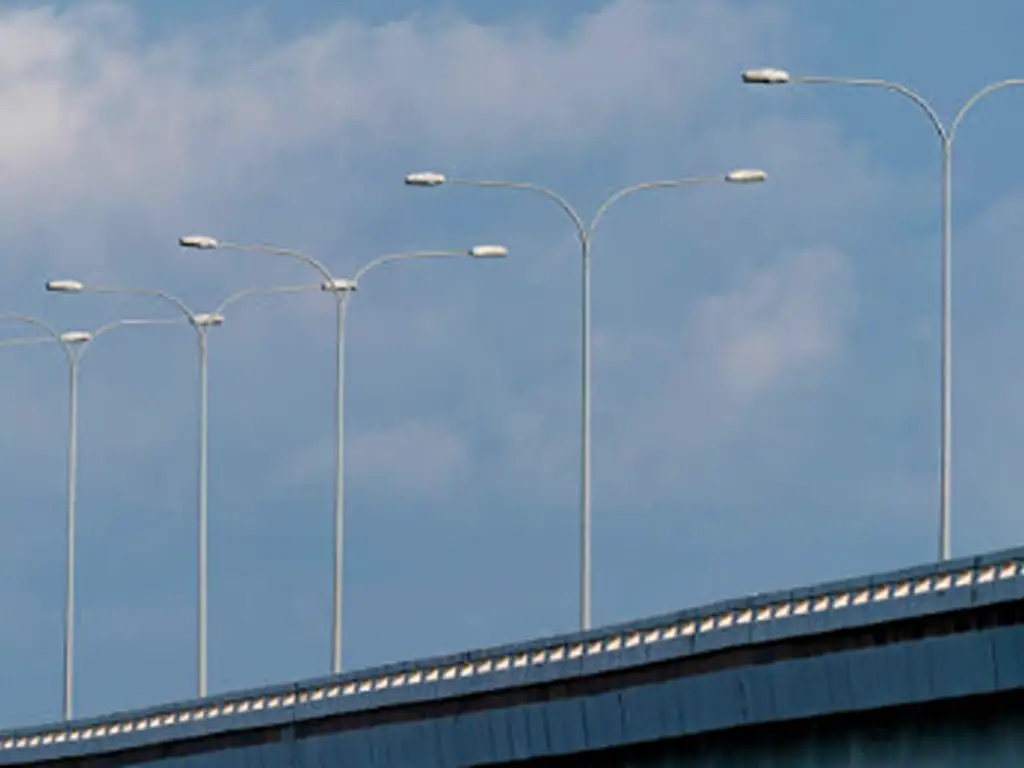
The cost conversation should always be framed in terms of total cost of ownership, not upfront purchase price. A typical solar street light system carries an initial capital expenditure of $1,200 to $3,000 per pole, compared to $800 to $1,800 for a grid-connected LED installation. But over a 15-year lifecycle, the solar system’s near-zero energy cost recoups the premium: total 15-year TCO for solar typically lands in the $1,500 to $4,000 range per pole, while grid-connected systems accumulate $1,000 to $3,000 in electricity costs alone, pushing total TCO to $2,100 to $5,700. These figures are indicative — actual costs depend on local electricity tariffs, solar irradiance, labor rates, and shipping logistics — but the pattern holds across most deployment scenarios: solar costs more upfront and less over time.
Near-zero energy cost
Higher upfront, lower TCO
$1,000–$3,000 in electricity
Lower upfront, higher TCO
For procurement professionals evaluating suppliers in this space, manufacturers with a full set of international certifications — including UL, TUV, ENEC, SAA, and ISO 9001 — and in-house CNAS-standard testing laboratories represent a reliably vetted starting point. You can review certification details at WosenLED’s certifications page or contact their team for project-specific inquiries.
References
- U.S. Department of Energy, Municipal Solid-State Street Lighting Consortium. “Model Specification for Adaptive Control and Remote Monitoring of LED Roadway Luminaires, V1.0.” 2013. https://www.energy.gov/
- OSTI. “Adaptive Lighting for Streets and Residential Areas.” 2025. https://www.osti.gov/biblio/2569693
- IEA 4E SSL Annex. “LED Lighting Product Tiers.” 2024. https://www.iea-4e.org/
- Illuminating Engineering Society. “ANSI/IES RP-8-22: Recommended Practice for Roadway Lighting.” 2022. https://www.ies.org/
- IPWEA. “Street Lighting and Smart Control (SLSC) Programme — Model Specifications.” https://www.slsc.org.au/
- TALQ Consortium. “Tender Template for Smart Outdoor Lighting, Edition 4.” 2024. https://www.talq-consortium.org/
- WosenLED. “Homepage.” https://www.wosenled.com/
- WosenLED. “Patents & Certifications.” https://www.wosenled.com/about-us/patents-certificates/
- WosenLED. “Contact.” https://www.wosenled.com/contact/


 English
  Spanish
  French
  German
  Italian
  Arabic
  Russian
  Portuguese