
If you type “how much does a street light cost” into Google, you are probably not asking out of idle curiosity. You have a project — a parking lot to light, a municipal road to retrofit, a development to spec — and you need a real number before you can move forward.
The shortest honest answer: $40 to $15,000+ per light. The gap between those two numbers is not someone trying to overcharge you. It is the difference between buying a bare LED fixture factory-direct from China and installing a decorative concrete streetscape pole in a US city center.
This guide walks you through every layer of street light cost — fixture pricing, installation scenarios, operating expenses, and the evaluation framework you need to judge whether a manufacturer’s quote is fair. Along the way, you will find real municipal budget data, a spec-to-price reference table, and a seven-point checklist for vetting suppliers.
What Determines Street Light Pricing — The Key Factors
Before we get to specific dollar figures, four variables explain nearly the entire $40-to-$15,000 spread. Understanding them will make every number in this guide make sense.
Wattage and light output. A 30W LED (roughly 4,000 lumens, enough for a residential side street) and a 300W LED (roughly 42,000 lumens, built for a highway interchange) are fundamentally different products. More wattage means a larger housing, more aluminum for heat dissipation, a higher-capacity driver, and more LED chips — all of which add cost proportionally.
Materials and manufacturing quality. The difference between a $60 street light and a $200 street light of the same wattage often comes down to the housing material and thermal design. High-purity ADC12 die-cast aluminum with copper-core substrates (18µm copper thickness minimum) costs more than basic steel or thin-gauge aluminum, but it determines whether the fixture lasts 50,000 hours or fails at 15,000. Cheap housings trap heat, and heat is what kills LEDs.
Certifications. A fixture carrying only CE and RoHS might cost $60 at 100W. The same fixture with UL listing, DLC Premium qualification, and ENEC certification can cost $110–$150 — nearly double. Those certifications are not paperwork; they are independent verification that the product meets safety and performance standards required for municipal projects and utility rebate programs in North America and Europe.
Order quantity. A 100-unit order and a 10,000-unit order can differ in unit price by 20–35%. Factories optimize production runs, and setup costs (SMT programming, assembly line configuration) amortize across volume.
With these drivers in mind, here is what the hardware actually costs.
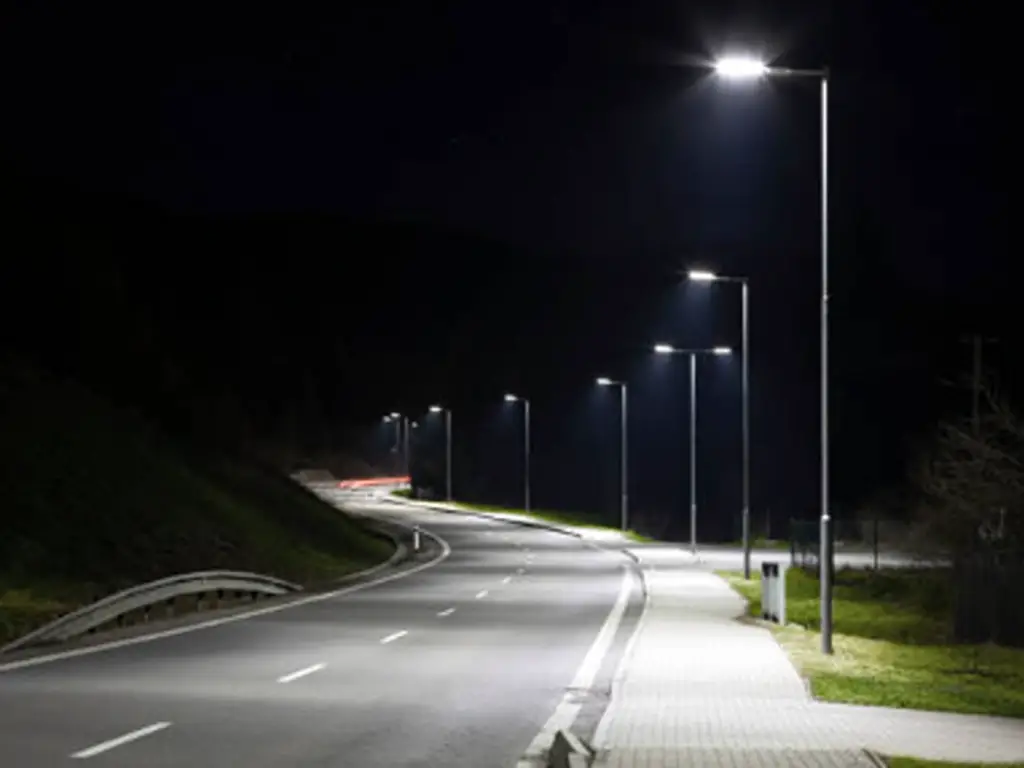
Factory-direct LED fixture pricing (FOB China) for 30W to 300W+ street lights, depending on wattage, certification, and component quality.
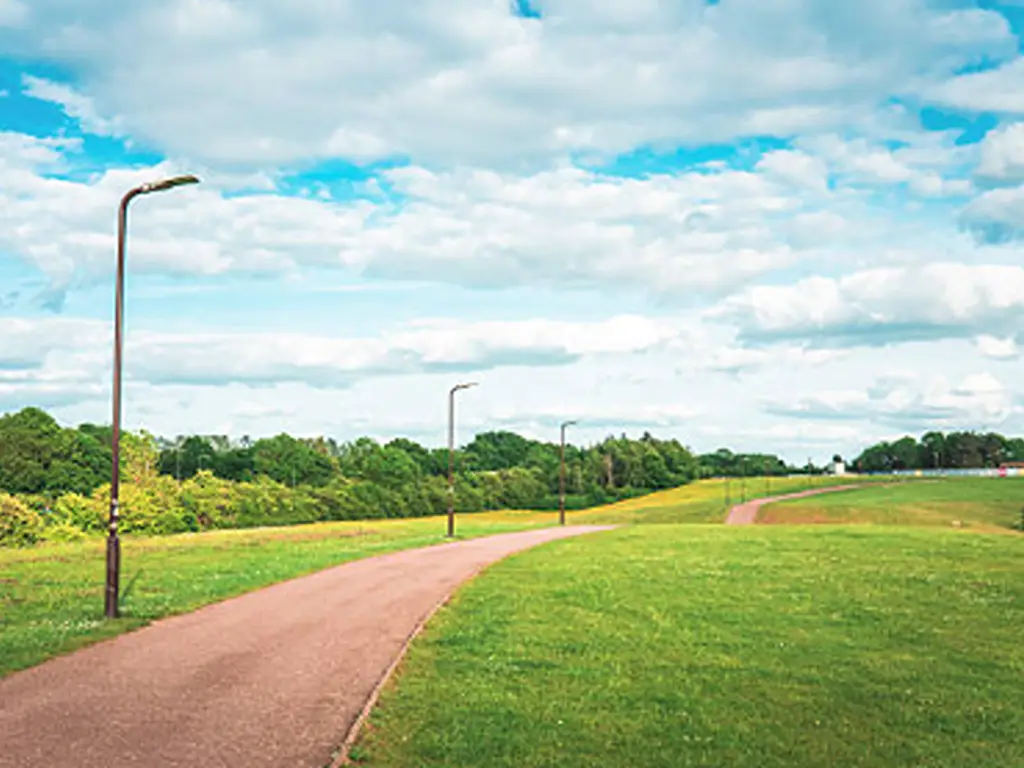
Complete installation including pole, foundation, wiring, labor, and commissioning. Retrofits start at $300; new construction runs $1,200–$5,000 per light.
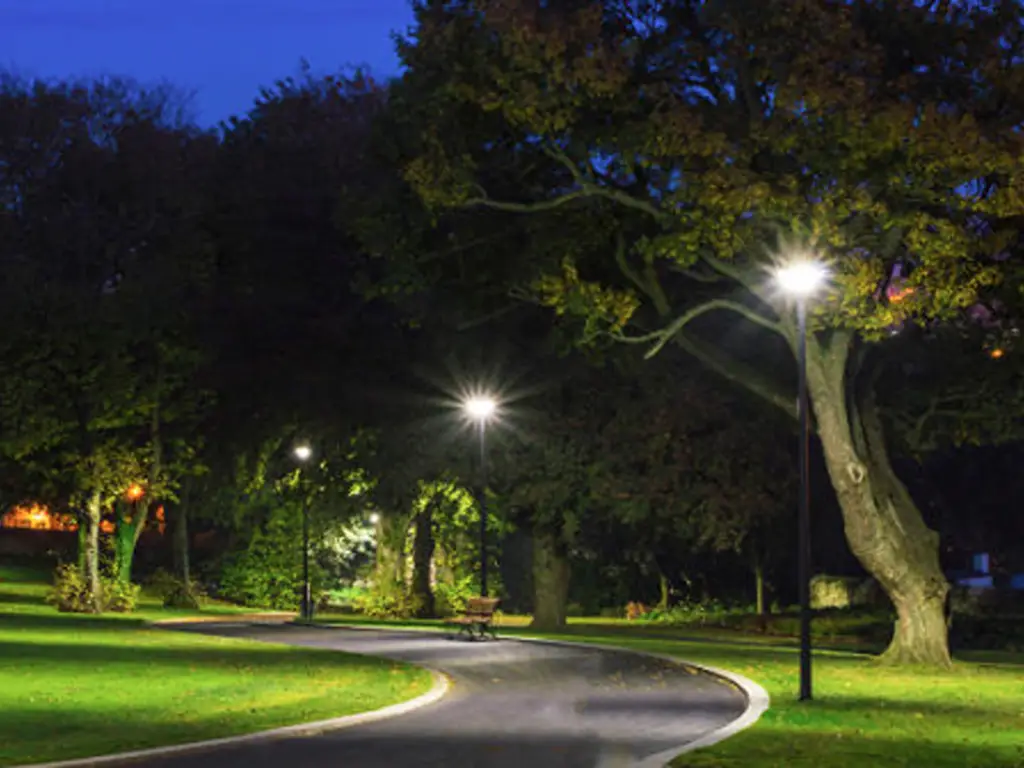
Custom-molded decorative poles with Dark Sky optics, utility coordination, and bespoke installation. Category entirely separate from standard street lights.
Street Light Fixture Costs — What the Hardware Actually Costs
LED street light fixtures, purchased factory-direct (FOB China), range from roughly $40 to over $1,000 depending on wattage, component quality, and certification level. Your price band is set by three variables: how much light you need, which certifications your market requires, and whether you buy direct or through a distributor. The three tiers below cover the full spectrum.
Budget and Low-Wattage LED Fixtures (30W–60W)
This is the entry point — the price range most people picture when they first ask what a street light costs. A 30W LED fixture producing about 3,900–4,200 lumens (equivalent to an old 70W high-pressure sodium lamp) runs $40–$80 FOB China. At 60W (roughly 8,000 lumens), expect $80–$150.
These fixtures typically use ADC12 aluminum housings with IP65 weather sealing and carry basic CE and RoHS certifications. The drivers are usually standard domestic brands rather than the premium names. The L70 lifespan rating is typically 50,000 hours at this tier — that is the point at which the LED output drops to 70% of its original brightness.
One real data point: a 30W LED street light was listed at $66.60 on a major global B2B sourcing platform in 2026. Through a US distributor, that same fixture would retail for $100–$300.
For residential roads, walkways, and small parking areas, this tier does the job — as long as your project does not require DLC or UL certification for utility rebates. If it does, you are moving to the next tier.
Mid-Range Commercial LED Fixtures (80W–150W)
This is where most commercial and municipal projects land. A 100W LED (13,000–15,000 lumens, replacing a 250W HPS) costs $150–$280 FOB China. A 150W fixture (21,000 lumens) runs $250–$400.
What you get for the price jump: IP66 sealing instead of IP65, IK08 or higher impact resistance, 10kV/5kA surge protection as standard, and — most importantly — branded drivers from Meanwell or Inventronics. The driver is the component most likely to fail in a cheap fixture. Upgrading from a generic driver to a Meanwell XLG or HLG series adds $15–$30 per unit but extends realistic service life by 30,000+ hours.
Certification premiums stack here. UL listing adds roughly $20–$40 per fixture. DLC Premium qualification adds another $15–$30. Together, a $180 base fixture becomes $215–$250 with full North American compliance — still far cheaper than buying through a US distributor, where the same certified fixture might cost $400–$600.
High-Power and Solar LED Fixtures (200W–400W+)
High-mast and highway-grade fixtures are a different category. A 200W LED (28,000 lumens) costs $350–$600 FOB. A 300W unit (42,000 lumens, for highway interchanges and port facilities) runs $600–$1,000+. At these wattages, thermal design becomes the dominant engineering challenge — you are paying for dense fin structures, thicker copper layers (≥18µm on the aluminum substrate), and drivers rated for sustained high-current operation.
Solar street lights deserve their own mention. An integrated solar unit (panel + LiFePO4 battery + LED fixture + pole adapter + MPPT controller) costs $150–$800 FOB depending on wattage and battery capacity. The battery chemistry is the hidden cost variable: LiFePO4 (lithium iron phosphate) batteries cost 30–50% more than standard lithium ternary batteries but deliver 2,000–3,000 charge cycles versus 500–800 — effectively tripling the battery’s service life. For any project where you cannot easily send a crew to replace batteries, LiFePO4 is the only defensible choice.
Installation Costs — Poles, Labor, and the Hidden Expenses
Here is the number that surprises most first-time buyers: installation often costs three to ten times more than the fixture itself. Your installation budget depends almost entirely on one question — are you replacing an existing light or building from scratch?
Scenario 1: Fixture Replacement on an Existing Pole (Retrofit)
If the pole, foundation, and wiring are already in place and you are only swapping the luminaire, your per-light cost drops dramatically. A real benchmark: the City of Marshfield, Wisconsin, replaced 510 HPS fixtures with LEDs in 2024 at a cost of $189 per fixture (hardware) + $142.48 per fixture (labor and equipment) = $331.80 total per light (City of Marshfield). A two-person bucket truck crew completed each swap in roughly 30 minutes.
This is the best-case scenario. No trenching, no new poles, no concrete pours. If your project fits this profile, budget $300–$500 per light all-in.
Scenario 2: New Standard Installation (Pole + Foundation + Wiring)
Installing a street light where none existed before is a construction project with a construction budget. Here is the breakdown for a typical 6–8 meter steel pole installation:
| Component | Cost Range |
|---|---|
| Steel pole (6–8m, hot-dip galvanized) | $200–$500 |
| Concrete foundation (0.6m × 0.6m × 1.2m) | $200–$400 |
| Trenching and cable (YJV 3×2.5mm²) | $300–$800 |
| Pole erection and fixture mounting | $300–$800 |
| Electrical connection and commissioning | $200–$300 |
| Total per light (full new installation) | $1,200–$2,800 |
In the US, labor pushes costs higher. The City of Wheaton, Illinois, procured 81 LED fixtures in 2025 at roughly $1,005 per fixture including installation on existing infrastructure (City of Wheaton). With a new pole and foundation added to that equation, the US per-light figure for new installations lands at $2,000–$5,000, and higher in coastal metro areas where labor rates and permitting costs climb by 20–30%.
Regional multipliers matter: installation costs in China run roughly 30% of US rates; the European Union sits at around 120% of US costs; the Middle East approximately 70%.
Scenario 3: Decorative and Streetscape Lighting
If your project involves decorative poles — cast aluminum, custom-molded, or historically-styled — the cost curve shifts into an entirely different bracket. The City of Fort Lauderdale, Florida, paid $165,144 for 11 decorative concrete light poles with fixtures in 2025 — approximately $15,013 per unit (City of Fort Lauderdale). The original budget was $83,000; the city had to approve an additional $128,000.
Decorative poles often require custom molds ($5,000–$20,000 in tooling, amortized across the order), Dark Sky-compliant optics (upward light output ratio below 5%), and coordination with water, gas, and telecom utilities in the trench corridor. This is bespoke infrastructure, not a catalog item.
LED vs. Traditional Street Lights — A 10-Year Cost Comparison
| Cost Dimension | HPS 250W | LED 100W (Equivalent) |
|---|---|---|
| Initial fixture cost | $80–$150 | $150–$350 |
| 10-year energy cost (12h/night, $0.12/kWh) | ~$1,314 | ~$526 |
| Lamp replacements (2–3× over 10 years) | $90–$180 | $0 |
| Maintenance labor (bucket truck visits) | $300–$600 | $50–$150 |
| 10-Year Total Cost of Ownership | $1,784–$2,244 | $726–$1,026 |
LEDs deliver 50–60% lower total cost of ownership over a decade despite a higher upfront price. The payback period for an LED retrofit typically lands between three and six years, and with utility rebates (available for DLC Premium-listed products), it can drop to two to four years.
The LED advantage is not universal. In regions where electricity costs less than $0.05/kWh and maintenance labor is inexpensive, HPS can remain competitive on pure financial terms. The decision flips when you factor in light quality — LEDs provide better color rendering (CRI 70–80+ versus HPS’s ~25), instant-on capability without warm-up, and native compatibility with adaptive dimming controls that can cut energy use by an additional 20–40%.
A real-world benchmark: Los Angeles converted over 140,000 street lights to LED, achieving approximately $9 million in annual energy savings and a 63% reduction in energy consumption Los Angeles Bureau of Street Lighting. That scale of savings repeats across municipalities worldwide, which is why LED now dominates new street light procurement.
50–60%
Lower Total Cost vs HPS
Payback in 3–6 years
LA saved $9M/year across 140,000 fixtures
Operating Costs — Energy, Maintenance, and What to Budget Yearly
Once the lights are up, the ongoing costs are straightforward to calculate.
Energy. A 100W LED running 12 hours per night consumes 1.2 kWh per day. At the US average electricity rate of $0.12/kWh, that is $0.144 per day — roughly $52 per year per fixture. For a project with 50 fixtures, annual electricity costs land around $2,600. Double the wattage and you double the bill. Simple enough.
Maintenance. LED street lights require far less maintenance than HPS. Budget $20–$50 per fixture per year for cleaning, inspection, and occasional repairs. There are no bulbs to replace — LEDs degrade gradually rather than burning out suddenly. The main maintenance event is the LED driver, which typically lasts 7–10 years (its electrolytic capacitors are the wear item, not the semiconductors). A driver replacement costs $50–$150 in parts, plus a bucket truck visit.
One detail worth budgeting for: surge protection. A fixture with 10kV/5kA surge protection reduces driver failure rates from 5–8% per year to under 1% per year. That spec is the minimum for most North American municipal standards. Lightning strikes and grid switching surges are the silent killers of unprotected LED street lights.
Spec 10kV/5kA surge protection. It drops driver failure from 5–8% per year to under 1% — and costs about $5 extra per fixture.
If your fixtures include adaptive dimming (reducing output to 50% after midnight, for example), you can cut your annual energy bill by an additional 20–30%. The control node adds $20–$50 to the fixture cost but typically pays for itself within two years.
Street Light Cost by Specification — Quick Reference Table
The table below maps wattage, mounting height, and application to approximate price ranges. These are 2026 benchmarks — use them as a starting point, not a final quote.
| Wattage & Lumens | Mounting Height | Typical Application | FOB China (Factory) | US Installed (Est.) |
|---|---|---|---|---|
| 30W / 4,000 lm | 4–5m | Residential side streets, footpaths | $40–$80 | $300–$500 |
| 60W / 8,000 lm | 5–6m | Secondary roads, small parking lots | $80–$150 | $500–$1,200 |
| 100W / 14,000 lm | 6–8m | Urban main roads, commercial parking | $150–$280 | $1,200–$3,000 |
| 150W / 21,000 lm | 8–10m | Major arterial roads, industrial zones | $250–$400 | $2,000–$4,000 |
| 200W / 28,000 lm | 10–12m | Highways, large logistics yards | $350–$600 | $3,000–$5,000 |
| 300W / 42,000 lm | 12–15m | Highway interchanges, ports, stadiums | $600–$1,000+ | $5,000–$8,000+ |
Notes on using this table:
- FOB China prices assume mid-range configuration: ADC12 aluminum housing, IP66, CE+RoHS, domestic-brand driver. Add $30–$80 for UL/DLC certification.
- Solar variants add $200–$600 (LiFePO4 battery + panel + MPPT controller).
- Bulk orders (500+ units) typically receive 15–25% volume discounts.
- US installed costs assume Midwest labor rates; East/West Coast metro areas add 20–30%. Multipliers: China ~0.3×, EU ~1.2×, Middle East ~0.7×.
- Decorative/streetscape poles are not included in this table (budget $10,000–$15,000+ per unit separately).
Need a cost breakdown for your specific wattage and order quantity?
Get Your Project QuoteHow to Evaluate a Street Light Manufacturer’s Pricing
Knowing the price ranges is only half the battle. The harder question: when a manufacturer sends you a quote, how do you know whether the number is fair and the company behind it is legitimate? The street light export industry includes everything from fully integrated factories with three decades of history to trading companies that have never touched a production line. Here is a seven-point checklist for separating the two.
1. Verify certifications — do not just look at the certificate images. Anybody can paste a logo onto a PDF. Go to the issuing body’s website and search for the manufacturer by name or certificate number. UL certifications can be verified at productiq.ul.com using the UL File Number. ENEC certificates are searchable at enec.com. DLC-qualified products appear at designlights.org/search. If a manufacturer cannot — or will not — provide certificate numbers you can independently verify, treat the quote with skepticism.
2. Ask for the component brand list. A legitimate manufacturer can tell you exactly which brand of LED chip (CREE, Osram, Philips, Nichia) and which driver (Meanwell, Inventronics, Philips) goes into each fixture — by model number. If the answer is vague (“we use high-quality chips”), the components are unbranded and you are paying for an unknown.
3. Request a live factory video or video call. Every real manufacturer can walk you through their production floor on a video call within 24 hours of your request. If a supplier makes excuses — “the factory is too busy,” “our policy does not allow filming” — you are almost certainly talking to a trading company. Walk away.
4. Apply the price reasonability test. If a 100W LED street light is quoted below $40 FOB, something is missing — probably the driver brand, the aluminum thickness, or the surge protection. The component cost alone (LED chips + branded driver + ADC12 housing + lens + gaskets + packaging) makes a sub-$40 price point unsustainable at any quality level. Treat quotes more than 30% below the market ranges in this guide as red flags.
5. Read the warranty language carefully. A five-year warranty that says “we will replace defective products” is not the same as a warranty that says “we will replace defective products and cover one-way shipping and customs fees.” The second version costs the manufacturer real money and signals genuine confidence. Ask what specifically is covered: LED output degradation? Driver failure? Housing corrosion? The narrower the language, the less the manufacturer stands behind the product.
6. Test responsiveness. Send a technical question — something specific like “What is the L70 rating at 85°C ambient for your 150W fixture?” A direct factory with an engineering team will answer within hours, with data. A trading company will take a day or more and often reply with a brochure instead of a specification sheet.
7. Ask for verifiable project references. A manufacturer with real experience can name three projects — with locations, years, and fixture quantities — that you can independently confirm. Many will list client logos on their website; fewer can give you a project contact who will vouch for them. The manufacturers who can are the ones worth your time.
Supplier Evaluation Checklist
Certifications independently verified
Component brands confirmed by model number
Live factory video call completed
Price within market range (±30%)
Warranty covers shipping and customs
Technical question answered with data within 12 hours
Three verifiable project references provided
A factory-direct manufacturer that has been operating continuously since 1992, holds eight international certifications (UL, TUV, ENEC, CE, RoHS, SAA, ETL, ISO9001) verifiable through their issuing bodies, runs a CNAS-standard in-house lab performing over 50 quality tests per fixture, and backs its products with a five-to-seven-year warranty that includes one-way shipping and customs coverage — that is what the checklist looks like in practice. You can browse a factory-direct street light product line spanning 30W to 300W+, with certifications you can verify independently at UL, ENEC, and CE online registries — and a warranty that covers one-way shipping and customs rather than leaving those costs on your side of the transaction. When you apply the seven-point checklist to any quote you receive, you will know within an hour whether you are dealing with a manufacturer or a middleman.
Smart Buying Strategies to Reduce Your Street Light Cost
You have the price ranges. You have the evaluation framework. Here are five concrete actions that lower your total spend — each one is something you can implement on your next order.
5 Ways to Cut Your Street Light Cost
Standardize on existing designs
Every manufacturer has a catalog of mature molds. Custom housing adds $5,000–$20,000 in tooling before the first fixture is produced. Pick from an existing product line and put the tooling budget toward more fixtures.
Buy in bulk (15–25% discount at 500+)
The price difference between a 100-unit order and a 500-unit order is typically 15–25% per fixture. Consolidate orders across phases to spread fixed setup costs across more units.
Consolidate shipping (save 30–40% on freight)
A 40-foot high-cube container holds roughly 200–300 fixtures. Loading multiple product types into the same container reduces per-unit ocean freight from $25–$30 to $15–$20.
Use adaptive dimming (pays back in <2 years)
A control node that drops output to 50% after midnight costs $20–$50 per fixture and reduces annual electricity consumption by 20–30%. On a 50-fixture project, that’s roughly $300–$500 in annual savings.
Pursue utility rebates (50–80% of retrofit costs covered)
DLC Premium-listed LED street lights typically qualify for utility rebates of $50–$150 per fixture. Federal programs like the DOE EECBG grant can cover 50–80% of municipal retrofit costs.
The common thread across all five strategies: the cheapest quote almost never produces the lowest total cost. Price the full lifecycle, buy direct where you can, and use the evaluation framework above so the savings you find are real — not a discount on quality you will pay for later. Get the procurement right on your next order, and you will not be back here searching “how much does a street light cost” again. You will have a supplier, a spec, and a number you trust.
If you are comparing manufacturers and want a project-specific quote from a factory with 350,000+ installations across 88 countries — including projects for the UN Development Programme, Soekarno-Hatta International Airport, and the Sheraton Los Angeles Hotel — you can get a project-specific quote from WosenLED’s engineering team.
Get a Project-Specific Street Light Quote
Factory-direct pricing from a 32-year manufacturer. 12-hour response. 350,000+ installations across 88 countries.
References
- City of Marshfield, Wisconsin. “City Council Agenda Packet — LED Street Light Conversion.” August 2024. https://cms4files1.revize.com/marshfieldwi/Agendas,%20packets%20and%20minutes/CC/2024/CC240813P.pdf
- City of Wheaton, Illinois. “Resolution R-2025 — LED Fixture Procurement.” July 2025. https://il-wheaton.civicplus.com/AgendaCenter/ViewFile/Agenda/_07072025-2891?packet=true
- City of Fort Lauderdale, Florida. “NE 4th Avenue Lighting — Procurement Record.” May 2025. https://fortlauderdale.legistar.com/View.ashx?GUID=AD7B2351-2310-487C-871C-9733B841F0CD&ID=14127103&M=F
- DesignLights Consortium. “Qualified Products List — Outdoor Lighting.” https://designlights.org/search
- WosenLED. “LED Street Lights — Product Line.” https://www.wosenled.com/outdoor-lights/led-street-lights/
- WosenLED. “Patents & Certifications.” https://www.wosenled.com/about-us/patents-certificates/
- WosenLED. “After-Sale Services.” https://www.wosenled.com/how-it-works/after-sale-services/
- WosenLED. “Projects.” https://www.wosenled.com/resources/projects/
- WosenLED. “Contact.” https://www.wosenled.com/contact/

 English
  Spanish
  French
  German
  Italian
  Arabic
  Russian
  Portuguese