
Whether you’re a lighting brand owner sourcing private-mold LED street lights, a contractor bidding on municipal infrastructure, or a distributor building a multi-category outdoor lighting portfolio — the manufacturer you choose determines not just your product quality, but your reputation, your margins, and your project timelines. Yet the process of evaluating street light manufacturers is surprisingly opaque. Most ranking articles give you a list of names and spec sheets, but rarely explain how to judge whether a manufacturer actually fits your procurement profile.
This guide takes a different approach. Instead of another top-10 list, we’ll walk through the evaluation dimensions that matter — broken down by buyer type — so you can build your own informed shortlist.
What Separates a Top-Tier Street Light Manufacturer from the Rest
Before looking at any individual manufacturer, you need a reliable evaluation framework. Too many buyers start by comparing wattage and lumen output, then get surprised when a product fails two years into a five-year project. The real differentiators between street light manufacturers sit upstream of the spec sheet — in how much of the production chain they actually control.
Four dimensions matter most.
Production autonomy. A manufacturer that does die-casting, machining, assembly, and quality control in-house has a fundamentally different cost structure and quality control from one that buys shells from a third-party supplier and only handles final assembly. When the shell is outsourced, the manufacturer can’t control material purity, casting density, or finish consistency — three things that directly determine how long a street light survives in coastal salt spray or desert heat.
Certification coverage. CE and RoHS are table stakes. The real question is whether the manufacturer holds the certifications your specific target market requires. UL Listed for North America. ENEC or TUV for high-end European government projects. SAA for Australia. A manufacturer with comprehensive certifications across all three regions signals something beyond paperwork: it means they have in-house testing infrastructure that passes third-party audits.
Partnership depth. “We do OEM” means nothing without qualification. There’s a spectrum from label-swapping to co-developing exclusive molds — and the right level depends entirely on your business model. We’ll map this in detail later.
Warranty and after-sales infrastructure. A 5-year warranty is only as good as the manufacturer’s willingness to dispatch a technician when something goes wrong. Ask: does the warranty cover the whole fixture or only the LED? Does it include labor, or parts only? What’s the actual response time — and is it documented in the SLA?
These four dimensions form the backbone of every evaluation that follows.
Street Light Manufacturers by Buyer Type — Who Serves Whom Best
There is no universal “best” street light manufacturer. The right one depends entirely on what kind of buyer you are. A brand owner seeking exclusive molds and design partnership needs a fundamentally different manufacturer profile than a contractor bidding on government tenders, or a distributor optimizing for multi-SKU procurement efficiency. Here’s how each buyer type should evaluate their options.
For Lighting Brand Owners — Prioritizing OEM Depth and Design Exclusivity
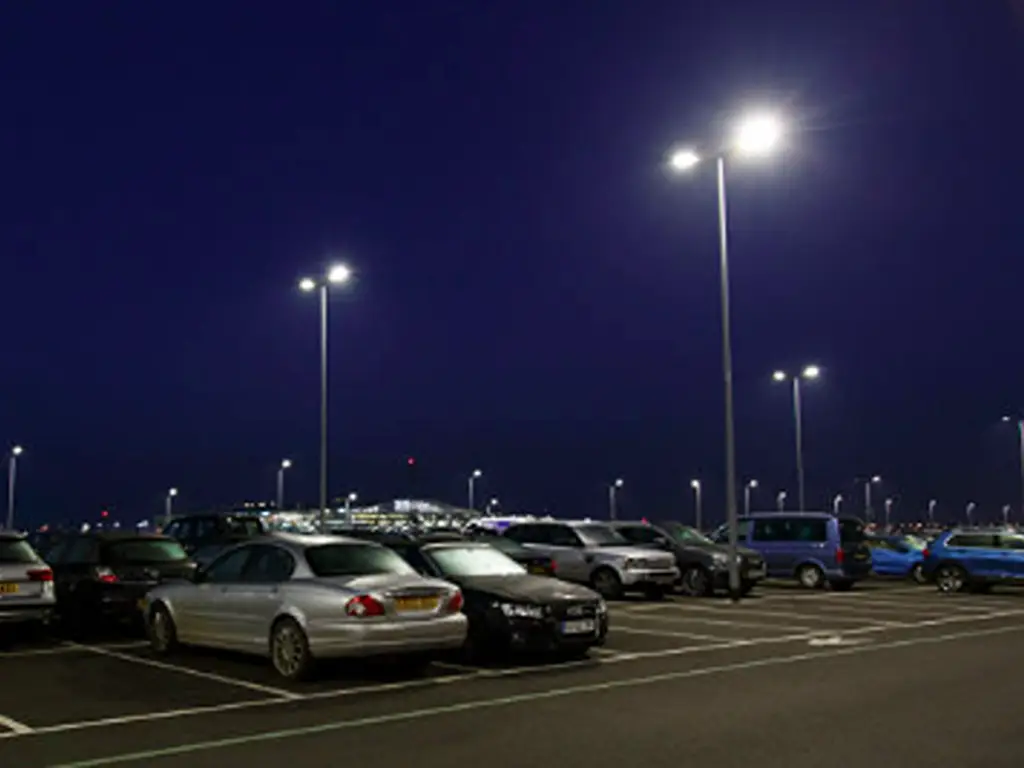
Brand owners — particularly those serving North American, South American, and European markets — don’t just need products. They need manufacturing partners who can help them build a defensible product line that competitors can’t easily replicate. The evaluation starts with one question: how deep does the OEM/ODM capability go?
The key dimensions for brand owners are mold ownership (who pays for the mold, and who owns it?), design collaboration capability (does the manufacturer propose design options, or just execute your specs?), customization breadth (can they embed your logo directly into the die-cast housing, or is it limited to silk-screen on the box?), and exclusivity terms (will your private-mold product be sold to anyone else in your region?).
Across the global landscape, tier-one giants like Cree Lighting (USA) lead on optical performance — their NanoOptic system delivers 140+ lm/W efficacy and their name carries weight in specification approvals across North America. But their OEM flexibility is limited: they sell their own branded products, and deep customization isn’t their model. What these global leaders typically do not offer is the combination of full-chain production autonomy (from raw aluminum ingot to finished luminaire under one roof) plus flexible OEM partnership models. Western manufacturers give you brand prestige and regional market proximity, but at higher MOQs, higher prices, and with less customization leeway. Chinese OEM specialists — those with genuine in-house die-casting, machining, and mold departments — offer deeper customization at more competitive price points. But they require more rigorous vetting on quality consistency and certification authenticity.
Take WOSEN, a Zhongshan-based manufacturer with 30 years in LED lighting. They occupy the brand-owner OEM segment with a full-chain model: in-house die-casting (400-500T high-pressure horizontal equipment), in-house machining (CNC 4-axis and 5-axis), a 20-year-experience mold department producing 100+ unique designs, and three mold-fee partnership models — customer-paid, co-invested, or manufacturer-invested — with region-exclusivity protection. Compared to the highest-tier global names, the value proposition shifts from “premium brand name” to “deeper manufacturing flexibility at competitive cost.”
For Project Contractors — Certifications, Project Support, and Warranty That Holds Up
Project contractors face a different evaluation logic. Whether bidding on municipal road lighting in the Middle East, infrastructure projects in Southeast Asia, or government tenders in Africa, their primary risk isn’t “will my product look unique?” — it’s “will my supplier’s certifications pass the tender review board?” and “if 5% of the lights fail after 18 months in desert conditions, who handles it and how fast?”
The non-negotiable starting point is certification breadth by target region. North American projects require UL Listed or ETL (Intertek) — and “designed to UL standards” is not the same as holding an actual UL certificate with a verifiable file number. European government projects increasingly require ENEC, which involves third-party full inspection rather than CE self-declaration. Australian projects need SAA. A manufacturer that holds all three — UL, ENEC, and SAA — sits in roughly the top 10% of the industry.
Acuity Brands (USA), through its Holophane and American Electric Lighting divisions, dominates North American municipal projects with the widest portfolio, nLight and XPoint wireless control ecosystems, and a distributor-specifier network built over a century. Schréder (Belgium), an independent family-owned manufacturer since 1907, brings smart-city integration (sensors, CCTV, connected lighting) across 70+ countries. Their track record includes the Channel Tunnel and Champs-Élysées. Signify (Philips Lighting, Netherlands) offers the global gold standard: the Interact IoT platform, the broadest product portfolio, and the newly launched smart solar street light series from 2025.
The trade-off with all three is structural: high MOQs, premium pricing (typically 2-3× comparable Chinese manufacturing), and lead times that assume a procurement cadence different from what many emerging-market contractors can accommodate. For project contractors whose budgets don’t stretch to the Acuity/Schréder/Signify tier but whose certification requirements are equally strict, the evaluation expands to include manufacturers that match the certification stack while offering more flexible terms.
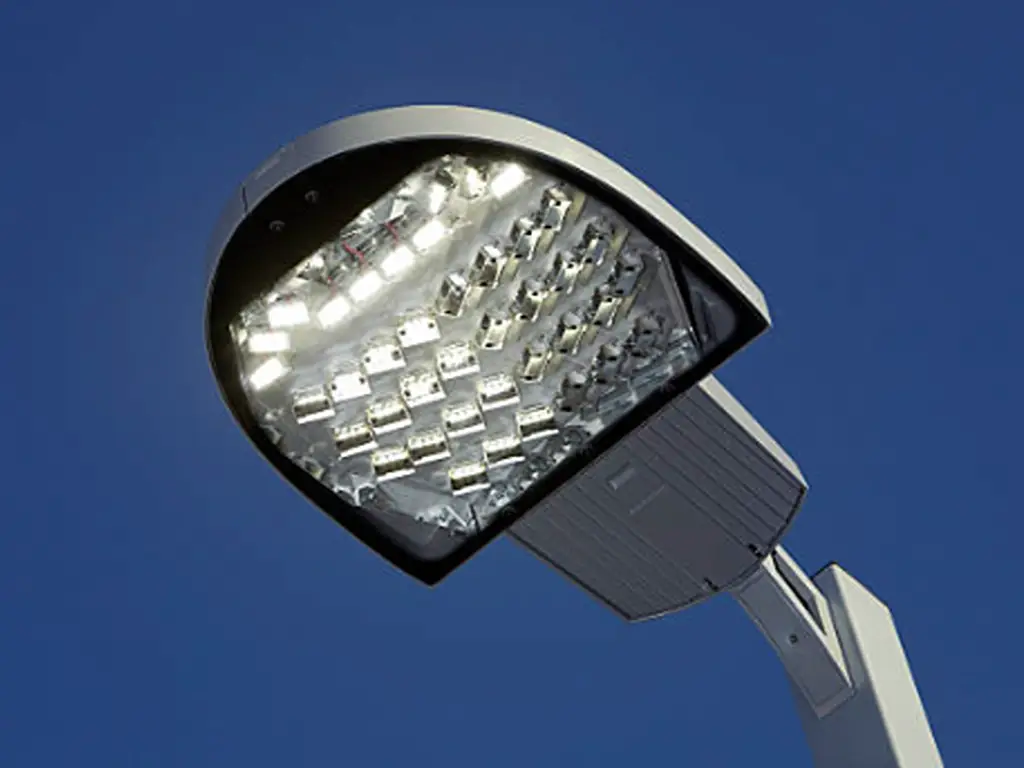
For context, WOSEN holds UL, ETL, ENEC, TUV, CE, and SAA certifications — a combination held by roughly 10% of Chinese street light manufacturers — backed by a CNAS-standard laboratory running 50+ test procedures per product (aging, salt spray, IP ingress, EMC, integrating sphere photometry, thermal-humidity cycling from -40°C to 150°C). Their warranty extends to 5-7 years on premium products using brand-name components (CREE/Osram/PHILIPS/Nichia LEDs, PHILIPS/Meanwell/Inventronics drivers), with a 12-hour international response SLA and on-site dispatch capability.
For Distributors — Product Range, Price Elasticity, and Supply Stability
Distributors and wholesale buyers evaluate manufacturers through a supply-chain lens. Their question isn’t “can you build my exclusive design?” or “can you support my tender documentation?” — it’s “can you keep my warehouse stocked across multiple product categories at predictable prices and delivery dates?”
The evaluation pivots on three dimensions: product line breadth (can one manufacturer cover outdoor street lights, flood lights, high bays, and solar lights — or do you need to manage four separate supplier relationships?), price stability (does the manufacturer have enough control over raw material sourcing to avoid passing every aluminum price fluctuation to you?), and delivery reliability (is the lead time a genuine commitment backed by visible production scheduling, or an estimate that drifts with every order?).
Thorn Lighting (UK, part of the Zumtobel Group) offers strong European distribution coverage across professional indoor and outdoor ranges, with EPD environmental product declarations that matter for EU tenders. TRILUX (Germany) brings German manufacturing quality and DALI-2/D4i certified product lines — excellent for distributors serving the Central European commercial market. GE Current (USA, now under Savant) carries 130+ years of brand equity with a broad portfolio spanning outdoor, indoor, and industrial categories.
WOSEN’s distributor proposition centers on this breadth-depth combination: nine product lines (street lights, flood lights, stadium lights, high bay lights, wall packs, recessed lights, panel lights, solar street lights, solar flood lights) produced in a 30,000 m² facility with 300,000 pcs/month capacity, 100-unit flexible MOQ, and 35-40 day standard lead time. ERP-tracked production progress and visualized container-loading documentation give distributors supply-chain visibility uncommon at this tier.
- OEM Depth
- Mold Exclusivity
- Design Collaboration
- Certification Breadth
- Project Support
- Warranty Terms
- Product Range
- Price Stability
- Delivery Reliability
Behind the Spec Sheet — Production Capabilities That Actually Matter
Two street lights can both list “die-cast aluminum housing, IP65, 50,000-hour lifespan” on their spec sheets — and one will still be working in year five while the other has corroded through by year two. The difference sits in production details that most buyers never think to ask about. Here are the four signals that separate manufacturing depth from marketing claims.
Die-casting capability. The tonnage of a manufacturer’s die-casting machines tells you how much pressure they can apply to molten aluminum. Higher pressure means denser, more uniform housing with fewer internal air pockets. Industry standard equipment runs 200-300 tons. Top-tier manufacturers run 400-500 tons, using high-pressure horizontal die-casting that controls internal gas ratios during the pour itself. The practical difference: a denser casting dissipates heat more efficiently, directly extending LED and driver lifespan.
Aluminum purity and batch verification. Most manufacturers claim “ADC12 aluminum.” Far fewer can prove it with batch-level lab analysis. ADC12 has higher purity than the commonly substituted ADC7 — the difference affects thermal conductivity, corrosion resistance, and structural integrity. Ask to see a random batch test report, not a one-time material certificate. If the manufacturer hesitates, you have your answer.
In-house mold department. A manufacturer that owns its mold-making capability — rather than outsourcing to a third-party mold shop — achieves higher design fidelity and longer mold life (40,000-50,000 shots versus the industry average of 30,000). Better mold = more consistent housing = fewer field failures.
Laboratory infrastructure. Does the manufacturer have in-house aging chambers, salt spray cabinets, IP ingress testers, EMC test rooms, integrating spheres, and thermal-humidity cycling chambers? Or do they send samples to a third-party lab once and call it done? In-house labs following CNAS standards mean every production batch undergoes the same test battery — not just the certification sample. The standard to ask about is IEC 60598 (the international luminaire safety standard), which specifies 20+ test categories (IEC, 2024). A manufacturer that can show you their in-house test reports for all 20+ categories is operating at a fundamentally different quality level than one pointing to a CE certificate from three years ago.
Next time you evaluate a manufacturer, skip the spec sheet for five minutes and ask these four questions instead. The answers — or the evasions — will tell you more than any datasheet ever could.
The Certification Map — Matching Manufacturers to Your Target Market
Certifications are not a “more is better” game. They are a routing table: your target market determines which certifications are non-negotiable, which are nice-to-have, and which are irrelevant. Yet remarkably few manufacturer evaluation guides explain this mapping. Here it is.
North American Market — Why UL and ETL Are Non-Negotiable
For any street light entering the United States or Canada, UL certification is the de facto gatekeeper. Not “designed to UL standards” — actual UL Listing with a verifiable file number in the UL Product iQ database (UL Solutions, 2026). The cost is significant: roughly $10,000 USD per product for certification testing, plus ongoing factory inspections. This cost barrier is precisely why only about 10% of Chinese street light manufacturers hold genuine UL certification — and why it functions as a reliable pre-screening filter.
ETL (Intertek) is the accepted alternative to UL in North America, recognized by the same regulatory bodies, and carries slightly lower certification costs. DLC Premium listing is a separate requirement for energy rebate eligibility in US municipal projects; without it, a project may lose 20-40% of its funding through unavailable efficiency incentives.
The verification step that most buyers skip: go to iq.ul.com or Intertek’s online directory, enter the manufacturer’s certificate number (which they should provide without hesitation), and confirm the certificate is current, covers your specific product model, and hasn’t expired. A manufacturer that can’t give you a verifiable certificate number within one business day is not UL-certified.
European and Australian Markets — ENEC, TUV, and SAA Explained
Europe’s certification landscape is more nuanced. CE marking is the legal minimum for EU market access — but it operates on self-declaration, meaning the manufacturer (not an independent body) declares conformity. ENEC sits at the higher tier: it requires third-party full inspection and testing by an accredited body, and is increasingly specified in European government and municipal lighting tenders. Think of CE as a driver’s license and ENEC as a commercial pilot’s license — both let you operate, but only one gets you into the cockpit of a government contract.
TUV certification (from TÜV Rheinland or TÜV SUD) carries particular weight in Germany and Central Europe, functioning similarly to ENEC but with the added brand recognition of the TÜV name among German-speaking procurement officers. For Australia and New Zealand, SAA certification is the specific market-access requirement — without it, your shipment doesn’t clear customs, regardless of what other certifications you hold.
The practical takeaway: before shortlisting manufacturers, write down your target markets, then write down the corresponding mandatory certifications for each. Use the certification requirement as your first filter — it will eliminate 80-90% of candidates immediately, saving you weeks of evaluation on manufacturers that were never viable for your markets.
Beyond Standard Products — What Genuine OEM/ODM Partnership Looks Like
Every street light manufacturer’s website says “OEM/ODM available.” But that phrase covers everything from printing your logo on a standard product to co-developing an entirely new luminaire from a blank CAD screen. Understanding where a manufacturer sits on this spectrum matters — especially for brand owners whose entire competitive strategy depends on product differentiation.
The Four Levels of OEM/ODM Partnership
Level 1 — Label-only OEM. The manufacturer takes an existing product, prints your logo on the housing (typically silk-screen or laser marking), and puts it in your branded packaging. This is the fastest and cheapest route to market, ideal for startups testing a product category, but it offers zero differentiation. Every competitor buying from the same manufacturer gets the same product with a different logo.
Level 2 — Spec-modified OEM. You keep the same housing and optical design but adjust technical parameters: different CCT, different wattage, different beam angle, or a different driver brand. This gives you some market positioning flexibility without the cost of new tooling. Most “OEM” in the street light industry stops at Level 2.
Level 3 — Custom-engineered ODM. The manufacturer designs a new product based on your requirements: desired appearance, target price range, warranty duration, and target market certifications. This involves 4-6 design proposals for your selection, detailed engineering refinement, 3D-printed prototyping (a non-powered sample that achieves ~90% visual fidelity to the final product), and then full production tooling. Budget 1-2 months from requirement sign-off to sample delivery. Mold fees for a typical street light range from roughly $14,000 to $56,000 USD (100,000-400,000 RMB) for a 5-size family, averaging $7,000-8,500 (50,000-60,000 RMB) per size.
Level 4 — Co-developed private mold. The deepest form of partnership: manufacturer and brand owner jointly invest in exclusive tooling, with region-protection clauses that prevent the manufacturer from selling the resulting product to anyone else in your market. The manufacturer may offer flexible payment models: customer pays full mold fee (typically with a volume-based rebate threshold), 50/50 co-investment, or manufacturer-funded, in exchange for the right to sell the product in non-competing regions. At this level, you’re not buying a product — you’re building a competitive moat.
What a Private Mold Development Journey Actually Looks Like
The process follows seven distinct stages. Knowing them in advance removes the fear of the unknown that stops many brand owners from pursuing Level 3-4 partnerships:
1. Requirement alignment. You specify the target market, desired warranty years, functional requirements, and aesthetic direction. The manufacturer responds with clarifying questions about regional voltage standards, certification needs, and budget range.
2. Design proposals. The manufacturer produces 4 distinct design concepts for your selection. Each proposal addresses the same requirements from a different design angle. This is where you evaluate the manufacturer’s design capability.
3. Detailed refinement. After you select a direction, the team finalizes details: logo placement method (laser-etched into the die-cast surface, embossed in the mold, or silk-screened), bracket adjustability angles, lens material (tempered glass for outdoor IK-rated applications, UV-stabilized acrylic for lighter-duty or indoor use), and housing finish texture.
4. Internal engineering. The manufacturer matches internal components — LED chips, driver brand, aluminum substrate copper thickness, sealing gasket material — to your target warranty duration and price range. This is where the 2-year versus 5-year production line distinction becomes critical: component selection and assembly standards differ fundamentally between the two.
5. 3D prototyping. A 3D-printed housing with components mounted (but not powered — the prototype lacks surge protection, waterproofing, and high-voltage safety) gives you ~90% visual and tactile accuracy. You can hold it, examine the finish, check the logo placement, and feel the weight.
6. Formal tooling and pre-production sample. After prototype approval, steel molds are machined. The first production-run samples undergo the full IEC 60598 test battery before shipping to you.
7. Mass production. With samples approved and molds validated, your exclusive product enters regular production. Every unit carries documented traceability from serial number to component batch.
The entire journey, from requirement sign-off to production-ready, typically takes about one month for a well-resourced manufacturer with an in-house mold department.
Your Manufacturer Shortlisting Checklist — The Questions That Reveal Everything
You’ve now walked through five evaluation dimensions. Here they are, compressed into ten questions you can send to any manufacturer. The answers — or the non-answers — will tell you everything you need to know for a first-round filter.
Production capability (3 questions):
- Is your die-casting done in-house? What tonnage equipment do you run? Can I see a recent batch test report for aluminum purity?
- How many in-house testing labs do you operate, and which IEC 60598 test categories do you perform on every production batch?
- What percentage of your production processes (die-casting, machining, SMT, assembly, QC, packaging) happen under your own roof versus outsourced?
Certifications (2 questions):
- For my target market — North America, Europe, or Australia — what certifications do you hold for the specific product model I’m evaluating? Please provide the certificate number so I can verify it on the issuing body’s online database.
- Are your certifications maintained per-product-model, or only for select product lines?
OEM/ODM partnership (3 questions):
- What level of OEM/ODM do you support — label-only, spec-modified, custom-engineered, or co-developed private mold?
- How is mold ownership handled? What are your mold-fee payment models, and do you offer regional exclusivity protection?
- Walk me through your development timeline from requirement sign-off to pre-production sample.
Warranty and after-sales (2 questions):
- Is your warranty whole-fixture or component-specific? Does it cover labor? What’s the SLA for international claims — response time, diagnosis time, and replacement dispatch time?
- Do you have on-site support capability for international projects? Can you share an example of how you handled a critical field issue?
These ten questions won’t give you a final answer, but they will give you a shortlist. Any manufacturer that answers all ten with documented evidence rather than verbal assurances belongs on it. Any manufacturer that deflects, answers vaguely, or claims “trust us, we test everything” doesn’t.
If your procurement profile involves OEM depth — private molds, multi-market certification requirements, or full-chain production visibility — your shortlist will naturally be shorter. The manufacturers that clear all ten questions with verifiable evidence are the ones worth the cost of a factory audit. For reference, a manufacturer operating at this level will typically have 20-30 years of manufacturing history, in-house die-casting at 400T+, a CNAS-standard or equivalent laboratory, UL/ENEC/SAA certification coverage across their product lines, and documented OEM processes at Levels 1-4 with clear mold ownership and regional protection terms.
References
- IEC. “IEC 60598 Series.” 2024. https://www.iec.ch
- UL Solutions. “UL Product iQ.” 2026. https://iq.ul.com
- ENEC. https://www.enec.com



 English
  Spanish
  French
  German
  Italian
  Arabic
  Russian
  Portuguese