
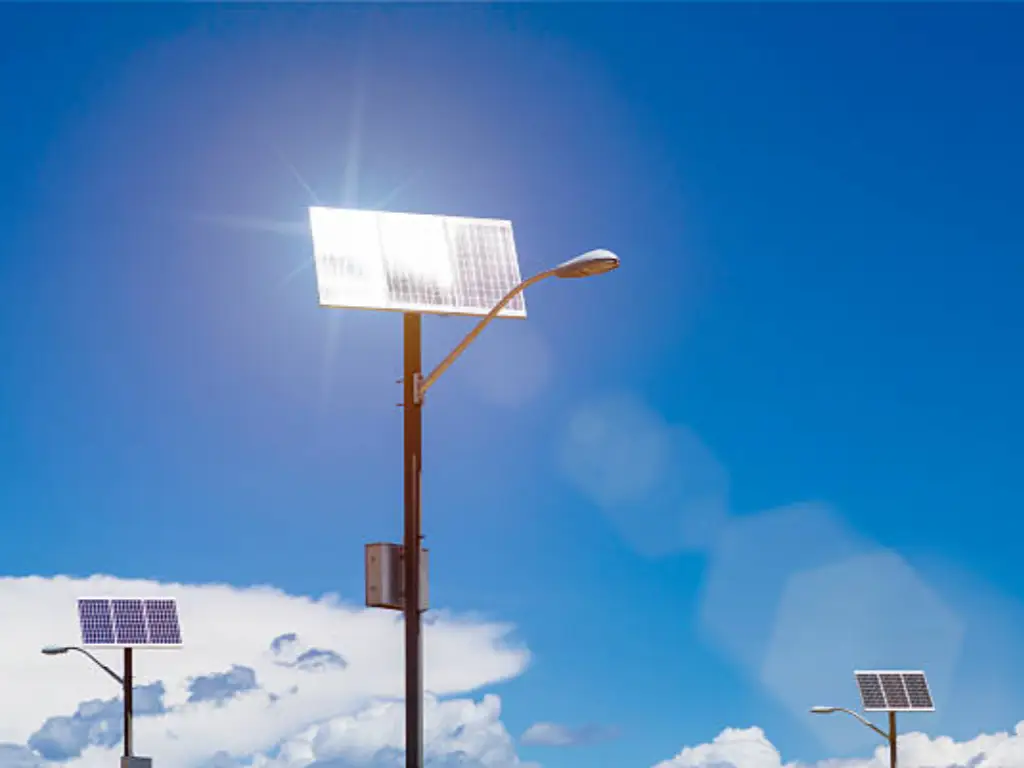
There has never been a greater demand for autonomous and sustainable outdoor solar lighting. With cities and enterprises abandoning the expensive grid-tied power and conventional street lights, the solar street light industry has become a boom, with estimates of the market growing to over $22 billion by 2030.
There is, however, a challenge to project managers and municipal buyers with this fast increase: noise. The suppliers have saturated the market, and each one of them is promising to be the best. The issue is that a commercial solar street light is not a commodity; it is a self-contained solar power plant to be used for a long time. It is the choice of the solar street light manufacturer that will make the difference between a successful investment and a very expensive failure.
This guide is meant to cut through such noise. We will set the rules of screening a real partner, dwell upon the top street light makers in the US market, enter the depths of technologies that count, and bust the myths that are associated with them.
Key Criteria for Vetting a Solar Street Lamp Manufacturer
You need to check the company prior to viewing a spec sheet. An excellent partner not only sells you a light, but he also designs lighting solutions together with you.
- Deep R&D and Customization (OEM/ODM): An authentic company has its own engineering staff. They will not simply sell something off the shelf, but will inquire as to the solar irradiation in your place and the requirements of your project. The fact that he is able to provide OEM (Original Equipment Manufacturer) and ODM (Original Design Manufacturer) is the best indicator that you are in a factory, not a reseller.
- Verified, Third-Party Certifications: Do not accept a supplier on his word. Find ISO 9001 (Quality Management), CE/RoHS (Safety/Materials), and hopefully TUV/SGS reports. These are independent lab tests, which confirm the claims of certain lighting products, which are waterproof (IP) and battery life.
- Transparency in Production and Sourcing of Components: Inquire about their sources of components. The A-grade solar street lamp suppliers are guaranteed contracts with world brands in their LED light source (chips), drivers, and industrial solar street lights battery cells. This openness is imperative in determining future reliability.
- Applicable Project Portfolio: Do not inquire about whether they have completed projects; inquire whether they have completed projects in the manner that you are inquiring. The way to provide a parking lot light in Arizona is vastly different from that of a highway in the Pacific Northwest. Request pertinent case studies and performance information.
Leading Solar Street Lamp Manufacturers for Outdoor Lighting in the USA
Based on the above criteria, we will be able to single out some manufacturers that are associated with quality, innovation, and a good standing in the market. This is the list containing the list of the who of dependable sources of serious commercial solar lighting and municipal projects.
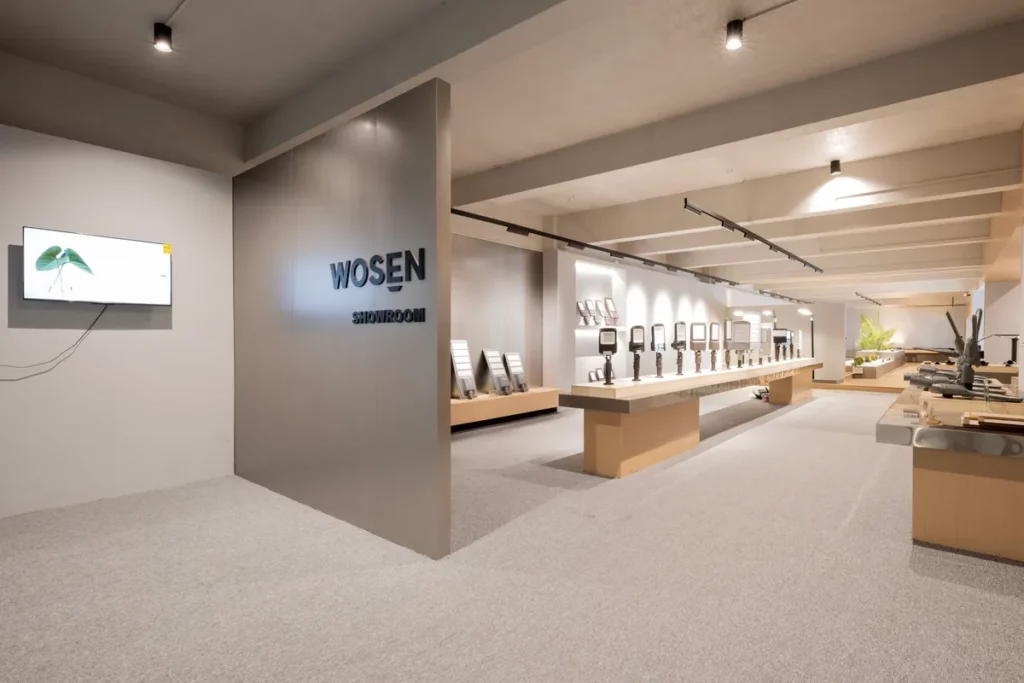
WOSEN
Recommendation: ★★★★★ (Best for Customization & Durability)
To B or C: B2B & B2G (Strong OEM/ODM Focus)
Main Markets: USA, Europe, Global OEM Partners
WOSEN has developed its reputation based on two main pillars, which are essential to buyers of B2B: extreme durability and profound OEM/ODM customization. WOSEN is a legitimate manufacturing partner, unlike suppliers who simply provide a standard catalog. They also enable the clients to develop their own lines of products- single, integrated solar lights or a full line of products- that is supported by a well-respected in-house engineering and production team. This is best suited for firms that wish to develop a special product without investing in their facility.
This elasticity is anchored on a principle of strong, non-negotiable quality. The company has adopted high-purity ADC12 aluminum in its housings, forming an end-to-end heat dissipation structure. This, together with the world-class LED chips and drivers, enables them to have a remarkably long life (L70) of 50,000 hours. In the case of a project manager, this is translated into reduced Total Cost of Ownership (TCO).
The systems at WOSEN are designed as set and forget about it. They have an IP65 waterproofing capacity and IK08 impact resistance, which, combined with a failure probability of less than 0.3%, means that their lights are resistant to the elements and that their maintenance costs are virtually nil. They also incorporate the state-of-the-art functionality that is required by modern projects, such as adjustable CCT (3000K-6500K), Human and Radar Sensor system, and other essential matching of intelligent solar street light controller to manage the remote projects.
Beyond Solar
Recommendation: ★★★★☆ (Best for US-Based Projects)
To B or C: B2B & B2G (Government/Military Focus)
Main Markets: USA (Domestic)
Beyond Solar is a leading manufacturer based in the United States and specializes in highly reliable lighting grid-optional and fully off-grid solar lighting systems as its main product.3 They prioritize using Made in America materials and engineering, and this is why they are selected as the choice of projects that are required to meet domestic sourcing standards, including the Buy American Act (BAA). This specialty is especially useful with federal, state, and municipal government contracts.
They are widely popular in government, military, and some other projects based on critical infrastructure, where failure of the system is not an option. Their line of products is designed to be strong and durable in different climatic conditions in North America.
Most manufacturers target an international market, but the fact that Beyond Solar targets the US standards and US-oriented support will give a unique benefit to domestic customers, who will be more concerned with the availability of engineering services and conformity.
This high build quality and long history in the United States is known to their systems. They offer highly integrated or full, end-to-end services, starting with the original lighting design through to the support provided after the installation, which is based on the long-term life of the asset and the sense of lifetime security rather than how cheap the final system can be.

Sunna Design
Recommendation: ★★★★★ (Best for Innovation & Smart City)
To B or C: B2B & B2G (Smart City/Premium Focus)
Main Markets: Global (Strong USA & EMEA presence)
Based in France and with a well-established US presence, Sunna Design enjoys a reputation for innovation and patented technology.3 They are commonly regarded as a high-quality provider in the solar lighting industry. These systems are heavily designed to resist extreme conditions, especially heat and humidity, making them a favorite to put in demanding deployments in the south of the US, the Middle East, and Africa. They have an award-winning design, which is a testament to their R&D consideration.
The main advantages of Sunna Design are found in their smart battery management systems (BMS) and durable, and in most cases architecturally oriented designs of their products. They have created patented technologies to make lithium batteries have the longest life and performance even under the harshest of conditions, when other systems would break down.
Their solar power systems are a great option for smart city use and high-stakes architectural projects where the performance, appearance, and intelligent control are the crucial factors. Their solutions are frequently combined with the functionality of IoT to provide remote monitoring and control, so they are a visionary partner of municipalities and large-scale commercial developers.

Greenshine
Recommendation: ★★★★☆ (Best for Commercial & Project Experience)
To B or C: B2B (Commercial Properties Focus)
Main Markets: USA, North America
Greenshine New Energy is a company that has been in the US commercial solar lighting market for more than 10 years and has its headquarters in California.6 Their main advantage is experience and a huge portfolio of successful installations. They have a reputation for offering a stable, affordable system that has been adopted as a standard in individual business premises such as parking areas, walkways, university campuses, and residential estates.
The business model of Greenshine offers optimization to a commercial buyer. They have developed a smooth, efficient system that runs customers through consultations and lighting simulation to final products. This straightforward design is very sought after by developers and contractors who require a reliable solution in terms of lighting without a complicated procurement cycle from a long-standing domestic supplier.
Although they do not emphasize cutting-edge research and development as much as some high-end brands, their brand is founded on consistency. They offer good US-based sales and technical support, and their products have been considered to be a proven and reliable workhorse of most standard commercial lighting systems in the sun.

Fonroche Lighting America
Recommendation: ★★★★★ (Best for Heavy-Duty & Large Scale)
To B or C: B2G & B2B (Industrial/Infrastructure Focus)
Main Markets: Global (Dedicated USA Division)
There is another strong French player that has a specific US branch, Fonroche Lighting, that deals with large-scale projects with high power. This is their major distinguishing feature.
When it comes to lighting a large highway, country roads, remote location, or sprawling logistics hub that is sprawling, Fonroche is one of the few manufacturers that can provide the technology and experience to do so. They specialize in big government (B2G) and heavy industrial (B2B) deals.
Their technology is designed to be as powerful as possible and ready to last up to 365 days. They are reputed to have large battery systems and strong luminaires, to suit the extreme brightness (lux/foot-candle) standards needed by these high-speed public street mamps. They have designed their solar street lamps in such a way that they work throughout the year, even in places where there are extreme winter conditions.
Fonroche has a proven world record of more than 100,000 installations behind its back and presents an industrial-strength, high-power solution. They do not fit in mini-commercial uses; they are the experts whom you invite to do the biggest, the most challenging off-grid solar street lighting projects.
Core Technologies That Define a “Great” Manufacturer in 2026
The above-mentioned leaders are distinguished by the fact that they have mastered the technologies of the best solar lighting solutions.
Battery Tech: Why LiFePO4 is the Commercial Standard
The core of your solar street lights is the battery; it is the core of energy storage.8 LiFePO4 (Lithium Iron Phosphate) is the only option for any professional project. It is an uncompromising quality that a manufacturer insists upon.
| Feature | LiFePO4 (Modern Lithium Battery) | Sealed Lead-Acid (SLA) – The Old Tech |
| Charge Cycle Lifespan | 2,000 – 3,000+ cycles (8-10+ years) | 300 – 500 cycles (1.5-2 years) |
| Depth of Discharge (DoD) | Can be safely discharged 80-90% | Recommended discharge of only 50% (halves usable capacity) |
| Thermal Safety | Extremely stable. Will not ignite or explode. | Can suffer “thermal runaway” and is sensitive to heat. |
| 10-Year Lifetime Cost | Low. (1, maybe 2 battery replacements) | Very High. (Requires 4-5 costly battery replacements). |
Smart Controls: The Role of MPPT and IoT Management
The brain is the solar controller. It controls the charge of the solar panel to the battery. The use of PWM (Pulse Width Modulation) controllers is simple and inefficient, and is used in cheaper lights. The MPPT (Maximum Power Point Tracking) controllers are used exclusively by professional manufacturers.
A smart converter is an MPPT that maximizes the voltage, and this is what enables the light to operate efficiently even during cloudy conditions, up to 30% higher. The second tier is IoT (Internet of Things) or smart controllers, which enable you to remotely monitor health, schedule dimming, and fault notification of hundreds of LED lights on a single dashboard.
The Importance of DIALux Simulation for Project Bids
What if you do not know whether a particular model of a light fixture will be bright enough on your highway or not? You don’t guess.
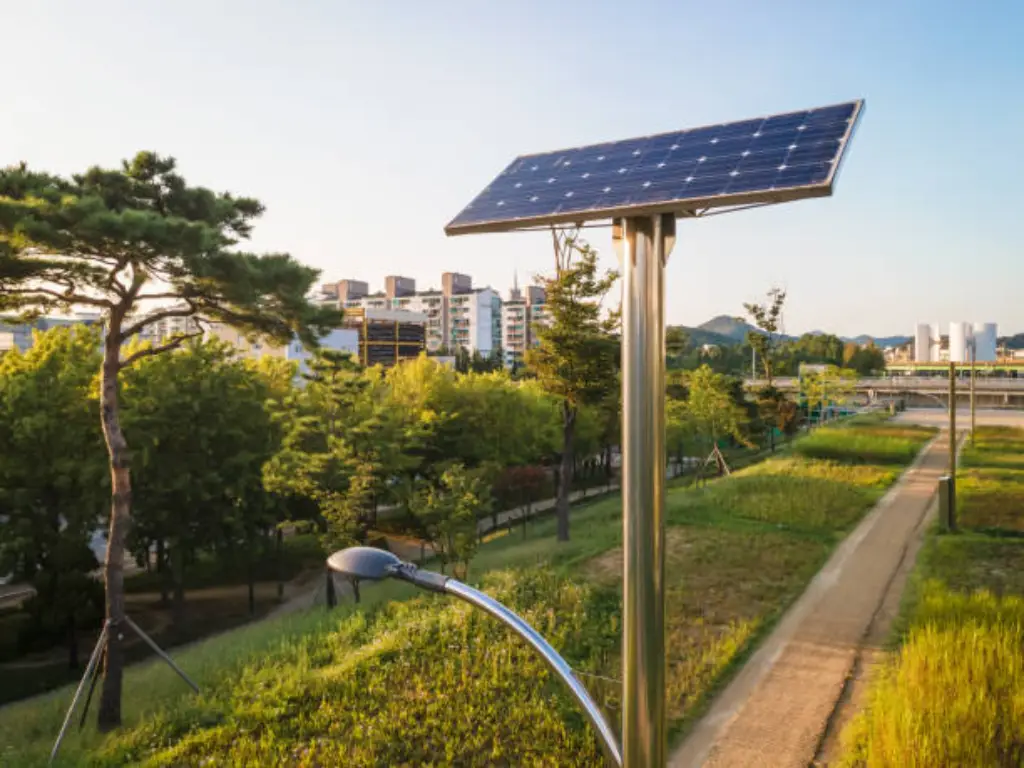
A manufacturer with serious intentions will offer a DIALux simulation. It is a professional 3D lighting design that inserts virtual scenes of their lights into your project design. It gives visual evidence of the performance, and it displays accurate brightness (lux) levels on the ground. This type of simulation is essential in avoiding over-lighting (saving you money), inadequate lighting (safety hazards), protection of the environment by efficient use of electrical energy, and is usually required to win competitive government contracts.
Debunking Common Myths About Solar Street Lighting
These myths have practically been conceived out of ill experiences with cheap and residential-grade products.
Myth 1: “They don’t work on rainy or cloudy days.”
Fact: Professional systems are designed to be autonomous. An excellent solar light manufacturer will examine your local weather and scale the battery and the panel to 3-5 consecutive days of overcast weather, which will give you a guarantee of no interruption by power failure. The high-efficiency components tap energy even in low light.
Myth 2: “Solar-led street lights just aren’t bright enough.”
Fact: Commercial-grade LED street lights using solar energy could easily comply with IES standards, regardless of their use in a local road or a major highway (often 10,000 to 30,000+ lumens). The final refutation of this myth is the DIALux simulation.
Myth 3: “The total cost is just too high.”
Fact: This mixes upfront price with the total cost of ownership (TCO). Installation and operation are the actual savings. Grid-tied lights need costly trenching, copper wiring, and approvals, together with a monthly electricity bill. Trenching can, by itself, be very costly to install and is often the cost of a whole solar lighting project.
Conclusion
The decision to select a solar street lamp manufacturer (or any solar street light company) in 2026 is not a short-term procurement decision; hence, it is a long-term, strategic choice. The success, reliability, and cost lifespan of your project will be dependent on the quality of your partner, one of the leading solar street lighting manufacturers.
In order to get a great partner, you have to look outside the spec sheet. Find a manufacturer whose R&D and customization can be checked to fulfill the demands of the customers. Insist on the core technologies, which are quality LiFePO4 batteries, MPPT controllers, and the technical expertise to give a DIALux simulation.
With such standards in mind, you will no longer think of purchasing a light fixture but investing in end-to-end street lighting systems. The appropriate partner and his/her led lighting systems will drive your project building success in the next 10 years and beyond.


 English
  Spanish
  French
  German
  Italian
  Arabic
  Russian
  Portuguese