
Strategic Entry: Why 2026 Demands Advanced LED Manufacturing?
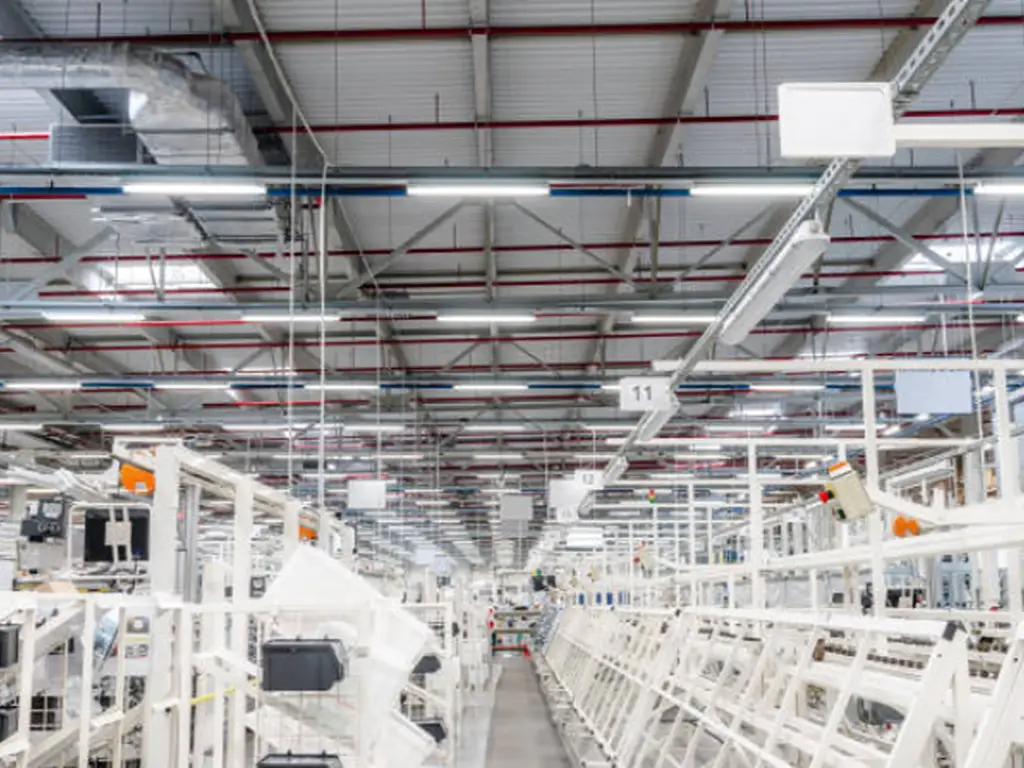
By 2026, LED manufacturing has transitioned from basic assembly to the production of intelligent edge devices. The core driver is the IoT ecosystem—specifically the Matter 1.4 protocol—which necessitates a fundamental change on the factory floor. Modern SMT lines must now handle sophisticated MCUs and wireless modules, requiring automated firmware flashing and RF signal calibration to be embedded directly into the production flow. This turns every bulb into a networked node with local computing power and near-instant response times.
Furthermore, regulations like the EU’s ESPR have reshaped the Bill of Materials (BOM), forcing manufacturers to optimize thermal management to guarantee 50,000-hour lifespans and carbon footprint compliance. To meet these mandates, the assembly line must now incorporate vacuum soldering to eliminate the micro-voids that compromise heat dissipation. Success in 2026 depends on a “specification-first” philosophy—implementing Digital ID scanning at the entry point to verify material purity and maintaining total control over every detail, from the precision placement of the electronic core to final optical consistency.
Then we are going to enter the main production phases of 2026 and we will see the technical details that drive these high-tech products.
The Professional Workflow: Step-by-Step Production and Tech Integration
Manufacturing a high-performance LED bulb in 2026 is a sequential process that balances high-speed automation with microscopic precision. Modern industry standards treat each step, including durability tests, as a critical building block for a reliable 50,000-hour product lifecycle.
Component SMT: Solder Application and Chip Placement
The steps start with preparing the Printed Circuit Board (PCB) on which a stencil printer is used to deposit solder paste in a micro level. The next step is to pick and place the individual LED components onto the board using high speed Surface Mount Technology (SMT) machines to ensure optimal illumination.
The standard has changed to all-Flip-Chip technology in the 2026 workflow, eliminating the delicate gold-wire bonding and eliminating one of the major points of failure. The placement has now been reduced to a plus or minus 15 micrometers (15um). It is this accuracy that forms the basis of the thermal and optical path; when a chip is not centered, its thermal pad will not accurately line up with the traces of the heat sink, creating a bottleneck in its efficient heat dissipation. At the same time, misalignment will cause the chip not to be on the geometric center of the lens, which will cause distortion of the beam and destroy the distribution of light.
Driver Fabrication: Power Board Assembly and Component Protection
The next part is the preparation of the LED board, then the attention is turned to the driver which is considered the brain of the luminaire and that is where the power conversion components such as transformers and capacitors are required to be mounted and soldered to the driver PCB.
To meet the efficiency requirements of the year 2026, Gallium Nitride (GaN) ICs are used, which enable a much smaller driver footprint with 20 percent of the heat generated. Vacuum-Assisted Potting is also a crucial last step in this stage. This process removes air bubbles by injecting resin of high thermal conductivity in the driver housing in a vacuum. This is to ensure that the heat of the internal parts are also well dissipated to the housing and offer a hermetic seal against moisture and vibrations.
Thermal Management: PCBA Mounting and Heat Sink Integration
The second is the mechanical assembly of the completed PCBA (LED board) and the heat sink which is either aluminium or polymer. This is so as to place a thermal interface material (TIM) between the two surfaces to enhance heat transfer.
Professionally, now TIMs are made as hardened metals at room temperatures but then they melt when in use to flow into microscopic cracks on the surfaces. Modern lines utilize automated hydraulic press devices to strictly control a Bond Line Thickness (BLT). Thermal highway control The control of the BLT offers a safe temperature (Tj) at the joint of LEDs, as it is too thick to be applied, would form an insulator, whereas too thin would not bridge the air gaps.
Optical Integration: Lens Fitting and Housing Sealing
Once the light source and thermal path is fixed, the optical system which consists of TIR lenses or reflectors will be installed on top of the LEDs, then, lastly the outer diffuser or cover is installed.
Laser Plastic Welding has since become used to replace traditional screws and clips by 2026. The laser beam is used in this process to form a molecular bond between the housing and the diffuser making it permanently, hermetically sealed (IP67+ rating). This connection cannot be affected by thermal expansion and contraction which tends to loosen the mechanical fasteners whereas this connection remains secure to keep all dusts and moisture out of the optical chamber to avoid the internal yellowing throughout the life cycle of the bulb.
Validation and Reliability: Full-Load Aging and AI Analysis
The validation phase is the last phase in the production process, bulbs are produced and then subjected to a long period of aging in order to stabilize them. The 2026 standard has changed this into Digital Twin Validation.
A Digital Twin is a high-fidelity virtual model, in other words, a data mirror, which is stored in the cloud to monitor all the physical bulbs in the real world. In an aging process, AI sensors continuously observe the electrical and thermal characteristics of the bulbs in real-time to update this digital counterpart as the bulbs experience a 100% full-load aging process. The system measures existing ripples and fluctuations and is able to anticipate the possible failures before they occur. This enables one to eliminate units that portray latent defects leading to the fact that the final user would have almost zero failure rate.
Asset Configuration: Selecting Equipment for Future-Proof Lines
The choice of capital equipment in 2026 must be a tradeoff between the high-speed throughput and the capabilities of the Flexible Manufacturing. The most dangerous threat to CAPEX is the high rate of the obsolescence of the rigid production lines.
Modular Production Cells should be used in a facility that will prove to be future proof. Instead of a single giant assembly line, current factories involve exchangeable SMT feeders and robotic arms controlled by AI, which can be reconfigured in a few minutes. This is due to the flexibility which enables the factory to switch between A19 residential bulbs, commercial PAR30 lamps and specialized architectural luminaires on the same shift. Moreover, the assets should be provided with OPC-UA or MTConnect protocols that can provide real-time data communication with the Manufacturing Execution System (MES) of the factory. An isolated machine in 2026 is a liability, and it is only integrated equipment that will be able to join the automated optimization that needs to be done to ensure a competitive ROI.
Quality Infrastructure: Scaling Without Sacrificing Excellence
Consistency is the money in professional lighting market. When the shipment of 10, 000 bulbs demonstrates even the slightest visible difference in the color temperature, the whole batch can be returned, which means disastrous financial consequences.
Photometric Science via Integrating Spheres
The Integrating Sphere and high-speed spectroradiometers are the main instruments of measuring the color consistency. Tier-1 manufacturers would need to conform to a 3-step MacAdam Ellipse (SDCM < 3) consistency requirement in 2026.
This can be achieved through automated photometric feedback loop by which the factory will monitor the Correlated Color Temperature (CCT) and Color Rendering Index (CRI) of each production lot in real-time. In case the system realizes a drift due to a new batch of phosphor or due to a movement of the LED binning, the MES may automatically correct this by changing the output parameters of the driver. Such a high degree of scientific control will provide the visual signature of the brand to be the same even after several years of production.
Aging Tests & Reliability Screening
Quality in 2026 is not just seen as something that is present at this point in time, but as an assurance of sustainability in the long run. In order to maintain this, the current reliability guidelines have shifted away of mere burn-in tests to more intense Environmental Stress Screening (ESS).
ESS consists of exposing statistically significant samples from each production lot to rapid thermal cycling — usually between minus 40 and plus 105 (-40 °C to +105 °C)— and high-humidity bias tests. This sophisticated procedure is aimed at increasing the speed at which latent defects, which may manifest themselves later on (solder joint fatigue or material delamination) would not appear until 12 to 18 months of the field environment. Tracking these failures of Infant Mortality through the factory gates, manufacturers will save the costs that decrease exponentially with field recalls and will avoid the permanent harm to the brand image.
Under these strict technical demands, a choice of a manufacturing partner with a demonstrated level of expertise and knowledge of precision in optics and reliability screening is no longer a question of convenience, but a strategic choice of long-term brand consistency.
The Manufacturer’s Edge: Mastering Hidden Technical Risks
Risk management will commence when raw materials are received in the facility. In 2026, a single run of production can be destroyed by Quality Dilution (e.g. low purity aluminum heat sink) or degraded phosphor silicone. To counter this, leading manufacturers resort to automated verification of the material. The system uses the unique digital ID of each batch to scan against Digital Twin specifications at the receiving bay to determine material purity. This is so that poor quality material is isolated prior to reaching the SMT line and hence the brand is not subjected to the expensive defects in mass production.
The Truth About Driver Longevity
Paradox in the industry is due to the fact that although the LED chip is rated 50,000 hours, the driver tends to judge after 5,000. The Electrolytic Capacitor is the main culprit.
Professional manufacturers avoid this in 2026 by using either Capacitor-less topologies of driver or high-temperature Solid-State Polymeric Capacitors. Although a typical electrolytic capacitor could cost a manufacturer less money by a dollar and a half in the BOM, the failure rate under high-heat conditions is non-linear. Spending an extra 0.40 on high-end thermal resistant parts, a company can be assured to warrant to between 5 and 7 years warranty – a requirement to enter the profitable North American ESCO (Energy Service Company) market.
Identifying Quality in Raw Materials
At the loading dock risk management starts. By 2026, the Quality Dilution of raw materials, e.g. a heatsink made of lower-purity aluminum, or a silicone phosphor that has gone bad can ruin a production run.
Another special insight possessed by the manufacturer is the Optical Grade Silicone that is used in encapsulation. In cheaper silicones, there is high Yellowing Indices during UV exposure or exposure to high energy blue light. Strict Incoming Quality Control (IQC) is employed by professional factories with the help of UV-accelerated weathering chambers to establish the stability of each lot of resin prior to entry into the production floor. This helps to eliminate the effect of blue-shift which afflicts low-end LED products after 2,000 hours of operation.
Financial Viability: Measuring CAPEX vs. ROI via Strategic Partnerships
The results of constructing an LED factory of 2026 specifications are a multi-million dollar project full of technical and economic risks. When the great frontiers of accuracy SMT, vacuum soldering, and extensive quality testing are realized, the business question that gets at the core is: Can the construction of an in-house facility be the quickest or the most economically efficient route to the market? To enter the market efficiently, the most sustainable Return on Investment (ROI) approach that the brand can adopt is avoiding the CAPEX trap and using the mature WOSEN manufacturing ecosystem.
The economic benefit of this strategic alliance is most apparent in the Time to ROI. Rather than enduring a 12-to-18-month learning curve to streamline a new production line and stabilize yields, the WOSEN OEM/ODM model enables a brand to focus on its core value drivers: marketing, design, and distribution.
A primary strategic advantage lies in the elimination of massive Capital Expenditure (CAPEX). Organizations can bypass the exorbitant costs of purchasing high-precision production and specialized testing machinery by directly leveraging WOSEN’s international-standard production lines. Furthermore, WOSEN provides an immediate gateway to global markets through its comprehensive validation framework, including RoHS, TUV, and ISO9001 certifications. By utilizing WOSEN’s proven infrastructure and rigorous quality systems, firms are not merely acquiring a finished product; they are securing a strategic head-start and a lower-risk financial future in the global marketplace.
Market Access: Navigating 2026 Global Compliance Standards
There will be new sets of “Circular Economy” and “Grid Stability” standards that will govern market access in 2026. Making a quality light would be of no use when it cannot be sold within the target jurisdiction as indicated by the law.
In the United States, the utility rebate eligibility requires compliance with Energy Star 3.2 and DLC 6.0. New standards are now having rigid requirements of the Flicker Index and Total Harmonic Distortion (THD) to ensure the health of occupants and power grid stability. In addition, the directive on the Right to Repair by the European Union has made LED modules and drivers on commercial luminaires replaceable. To the manufacturer this will imply creating products that are put together using mechanical fasteners instead of permanent adhesives- a design change that should be factored in the robot programming of the assembly line since the beginning.
Conclusion: Industry 4.0 & Sustainable Growth Beyond the First Batch
The path of first facility installation to long-term profitability will end in the implementation of Industry 4.0. In the case that Industry 1.0 was steam, 2.0 was electricity, and 3.0 was automation, then 4.0 is the intelligence era. It is founded on the idea of creating smart factories where machines, systems and people interact in real time.
The core of this is the Digital Twin which is a high-fidelity virtual mirror of all the physical bulbs. It will not be only well-equipped machines in 2026 that will make the winners of the LED market, but those manufacturers who will be able to process the manufacturing data into the management efficiency. This is possible by analyzing real-time sensor data on the production line and transitioning to predictive maintenance instead of reactive maintenance to make sure that the success of the first batch is repeated by millions of units.
This development of a digital infrastructure is a complicated process. Partnering with an established expert is the most effective way to go as long as the brands want to employ these standards but are not ready to take the risk of capital expenditure. In the case you need any needs in the professional LED manufacturing, WOSEN is willing to offer the strategic support that your brand requires to convert the data into the sustainable growth.

 English
  Spanish
  French
  German
  Italian
  Arabic
  Russian
  Portuguese