
Introduction: Balancing Compliance, Productivity, and ROI
Lighting is much more than a tool; it is a tactical investment that characterizes the feel of an environment that performs high. The glowing atmosphere is silently determining the safety, concentration, and efficiency of your most precious company asset, people, whether you are operating in high-rise corporate office work areas or a high-stakes construction site where adequate lighting plays a crucial role.
Regulatory obstacles in the use of better lighting in the workplace have developed into the center of health administration and business success in the competitive environment of the year 2026. Poor-quality lighting, that is, dim or bad spectral quality, is an invisible loss to the bottom line of a company that is reflected in high error rates and the systematic exhaustion of the employees. To the decision-makers, the ROI of quality lighting is multi-dimensional: the amount of energy saved by quality lighting is substantial, the legal liability minimized, and the overall output maximized.
Navigating Global Regulatory Requirements for 2026
The “ballast” of any project in the field of lighting is regulatory compliance. In case of organizations that are functioning at the global level, the first compulsory step of risk management is alignment with OSHA regulations and standards (USA), HSE (UK) and EN 12464-1 (Europe). These norms make sure that the lighting is not just there, it is intentional.
We have to divide the topic of lighting into two areas of functions:
- Safety Lighting: This is the red line which cannot be crossed. It is focused on high risk locations such as stairways, corridors, and emergency exits. It is simply designed to be able to provide adequate homogeneous lighting so that in case of power outage or any other emergency situation, people can get to safety without panicking or physical harm.
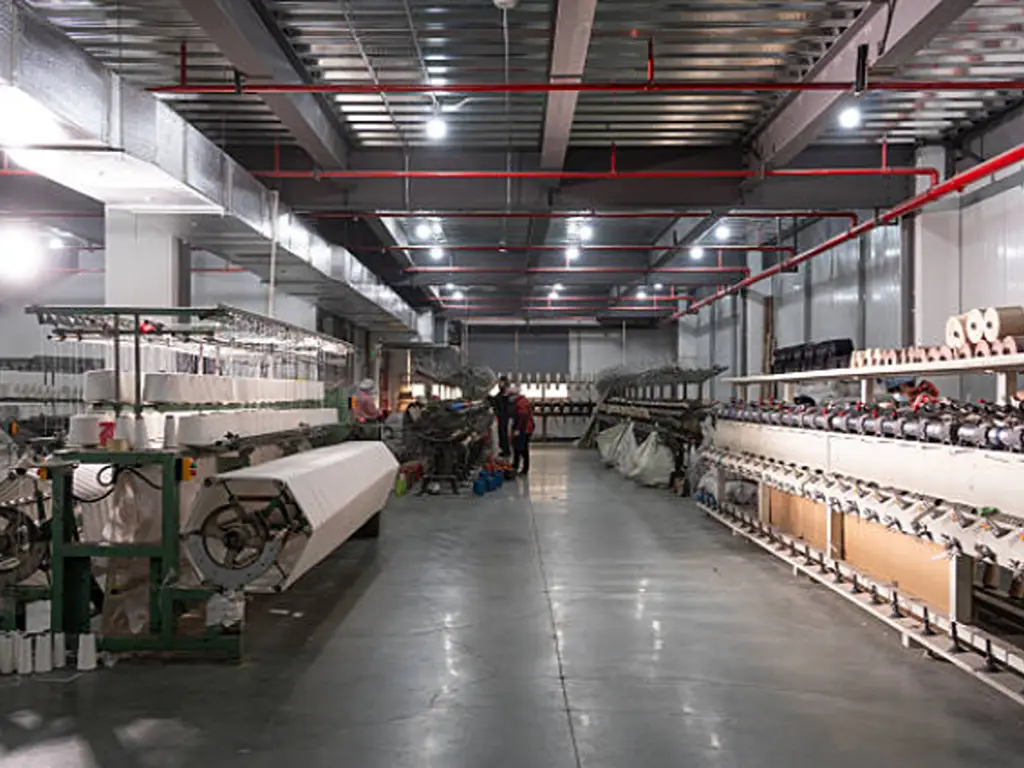
- Task Lighting: It is the operational efficiency underpinning. It concentrates on the particular plane of work- the desk, the assembly line or the inspection table. It is that which would enable the eye to receive high-frequency visual data without the feeling of exhaustion and occupational vision degradation in the long-term.
The Quantitative Checklist: Essential Technical Metrics
To assess a professional lighting system one must go beyond the subjective aspect of the system, which is its perceived brightness and go to the objective, scientific data.
Target Illuminance Levels for Diverse Tasks
Various activities require varying spectral intensities, and accurate office lighting distribution is effective not only in preserving the eyes but it also has a great influence on accuracy in operations. Rows of lights should be strategically placed to optimize this distribution. The table below reflects the targets of the diverse environments according to the industry standards in 2026:
| Workspace Category | Recommended Illuminance (Lux) | Core Strategic Value |
| Circulation Areas (Stairs, Corridors, Storage) | 100 – 200 lx | Hazard avoidance; providing basic spatial orientation. |
| Standard Office / Collaboration / Meeting Rooms | 500 lx | Supports sustained reading/typing in active storage areas; reduces screen-glare fatigue. |
| Precision Manufacturing / CAD Drawing / QC | 750 – 1000 lx | Detail capture; minimizes error rates and material waste. |
| Industrial Construction Sites (General Areas) | 200 – 300 lx | Obstacle recognition; ensuring safe movement in dynamic zones. |
Glare Control (UGR) and Color Accuracy (CRI)
The two main pillars of visual quality are Unified Glare Rating (UGR) and color fidelity. UGR is a measurement of the psychological discomfort due to the light striking the eye in direct angles as part of comprehensive lighting design, which ultimately affects the amount of illumination. UGR < 19 is important in an office environment. With a high glare, the ciliary muscles of the eye become under a permanent condition of micro-adjustment. This provokes a visual interference, which in the long term is accompanied by migraine and fragmentation of the deep focus. The glare control in the industrial areas is a safety feature- it eliminates the temporary blindness that happens when the personnel look up at the high-mounted lamps in the course of using the machine.
Color Rendering Index (CRI) sets what the truth is of the environment, and CCT plays a crucial role in this aspect, enhancing visibility. The contemporary criterion of professional space is CRI > 80, with this number being sufficient to avoid distortion of colors. The difference between a pass and a fail in a factory environment, whether it is the soldering of circuit boards, spray-painting automotive parts, or the testing of chemical uniformity, is the high CRI. Unless lighting can be used to show the actual color of a wire or a surface defect, it is impossible to have the highest standards of quality.
Sustainable professional UGR and CRI levels are the central concern of the professional project decision-makers on workplace lighting requirements. Therefore, the strategic approach to paraplaning technical accuracy into structural assurance of long-term team concentration and visual precision is choosing a professional associate in the implementation of the project.
Adapting Compliance Standards to Diverse Workspace Environments
The professional lighting does not have a one-size-fits-all luminaire. A company has to examine the stresses specific to both indoor offices and the “hard-hat” conditions of general construction areas and the construction industry while also considering regulations like “ANSI” standards.
Indoor Office and Collaborative Environments
The Challenge: The Fatigue of Vision and Space Fragmentation in different types of workplaces. Contemporary offices are mixed areas of screen-oriented attention and cooperation. The ultimate point of pain is Visual Discontinuity, especially when there isn’t adequate attention to the line of sight. As one shifts the eyes off a bright monitor, to a dark area of the desk, they make a constant fit, which gets the pupils to be tired mid-afternoon. There are also Cave Effects which are harsh directional light, and these dark pockets appear in a professional office making it cramped.
The Solution: Uniformity and Diffusion The idea is to have uniformity whereby the uniformity ratio (Uo) is to be 0.6 or higher. This guarantees smooth changing of visual effects.
- LED Panel Lights: The open office leader. Their huge diffused surface removes sharp shadows and makes the room look soft yet brightened to the needed level.
- LED Linear Lights: These are best used on modular workstations, and provide a seamless stream of light, which can be adjusted to the rhythm of the space in the current layout.

Industrial Facilities and Construction Site Safety
The Challenge: Massive Ceiling Heights, Dust-Laden Air and Impact Physical effects are associated with the industrial zones. and general construction plants. Normal lamps, including overhead lights, are a detriment here; the insufficiency to throw, or contrast, may cause disastrous mistakes, such as the error of mistaking warning lights or missing moving equipment within the darkness of shadow.
The Solution: Durability and Photometric Precision, the industrial lighting must have the hardened specifications (heat dissipation and impact resistance) to ensure occupational safety.
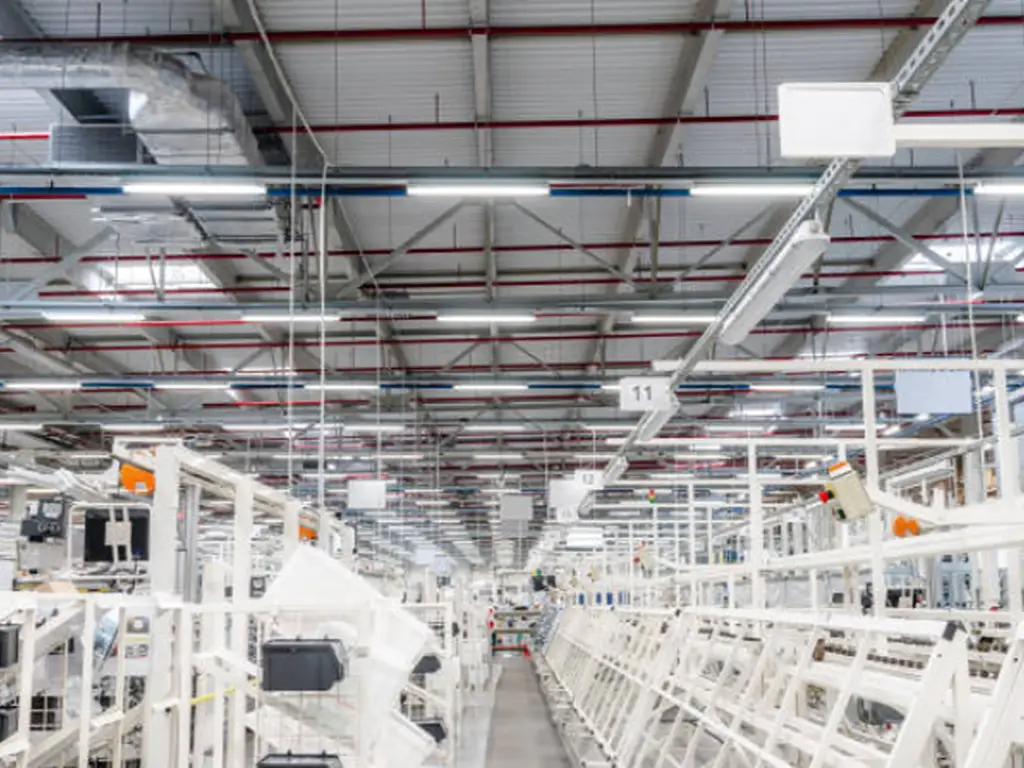
- LED High Bay Lights: These are used on ceilings more than 6 meters to give the optical kick to break through industrial haze and go to the floor effectively.
- LED Floodlights: They are the protectors of the construction site. The high intensity (and wide-angle coverage) makes them build a sort of safety net around night shifts so that the hazards could be identified at a distance.
- LED Tri-proof Lights: The seal is life in damp or dusty areas. These are waterproof and corrosion proof fixtures, which provide 50,000 or more hours of operation with no maintenance outage.
Enhancing Employee Well-being Through Human-Centric Design
As we tend to go in the mad chase of efficiency, we miss a lot of the essence of light in regard to human circadian rhythm. Ordinary LED lamps tend to have an issue with ‘invisible flicker,’ a stroboscopic effect at a high frequency that is visible to the brain but not to the eye. This is the covert culprit of office fatigue that causes a stress reaction in the nervous system. Moreover, the inflexible and single-spectrum general lighting does not respond to the natural clock of the body and results in the notorious so-called afternoon doldrums of plummeting productivity.
To fill this engineering/biology gap, a manufacturer has to go beyond assembly into professional-grade R&D. Professional manufacturers such as Wosen incorporate laboratory-grade rigor onto the production line. A CNAS laboratory under the guidance of 20-year experienced experts tests all the chips and light fixtures to achieve spectral stability. In comparison to generic drivers, a CRI of more than 80 resembling natural light is obtained through the use of specialized COB/SMD technology.
The light can breathe with the environment by providing smart dimming and tunable white options, thus providing the benefit of adding blue-tones in the morning and warm-tones to the evening for different tasks. The industrial quality is confirmed according to 6S, ISO9001 and IEC60598 standard as the performance can be guaranteed to last 5 to 7 years. It is only through selecting a manufacturer of this level of research that one can graduate to the next stage of transitioning between the levels of basic compliance and the high-efficiency workplace.
Future Proofing with Smart Controls and Energy Efficiency
With the price of energy changing and ESG (Environmental, Social, and Governance) targets being a compulsory requirement, the outdoor lighting system should transform into a Smart Ecosystem.
- Daylight Harvesting: The present sensors are able to identify the contribution of natural sunlight. The system automatically puts the LEDs on and off on a sunny afternoon, which will keep the desk at precisely 500 lx and save up to 40% of electricity.
- Occupancy Sensors: This is of 2026 warehouses and corridors. It makes sure that power is not consumed until a presence is sensed. In addition to energy conservation, this greatly saves the life of the LED chips and the drivers since the amount of time spent by the chips being on is minimized when a space is idle.
- IoT & Predictive Maintenance: With the help of cloud management, the facility managers are able to check the well-being of each lamp. A system will warn you that a driver is approaching its end-of-life before it breaks down so that you can perform planned maintenance without interfering with production.
Performing a Workplace Audit to Identify Performance Gaps
Compliance is not a static achievement; it is a state of being. Periodic lighting audits are the only way to identify “performance debt” before it results in an accident, eye strain, or a loss in productivity.
The Three-Step Audit Framework:
- Illuminance Mapping: Use a calibrated Lux meter to test multiple points on the work surfaces during different times of the day. This identifies “dark spots” where light has decayed due to aging or poor initial design.
- Visual Comfort & Glare Check: Engage with the workforce. Are employees reporting headaches? Are there new reflections caused by relocated equipment? A professional audit looks at the geometry of the room, not just the bulbs.
- Maintenance Factor (MF) Evaluation: Check for “dust lumen depreciation” and chip degradation. If a lamp has lost 20% of its initial output, it may no longer meet the safety threshold for precision work. An audit reveals these invisible “lighting deficits,” allowing for timely intervention.
Conclusion: Next Steps for Sustainable Lighting Excellence
Compliance with workplace light standards and minimum lighting requirements is not a check sheet that you do every once; it is a commitment that takes a long-term obligation to the individuals that drive your business.
A contemporary lighting system is not merely a bunch of lights. It is a combination of legal inflexibility, technical accuracy and sympathy. When we change our mind to ask, is it bright enough? to “is it excellent enough? we open a place of work that generates sustainable value, security, and culture pride.


 English
  Spanish
  French
  German
  Italian
  Arabic
  Russian
  Portuguese